The Jenné-jeno Terracottas: clay figures from an ancient West African city, and the looters who outran the archaeologists
Famous find Figures made about AD 1000 to 1400 · Found in 1977 See it on the timeline →
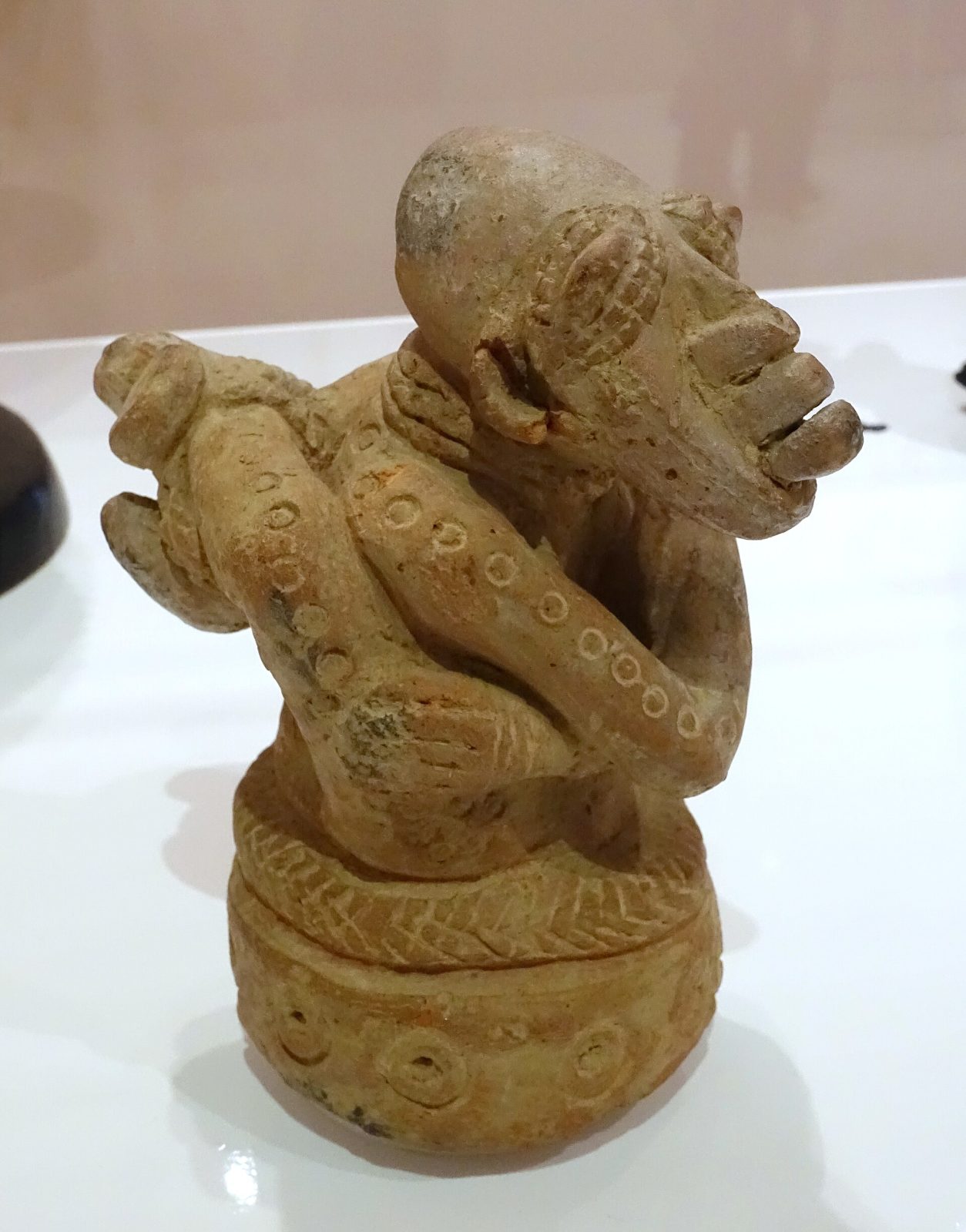
In 1977 archaeologists Roderick and Susan McIntosh began excavating Jenné-jeno in Mali, one of the oldest known cities in sub-Saharan Africa, where people made terracotta figures between about AD 1000 and 1400. Within a few years, looters digging for the art market were destroying the sites faster than they could be studied.
In 1977 two young American archaeologists, Roderick and Susan McIntosh, then graduate students, began excavating Jenné-jeno, a great mound about three kilometres from the town of Djenné in the Inland Niger Delta of Mali. The mound covered about 33 hectares and stood up to six metres high, with more than 60 smaller mounds around it. They returned in 1981, working there for sixteen months in all.
They found that Jenné-jeno had been settled by about 250 BC and had grown into one of the oldest known cities in sub-Saharan Africa, covering at least 12 hectares by about AD 50 and 33 hectares by AD 600 to 800, with a wall of cylindrical mud bricks. It declined after AD 1200 and was abandoned by 1400. In its later centuries its people made terracotta figures: kneeling, seated and on horseback, some with snakes, some covered in raised bumps that may show disease or scarification. Excavation suggested that some were set into walls or foundations, or placed on house floors with small offering bowls.
By then the figures were already being sold to tourists and to the Western art market. A survey around Djenné between 1989 and 1992 recorded 834 sites, 45 per cent of them already damaged by illegal digging. When 83 of those sites were revisited in 1996, the share looted had risen from 19 to 59 per cent. Erosion took about a tenth of Jenné-jeno's own deposits in twenty years. The only figures definitely known to come from Jenné-jeno are those the McIntoshes excavated and published.
In 1993 the United States imposed emergency restrictions on importing archaeological material from the region, later extended to all of Mali, and in 2022 the Museum of Fine Arts in Boston returned two Djenné terracottas that had been exported illegally. The excavated finds are in Mali's national collections, held by the National Museum of Mali in Bamako.
Written for Global Finds from R. and S. McIntosh (Rice University, and Expedition magazine, 1983), N. Brodie (Trafficking Culture), the US Federal Register (1997 and 2022) and the Museum of Fine Arts, Boston (2022). Photo: a Jenné-style terracotta figure of the 12th to 15th centuries in the Krannert Art Museum, findspot unrecorded, Daderot, Wikimedia Commons, public domain.
Approximate location13.89, -4.54View on map