The Uluburun Shipwreck: a sponge diver's 'metal biscuits with ears' that revealed a Bronze Age cargo
Famous find Sank about 1300 BC · Found in 1982 See it on the timeline →
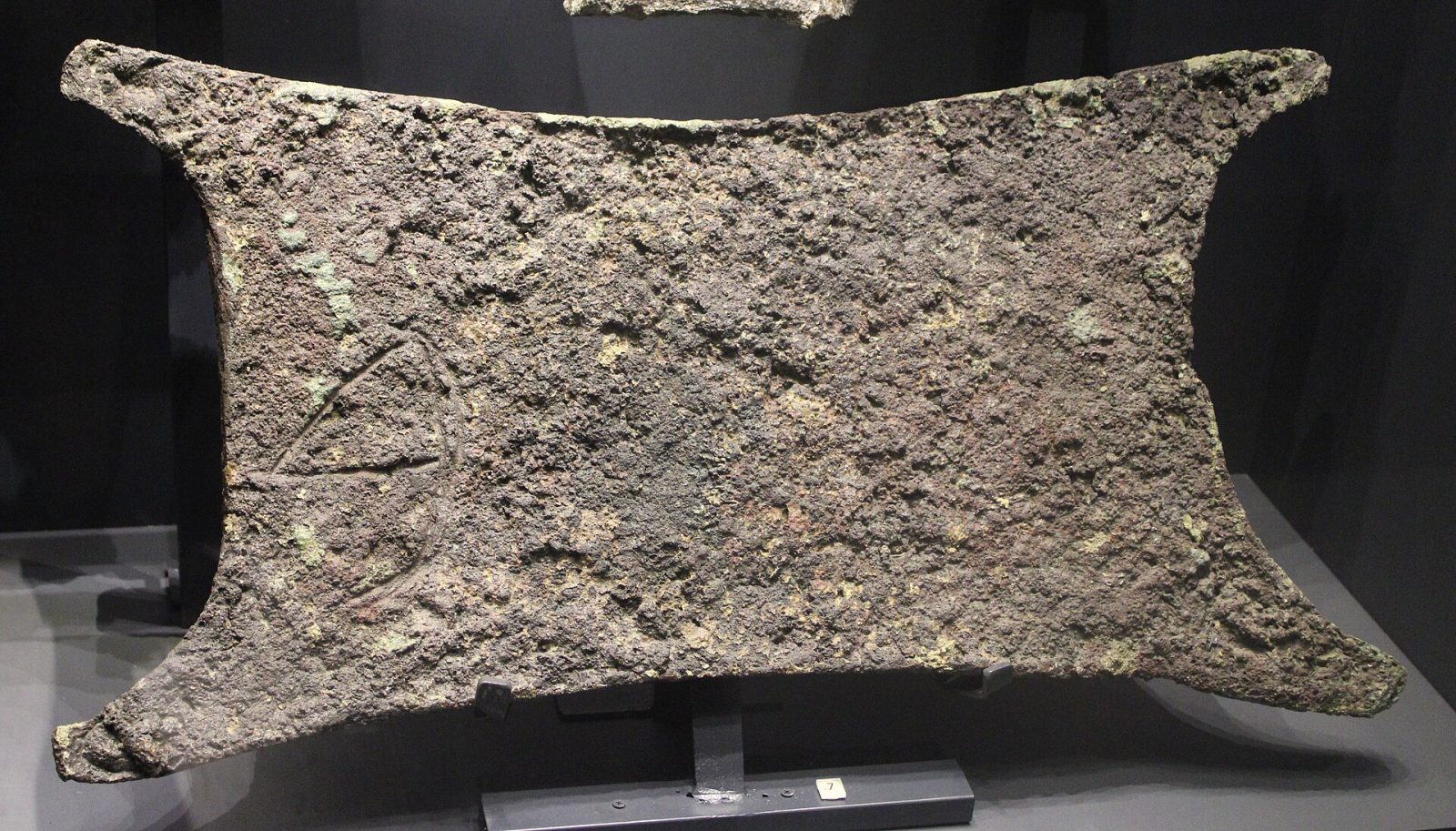
In 1982 a Turkish sponge diver described 'metal biscuits with ears' on the seabed near Kaş. They were copper ingots from a ship wrecked around 1300 BC, carrying ten tons of copper, a ton of tin, glass, ivory, gold and a scarab bearing the name of Nefertiti.
In the summer of 1982, Mehmet Çakır, a sponge diver from Yalıkavak near Bodrum, on the south-west coast of Turkey, reported seeing "metal biscuits with ears" on the seabed off Uluburun, the Grand Cape, about nine kilometres south-east of Kaş. The Institute of Nautical Archaeology, which was surveying the coast, and the Bodrum Museum recognised the description: copper ingots in the shape of an ox hide, typical of the Late Bronze Age.
The Institute excavated the wreck between 1984 and 1994, first under George Bass and then under Cemal Pulak, in eleven seasons and more than 22,000 dives at depths of 42 to 61 metres, deep and dangerous water for divers breathing air.
Almost 17 tons of material came up. There were about ten tons of copper, mostly in 354 oxhide ingots averaging 24 kilograms each and probably from Cyprus, and about a ton of tin, enough together to make eleven tons of bronze. There were about 175 ingots of glass coloured cobalt blue, turquoise and purple, logs of ebony, elephant tusks and hippopotamus teeth, ostrich eggshells and at least 149 Canaanite jars of terebinth resin. Among the gold jewellery was a scarab bearing the name of the Egyptian queen Nefertiti. There were weapons, a wooden writing tablet and sets of balance weights for weighing goods in a world without coins. Tree-ring and radiocarbon dating place the sinking at the end of the 14th century BC, around 1300 BC. The cedar-built ship is often described as the oldest seagoing ship ever excavated.
The finds belong to the Turkish state and are in the Bodrum Museum of Underwater Archaeology in Bodrum Castle, which reopened in 2020 after restoration. A full-size replica of the ship was later sunk off Kaş for divers to visit.
Written for Global Finds from C. Pulak in Beyond Babylon (Metropolitan Museum of Art, 2008), the Institute of Nautical Archaeology, Turkey's Ministry of Culture and Tourism and Hürriyet Daily News (2020). Photo: an oxhide copper ingot from the Uluburun wreck in the Bodrum Museum of Underwater Archaeology, Zunkir, Wikimedia Commons, CC BY-SA 4.0.
Approximate location36.13, 29.69View on map
Source: C. Pulak, Beyond Babylon (Metropolitan Museum of Art, 2008)