The Snettisham Jeweller's Hoard: a Roman jeweller's stock, dug up by builders in a Norfolk village
Famous find Buried about AD 155 · Found in 1985 See it on the timeline →
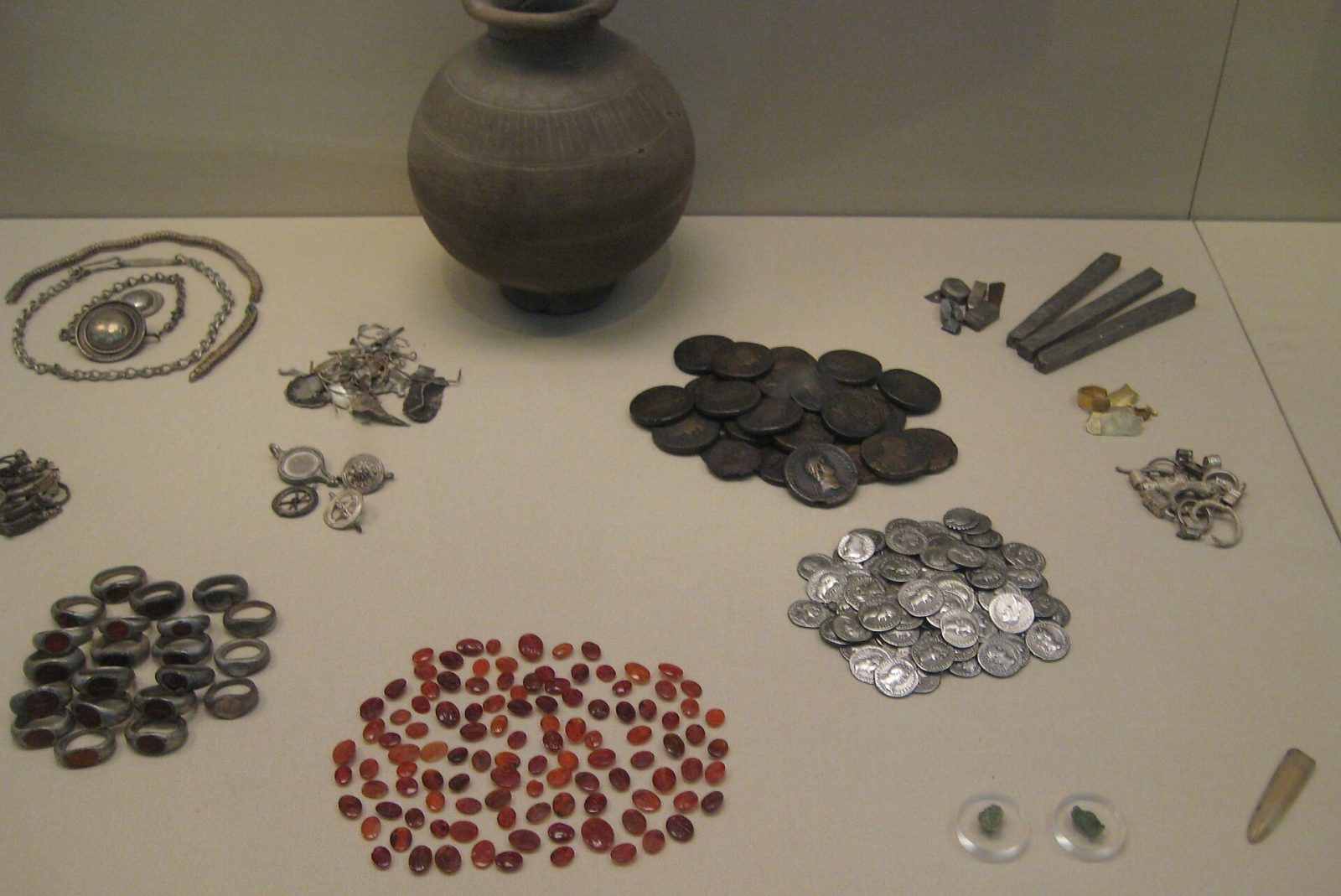
In 1985 builders preparing a house plot in Snettisham, Norfolk, dug up a small Roman pot. Inside was the working stock of a jeweller buried around AD 155: 110 coins, 117 engraved gemstones, silver rings and bracelets, ingots, scrap gold and a polishing tool.
In 1985, builders preparing the ground for a new house on Strickland Avenue in Snettisham, Norfolk, the village already famous for its great Iron Age gold torcs, dug up a small grey pottery jar. The finder's name is not recorded in the published sources. The local press reported the find that September, and an excavation of the site that followed found a Roman settlement of the 2nd and 3rd centuries where iron had been worked.
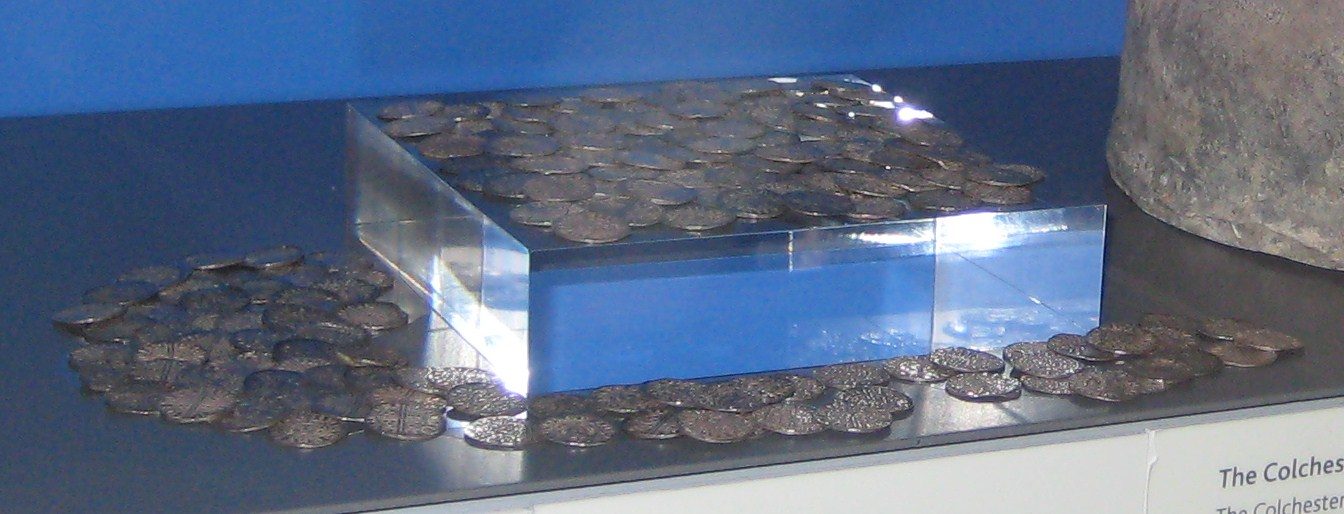
The jar, 17.5 centimetres high, held the working stock of a Roman jeweller. There were 110 coins, 83 of them silver denarii and 27 bronze, and 117 carnelian gemstones engraved with figures of good luck such as Fortuna, Bonus Eventus and Ceres, 110 of them still unmounted and cut by at least three different engravers. There were silver snake rings and bracelets, chain necklaces with crescent-shaped pendants and an unfinished gold ring. Alongside the finished pieces were the jeweller's raw materials and tools: silver ingots, scrap silver, six pieces of scrap gold, a quartz polishing tool still carrying traces of gold, and a seal-box. Two scraps of Roman linen survived too. Some bracelets had been bent to squeeze them through the jar's narrow neck.
This was not anyone's savings but a business. Most of the silver coins were old by the time they were buried and were probably kept as bullion to melt down, while the bronze coins may have been small change. The snake rings were stamped from silver strip with dies, an early form of mass production. The latest coins, struck in memory of the empress Faustina the Elder, date from AD 154 to 155, so the hoard was buried around 155. Why the jeweller never came back for it is unknown.
The British Museum acquired the hoard in 1986, and it has been displayed in its gallery of Roman Britain.
Written for Global Finds from the British Museum, the Norfolk Historic Environment Record, C. Johns, The Snettisham Roman Jeweller's Hoard (1997), and T. Potter in Antiquity (1986). Photo: the Snettisham Jeweller's Hoard in the British Museum, BabelStone, Wikimedia Commons, CC0.
Approximate location52.88, 0.50View on map
Source: Norfolk Heritage Explorer