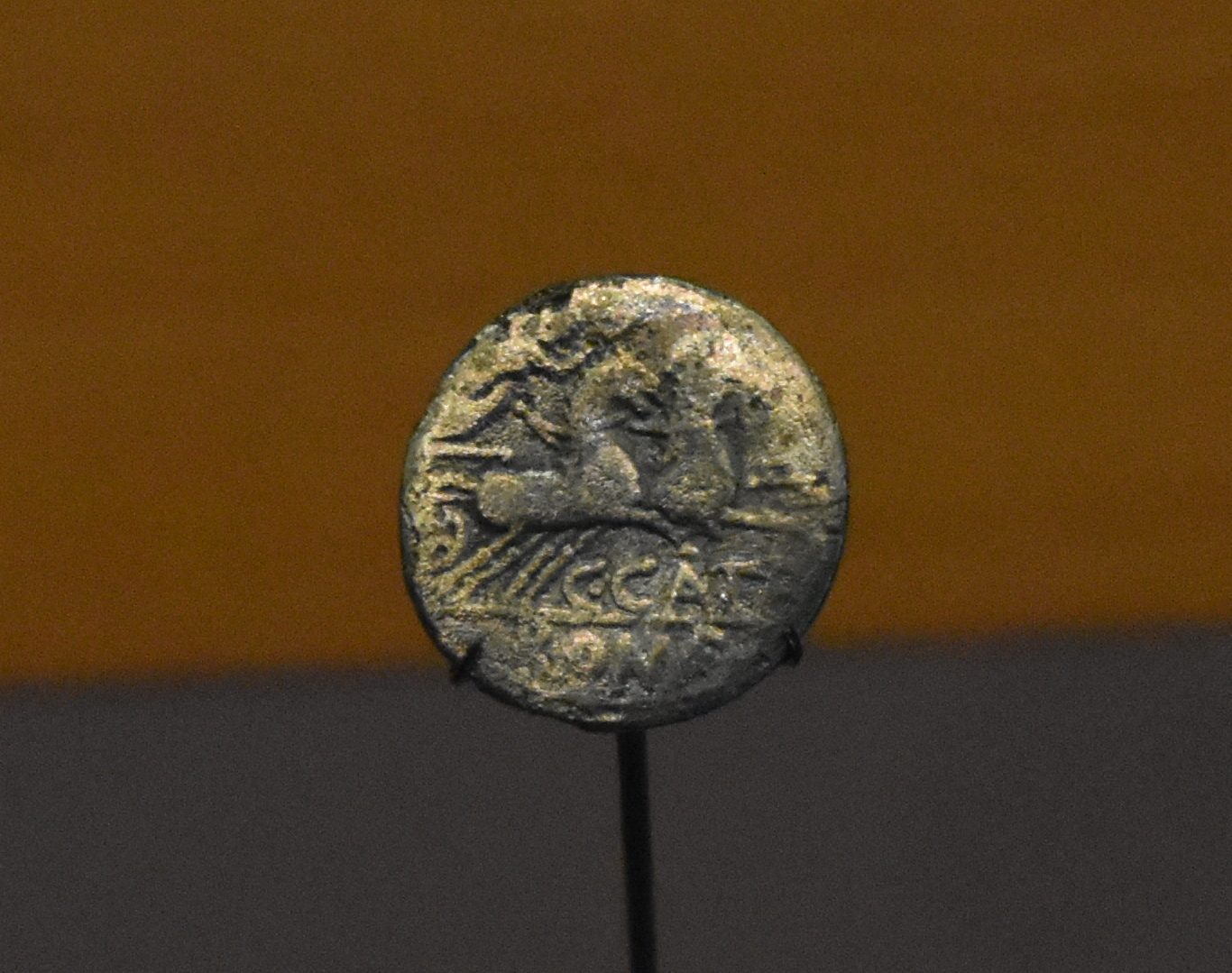
The Péran Penny: a coin of Viking York found in the burnt-glass ruins of a Viking fort in Brittany
Famous find Struck at York about 905 to 925 · Found in 1984 See it on the timeline →
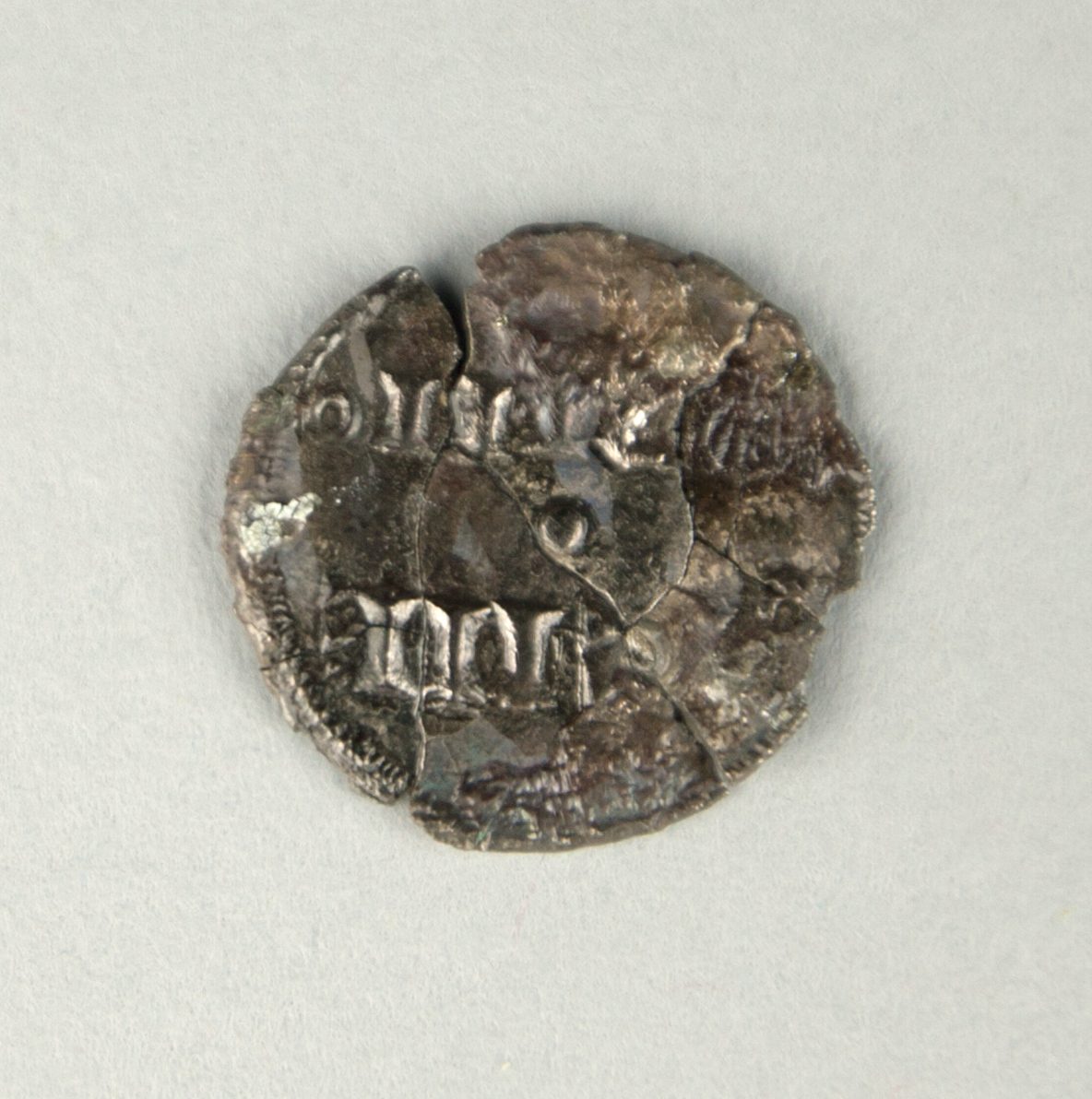
In the early 1980s volunteers excavating the Camp de Péran, a hillfort near Saint-Brieuc in Brittany whose walls had been burnt so hot the stone turned to glass, found a silver penny struck at Viking York in the name of St Peter. It helped date the fort's destruction.
In 1983 a team of volunteers from the Centre Archéologique de Péran, working under the direction of the archaeologist Jean-Pierre Nicolardot, began excavating the Camp de Péran at Plédran, near Saint-Brieuc on the north coast of Brittany. It is a roughly circular enclosure about 140 metres across on a hill above the bay of Yffiniac, and local people had long called it the "burnt stones". Within a year or two the dig produced a small silver coin, cracked into several pieces,.
Specialists from the Cabinet des Médailles in Paris identified it as a penny of Viking York. Around its cross runs EBORACE CI, for the city of York, and across the other side, in two lines, a garbled version of SCI PETRI MO, "the money of St Peter". In the early 10th century the Scandinavian rulers of York struck coins in the name of St Peter, the patron of York's minster, rather than in their own names. This one was struck between about 905 and 925. In 1989 the historian Neil Price described the find as, for the time being, unique.
Its importance lies in where it was found. The rampart of Péran had been destroyed by a fire so fierce that it fused the stones into glass, a process called vitrification. The burnt layers held Viking-age weapons and gear, including a sword still in its scabbard, a stirrup, a shield boss and a cauldron. Radiocarbon dates, magnetic dating of the burnt clay and the York penny together place the fire in the first half of the 10th century, when Vikings held parts of Brittany. The excavators suggested, cautiously, that the fort was a Viking stronghold destroyed during the Breton reconquest under Alain Barbetorte in the 930s, though the chronicle describing those campaigns is late and unreliable. The two main reports even disagree on exactly where in the site the coin lay.
The coin was restored at the national archaeology museum at Saint-Germain-en-Laye and is now in the Musée d'art et d'histoire in Saint-Brieuc. Part of the fort's rampart has been reconstructed and the site can be visited.
Written for Global Finds from J.-P. Nicolardot and P. Guigon in the Revue archéologique de l'Ouest (1991), J.-P. Nicolardot in Archéologie médiévale (1985) and N. S. Price, The Vikings in Brittany (1989). Photo: the Péran penny in the Musée d'art et d'histoire de Saint-Brieuc, Dominique Morin, Wikimedia Commons, CC BY-SA 4.0.
Source: Nicolardot and Guigon, Revue archéologique de l'Ouest (1991)