The Batavia: a Dutch flagship wrecked off Western Australia, a massacre, and a stone gateway on the seabed
Famous find Wrecked on 4 June 1629 · Found in 1963 See it on the timeline →
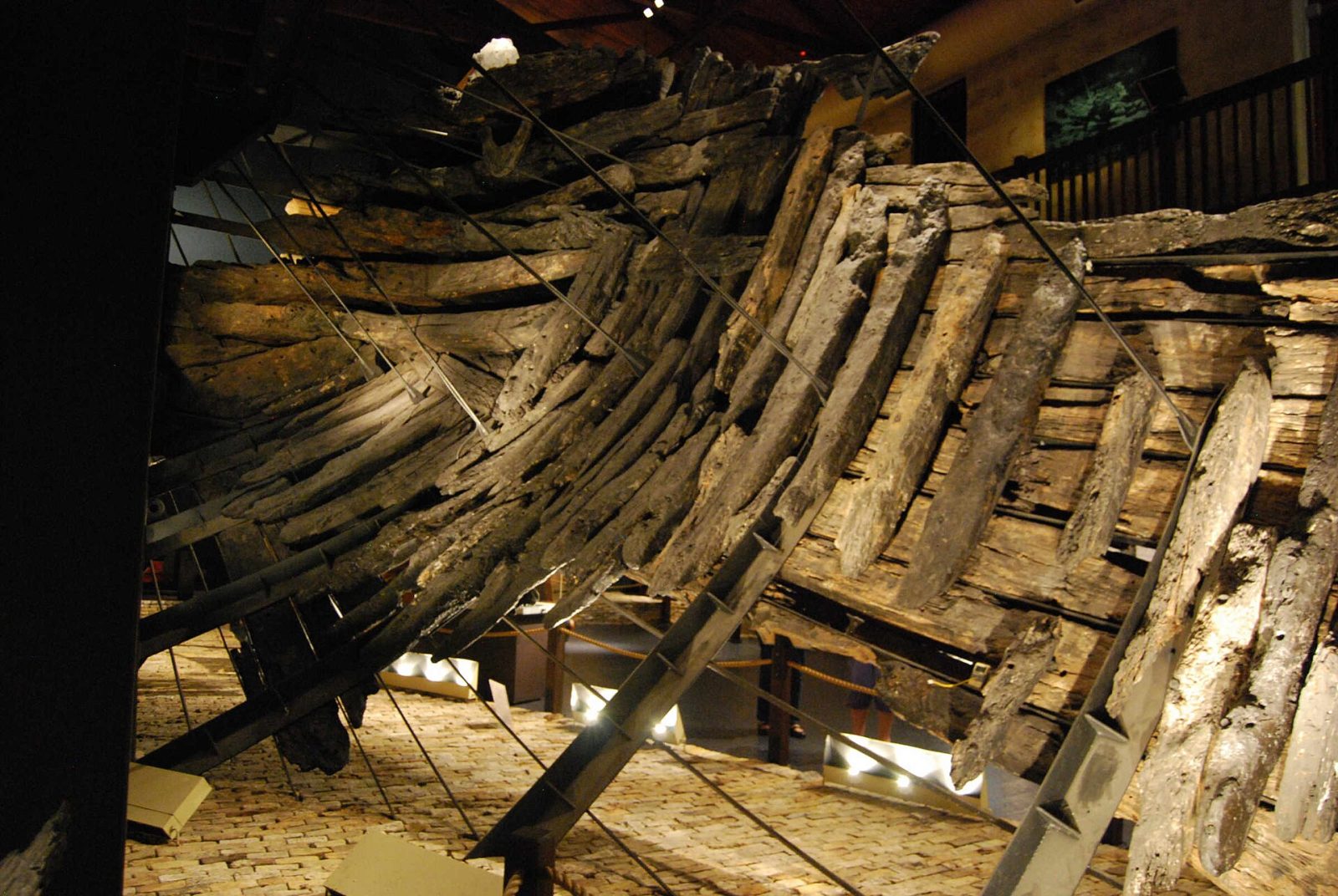
In June 1629 the Dutch East India Company ship Batavia struck a reef in the Houtman Abrolhos islands off Western Australia, and mutineers murdered more than 100 survivors. Found in 1963, the wreck has given up its hull, cannon, coins and a prefabricated stone gateway.
Before dawn on 4 June 1629, the Dutch East India Company ship Batavia, on her maiden voyage to the East Indies, struck Morning Reef in the Wallabi Group of the Houtman Abrolhos islands, off the coast of Western Australia. Her commander, Francisco Pelsaert, left most of the survivors on low, waterless islands and sailed an open boat to the Dutch base at Batavia, now Jakarta, arriving on 7 July before returning in the yacht Sardam.
While he was away, the under-merchant Jeronimus Cornelisz led a group of mutineers who murdered more than 100 men, women and children. When Pelsaert returned, Cornelisz and several others had their hands cut off and were hanged. Two mutineers, Wouter Loos and Jan Pelgrom, were put ashore on the mainland near the Murchison River and never heard of again.
The wreck was rediscovered in 1963. The historian Henrietta Drake-Brockman's research in the 1950s had pointed to the Wallabi Group, and a crayfisherman, Dave Johnson, told the diver Max Cramer that he had seen an anchor and cannons on the reef. With Hugh Edwards and others they found the site and raised cannon, coins and two astrolabes. In the early 1970s the Western Australian Museum, under Jeremy Green, excavated the wreck, raising the surviving stern of the hull and 137 sandstone blocks weighing more than 37 tonnes. They were a prefabricated stone gateway for the castle at Batavia, numbered by the masons so that it could be put together on arrival. In all the museum holds more than 35,000 objects from the wreck, the first and largest collection from a Dutch East India Company ship ever excavated.
The reconstructed stern timbers, a 28-pounder cannon cast in 1616 and a replica of the gateway are displayed at the WA Shipwrecks Museum in Fremantle, and the original gateway at the Museum of Geraldton. In 2023 four coins taken illegally from the wreck in the early 1990s came to light in Queensland and were returned to the museum.
Written for Global Finds from the Western Australian Museum and PS News (2023). Photo: the surviving stern timbers of the Batavia in the WA Shipwrecks Museum, Fremantle, Guy de la Bedoyere, Wikimedia Commons, CC BY-SA 4.0.
Approximate location-28.49, 113.79View on map
Source: Western Australian Museum