The Glauberg Prince: a Celtic warrior carved in stone, found after a retired teacher asked a pilot to fly over a hill
Famous find Made about 450 to 400 BC · Found in 1996 See it on the timeline →
In 1988 Werner Erk, a retired teacher from Glauburg in Hesse, asked the pilot of a sightseeing flight to pass over the Glauberg and photographed marks in the crops. Excavations found an unrobbed princely grave of about 400 BC and, in 1996, a life-size sandstone statue of the man buried in it.
In the summer of 1988, Werner Erk, a retired vocational-school teacher and local historian from Glauburg in the Wetterau, north-east of Frankfurt, was on a sightseeing flight when he asked the pilot to pass over the Glauberg, a hill long known for its Iron Age hillfort. Below the hill he photographed a semicircle and lines showing in the crops, and sent the pictures to the Hessian monuments office. Some accounts date the flight to 1987.
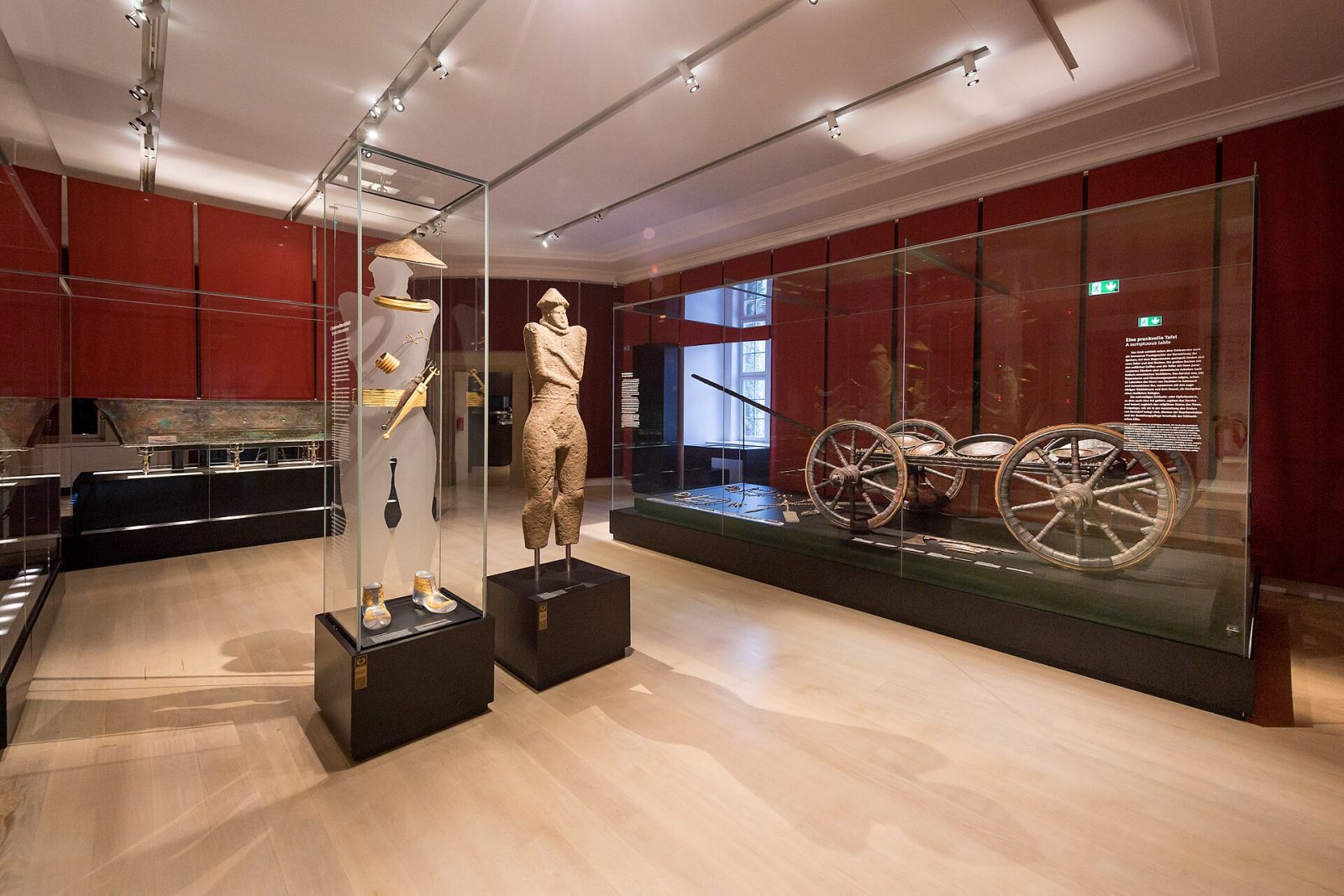
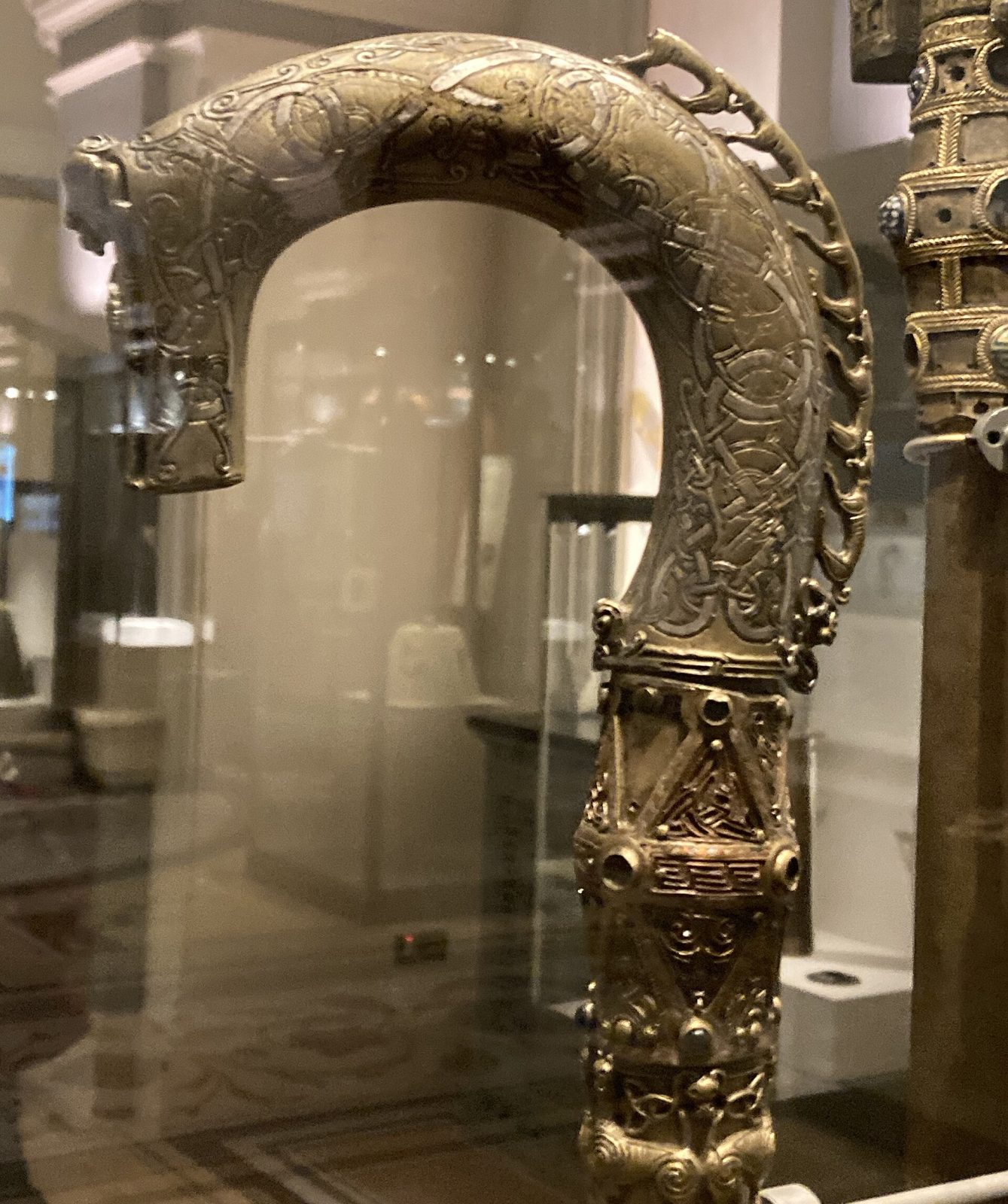
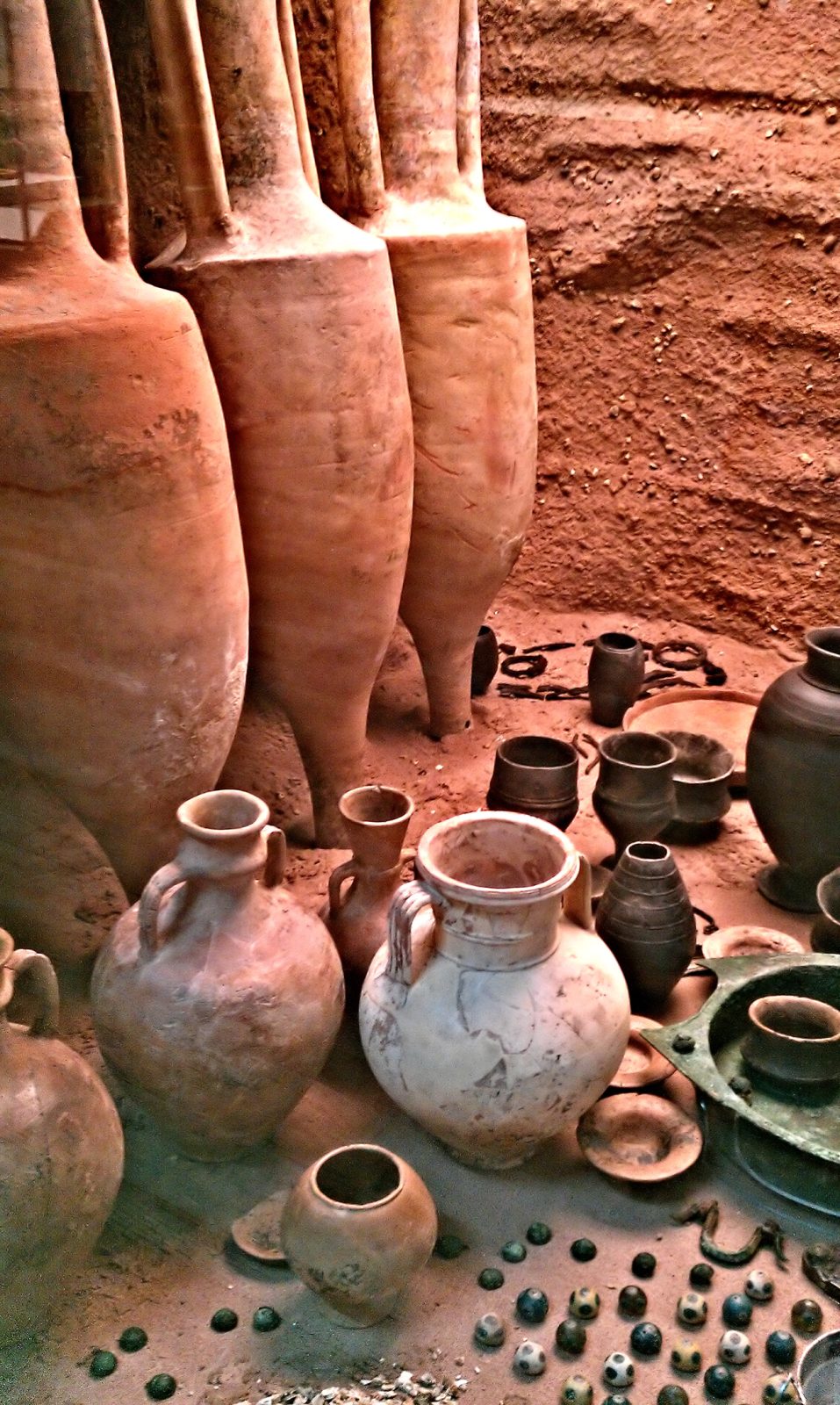
The marks were the ditch around a burial mound, about 70 metres across, with a processional way 350 metres long leading to it. Excavations led by the state archaeologist Fritz-Rudolf Herrmann began in 1994, and that autumn the team found the chieftain's grave at the heart of the mound, unrobbed. The man had been buried around 400 BC with a gold neck ring, gold brooches, one set with 109 coral beads, a gold bracelet and rings, a sword and shield, spears and a bronze flagon with a cast figure on its handle. A second grave, a cremation, held another sword and a spouted bronze jug.
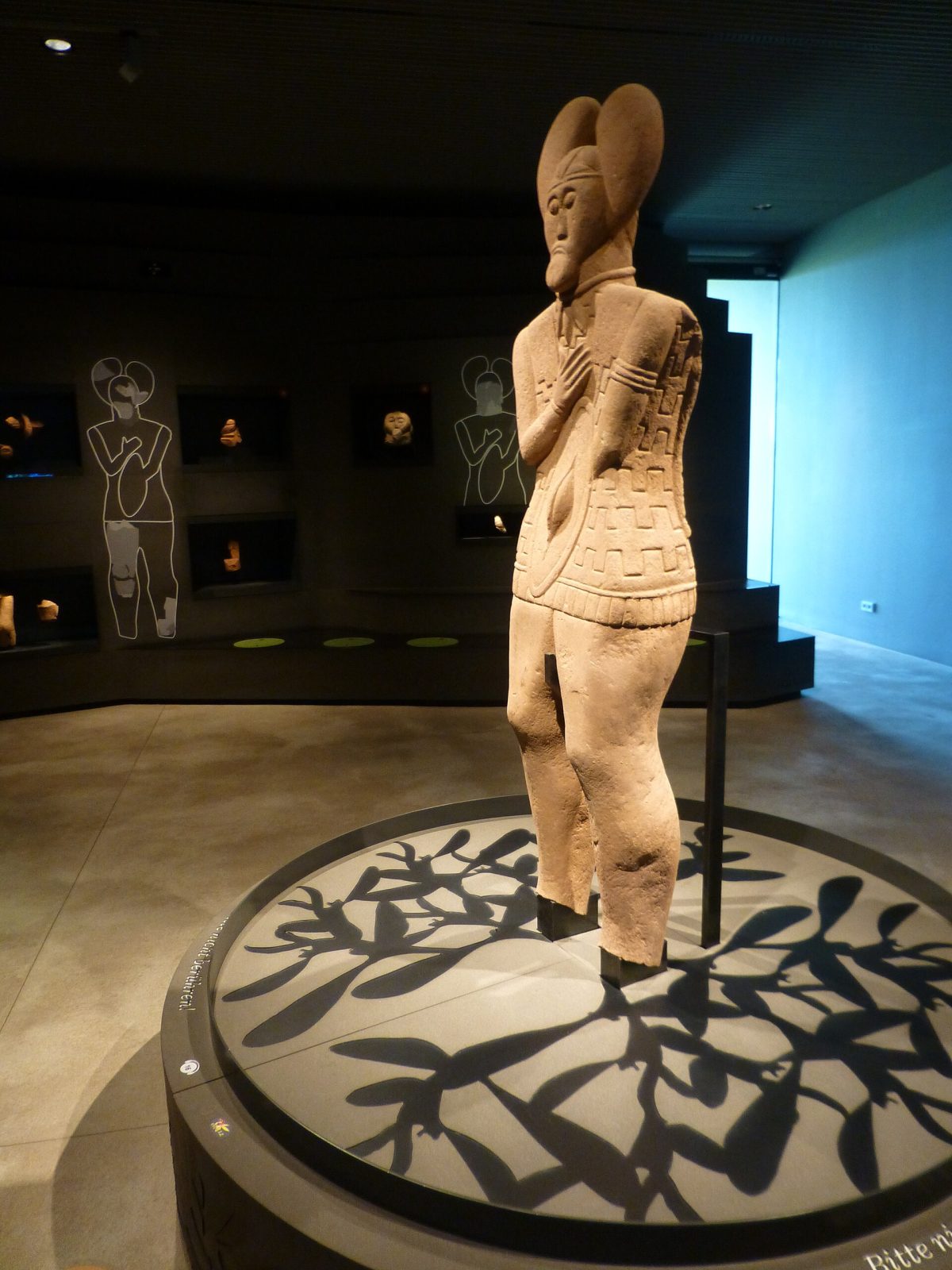
Then, on 24 June 1996, in a side chamber of the ditch, the excavators uncovered a statue. Carved in sandstone, 1.86 metres tall and weighing about 230 kilograms, it shows a warrior with a sword, shield and layered armour, wearing the same neck ring, bracelet and rings as the man in the grave, and on his head a cap with two huge leaf-shaped lobes, the leaf crown that has made him famous. Only his feet are missing. Around him lay some 130 fragments of at least three more statues. It is the finest Celtic stone figure ever found, a portrait of the dead prince standing guard over his own grave.
The statue was taken to Wiesbaden, but a local campaign brought it back, and since 2011 it has been the centrepiece of the Keltenwelt am Glauberg museum beside the rebuilt mound, where it is displayed with the gold from the grave. Werner Erk missed the moment of discovery; he was still at school until one o'clock, and first saw the prince lying on a mattress in a van.
Written for Global Finds from Keltenwelt am Glauberg, the Stuttgarter Zeitung and dpa (2026), hessenschau (2026) and M. Trefný and colleagues in PLOS One (2022). Photo: the Glauberg prince in the Keltenwelt am Glauberg, with fragments of other statues behind, Muck, Wikimedia Commons, CC BY-SA 4.0.
Approximate location50.31, 9.01View on map
Source: Keltenwelt am Glauberg