The Chancton Hoard: pennies of Edward the Confessor and King Harold, ploughed up from under a Sussex hedgerow root
Famous find Buried about 1066 · Found in 1866 See it on the timeline →
On 21 December 1866 a plough at Upper Chancton Farm in West Sussex smashed a crock of silver pennies hidden under a hedgerow root. About 1,720 were recovered, Edward the Confessor's and 58 of King Harold II's, buried in or just after 1066.
On 21 December 1866, on Upper Chancton Farm in the parish of Washington, below the South Downs in West Sussex, a large root was dug out of an old hedgerow so that the plough could pass. Two years earlier an old barn had been pulled down and the hedgerow trees felled. When the plough went through, it turned up an earthenware crock full of silver coins and broke it into fragments.
There was a scramble among the labourers, and many coins were carried off and sold at Shoreham, at Brighton and even in London, while some villagers hid theirs in the hope of a better price later. The vicar of Storrington, the Reverend James Beck, sent coins to the British Museum, and the bulk of the hoard reached the government, whose solicitor forwarded it to the museum. The Duke of Norfolk, who owned the land, waived any claim.
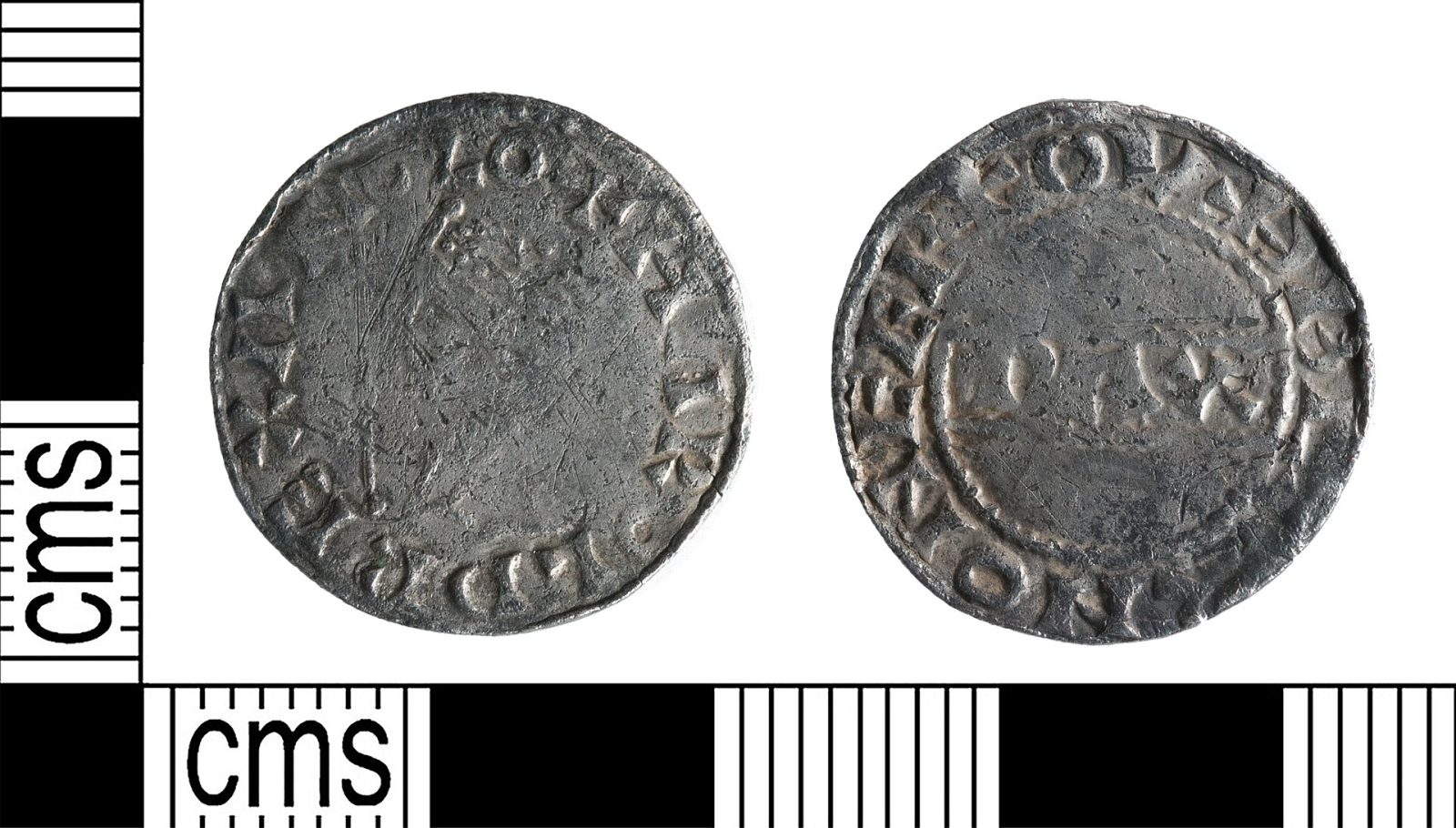
Barclay Head of the British Museum published the hoard in 1867. About 1,720 coins were recovered. All were silver pennies of Edward the Confessor except 58 of Harold II, all of his PAX type, and 35 of those 58 had been struck by a single moneyer, Oswold of Lewes. The coins came from 53 mints, twenty of them never before recorded for Edward's reign, among them Steyning, Chichester, Guildford, Romney, Sandwich and Southwark. Many were as fresh as if they had just left the mint; others were caked in thick green corrosion.
Harold reigned for only nine months in 1066 before he was killed at Hastings, less than sixty miles to the east, so the hoard was buried in that year or soon after. Who hid it, and why they never came back for it, is not recorded.
The British Museum took the coins it lacked, more than doubling its collection of Edward the Confessor's pennies, and the rest were dispersed; coins described as "ex Chancton" still appear at auction. A Steyning penny by the moneyer Deorman, once owned by the Reverend Beck, is now in the Fitzwilliam Museum in Cambridge.
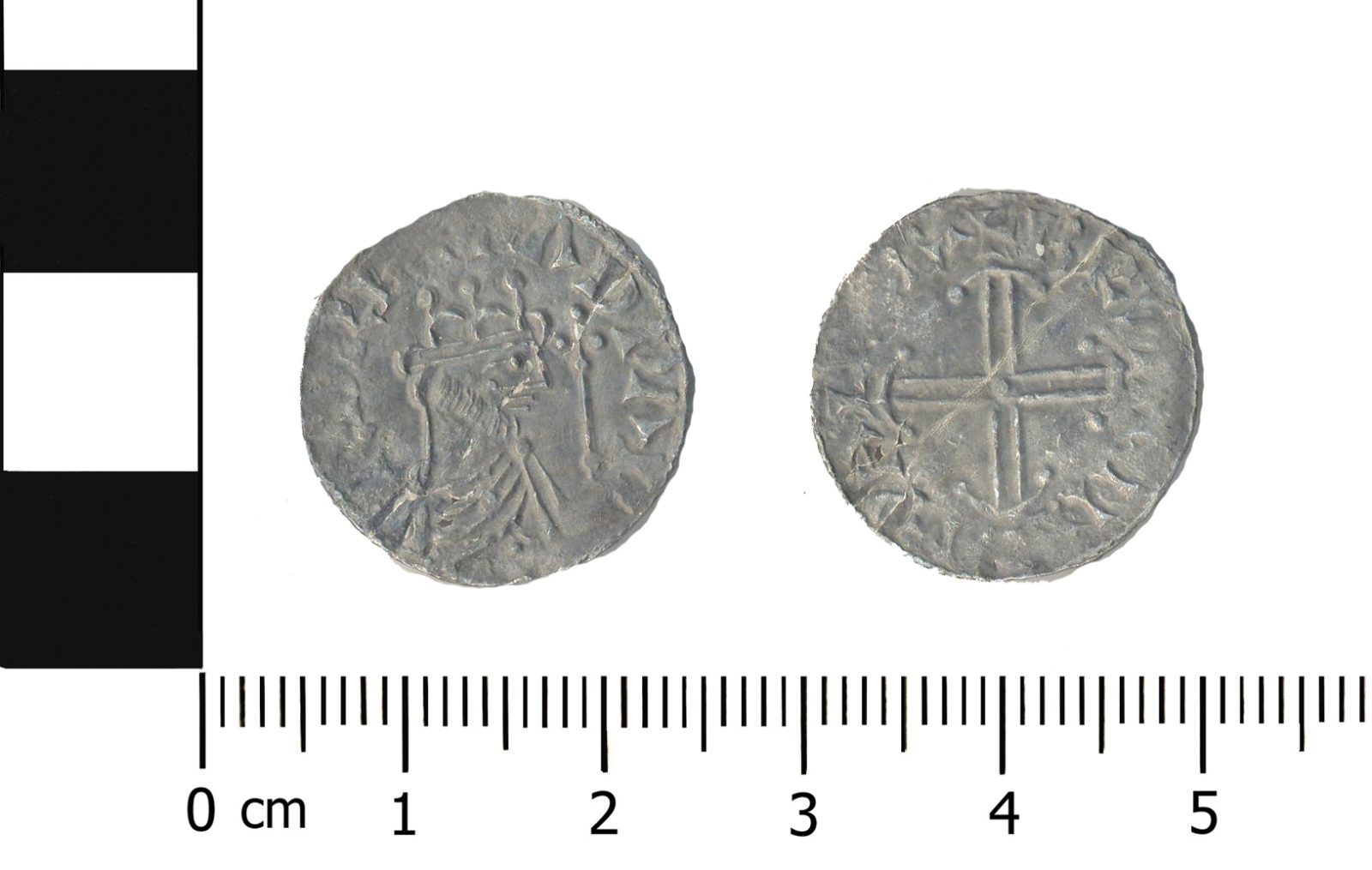
Written for Global Finds from B. V. Head in the Numismatic Chronicle (1867) and the Fitzwilliam Museum. Photo: a Hammer Cross penny of Edward the Confessor, the commonest type in the hoard (not from the hoard), Oxfordshire County Council, Anni Byard, Wikimedia Commons, CC BY 2.0.