The Sinan Shipwreck: a fisherman's net brought up the cargo of a ship sunk in 1323, with 28 tonnes of Chinese coins
Famous find Sank about 1323 · Found in 1975 See it on the timeline →
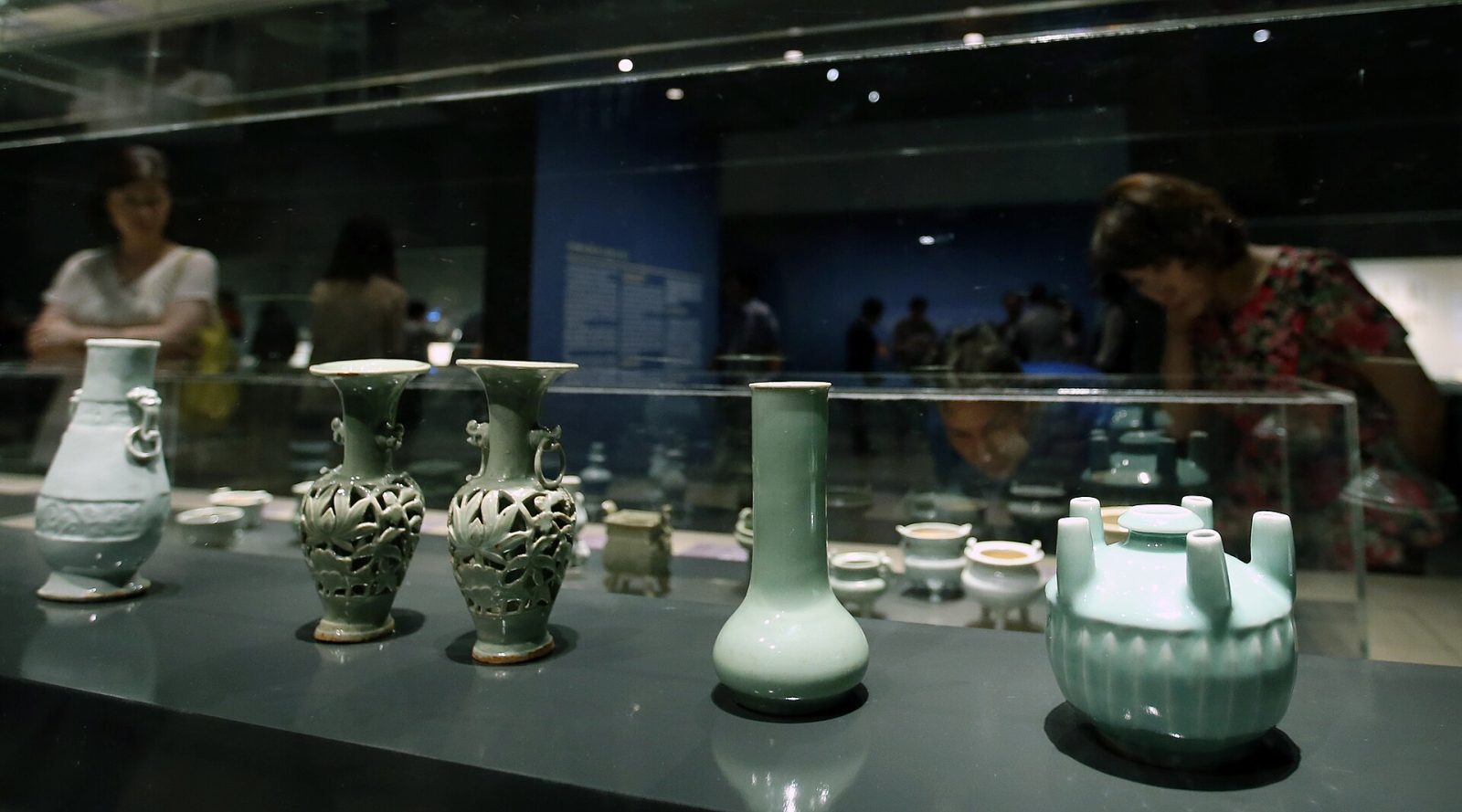
In 1975 a fisherman off Sinan in South Korea hauled up Chinese celadon in his net. Divers found a trading ship that sailed from China for Japan in 1323, carrying more than 20,000 ceramics, 28 tonnes of copper coins and wooden cargo labels naming a Kyoto temple.
In 1975, a fisherman working off Jeungdo island in Sinan County, at the south-western tip of Korea, pulled up pieces of Chinese celadon in his net and reported them to the district office. When the find became public the next year, looters went after the site, and the Korean government stepped in, with the navy guarding the wreck.
The official excavation began on 27 October 1976 and lasted until September 1984, eleven seasons in 20 to 25 metres of water with strong currents and almost no visibility. The divers found a Chinese trading ship, about 32 metres long and 11 metres wide, that had set out from Qingyuan, now Ningbo, for Hakata in Japan. Its timbers were raised in 1982 and 1983, and the hull has been rebuilt from nearly five hundred pieces.
The cargo was enormous. There were about 20,600 ceramics, most of them celadon and porcelain, along with more than 700 metal objects, a bronze weight inscribed with the name of its home port, and about 28 tonnes of Chinese copper coins. The coins span some 1,300 years, from AD 14 to about 1310, and many were still on their strings.
The ship can be dated almost to the month. Among 364 wooden cargo labels, eight carry a date in the summer of 1323, and 41 name Tofuku-ji, a Zen temple in Kyoto that had been damaged by fire in 1319; part of the cargo, it seems, was meant to raise money to rebuild it. The ship never arrived, though why it sank off Korea is not known.
The finds are divided between the National Museum of Korea in Seoul, which has a gallery for them, and the National Maritime Museum in Mokpo, where the rebuilt hull is displayed.
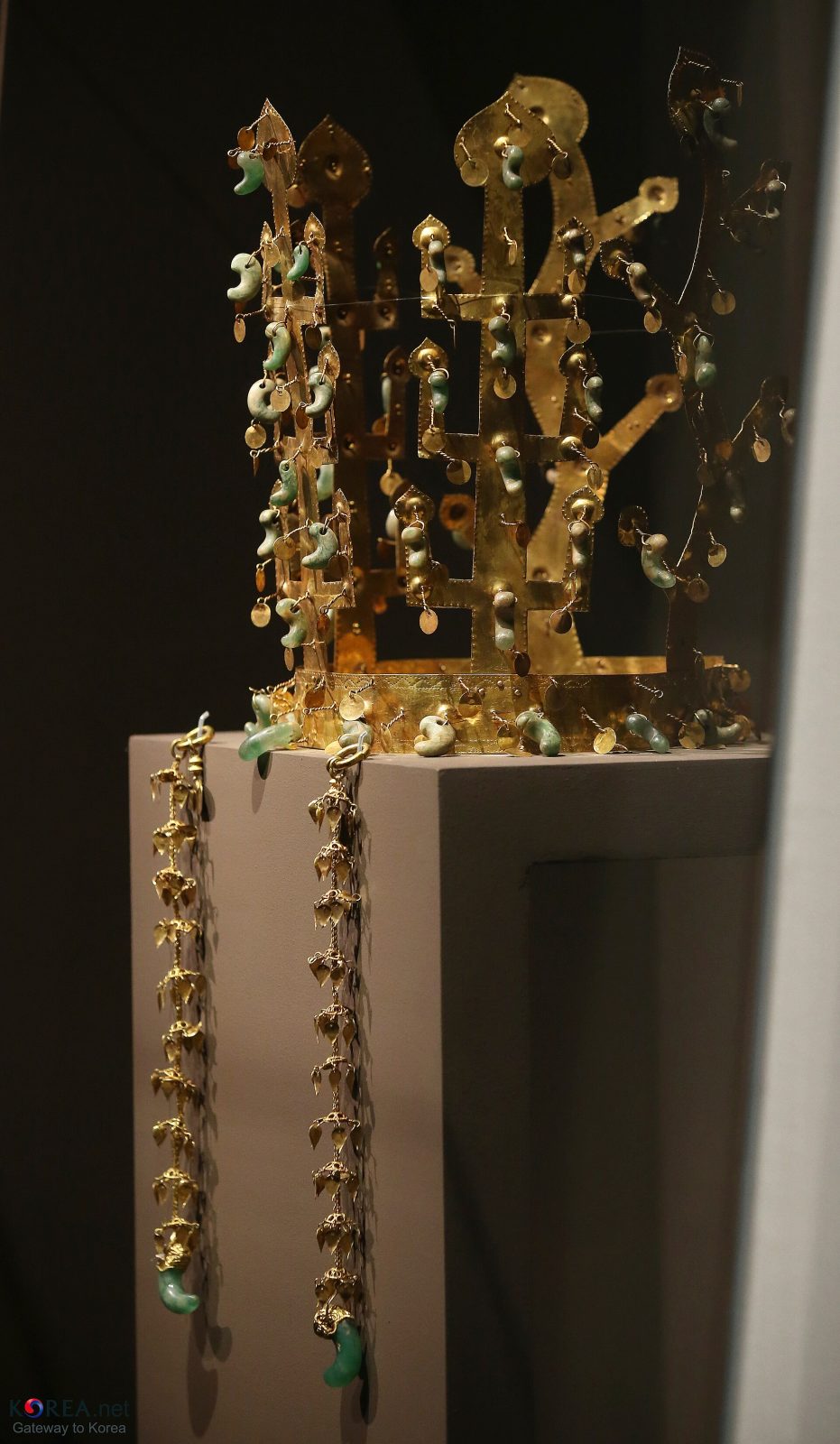
Written for Global Finds from Lee Taehee in the Journal of Korean Art and Archaeology (2011), the National Maritime Museum, Mokpo, and the Vasa Museum. Photo: celadon from the Sinan shipwreck in the National Museum of Korea, Korea.net / Korean Culture and Information Service (Jeon Han), Wikimedia Commons, CC BY-SA 2.0.
Source: Journal of Korean Art and Archaeology (Lee Taehee, 2011)