The Sodré Astrolabe: divers off Oman raised a plain bronze disc from Vasco da Gama's fleet, and lasers found its hidden scale
Famous find Made about 1496 to 1501, lost in May 1503 · Found in 2014 See it on the timeline →
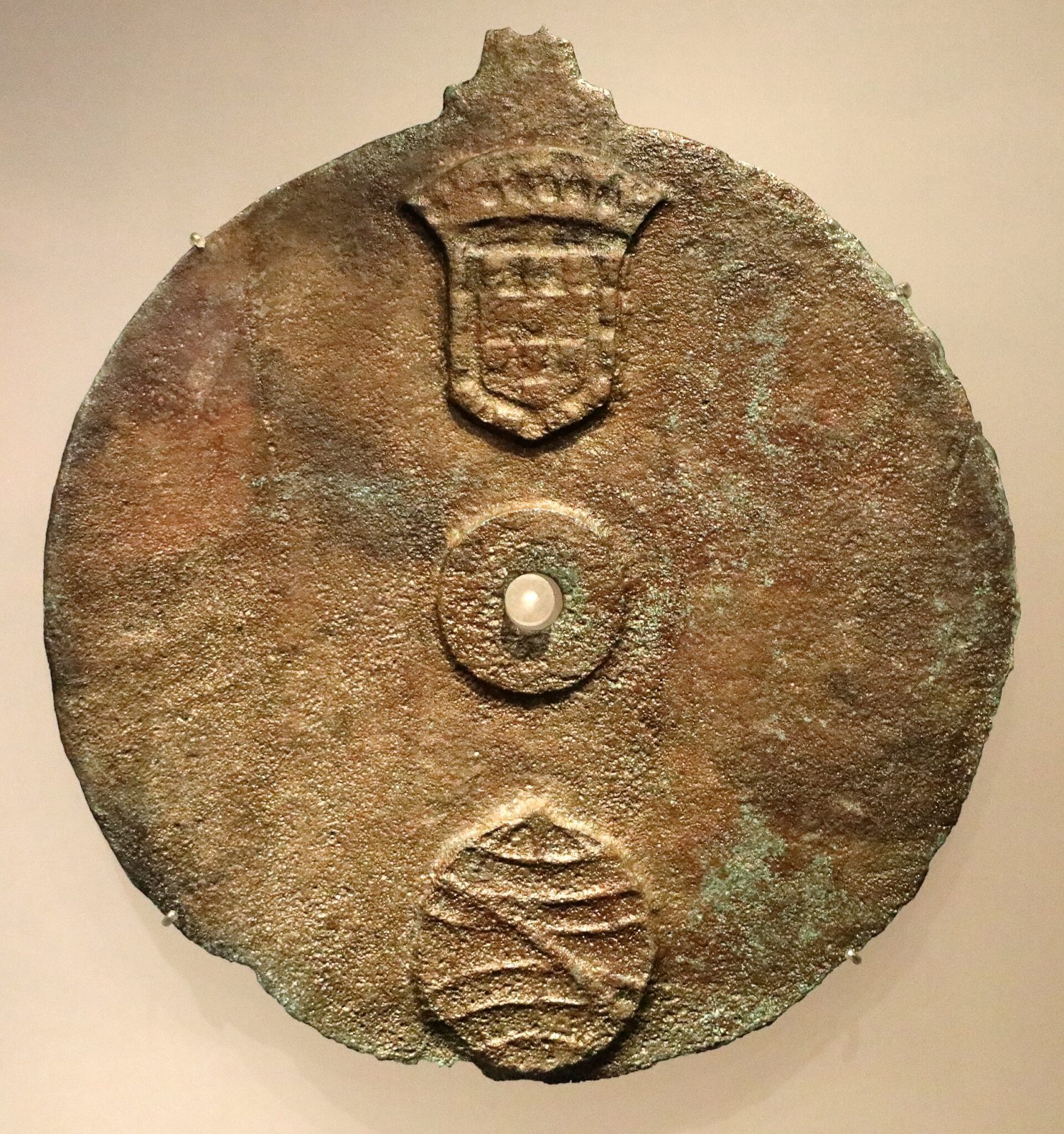
On 8 May 2014 divers excavating a Portuguese wreck off Al Hallaniyah island, Oman, raised a bronze disc bearing the arms of Portugal. Laser scans later revealed the scale of a mariner's astrolabe, made around 1496 to 1501: the earliest verified example in the world.
On 8 May 2014, divers working on a shipwreck off the north-east coast of Al Hallaniyah, an island in the Kuria Muria group off southern Oman, lifted a flat bronze disc from the seabed. The excavation, run by David Mearns of Blue Water Recoveries with Oman's heritage ministry, had begun in 2013. The divers suspected the disc might be an astrolabe, but they could see no scale on it, and without one it could not be proved.
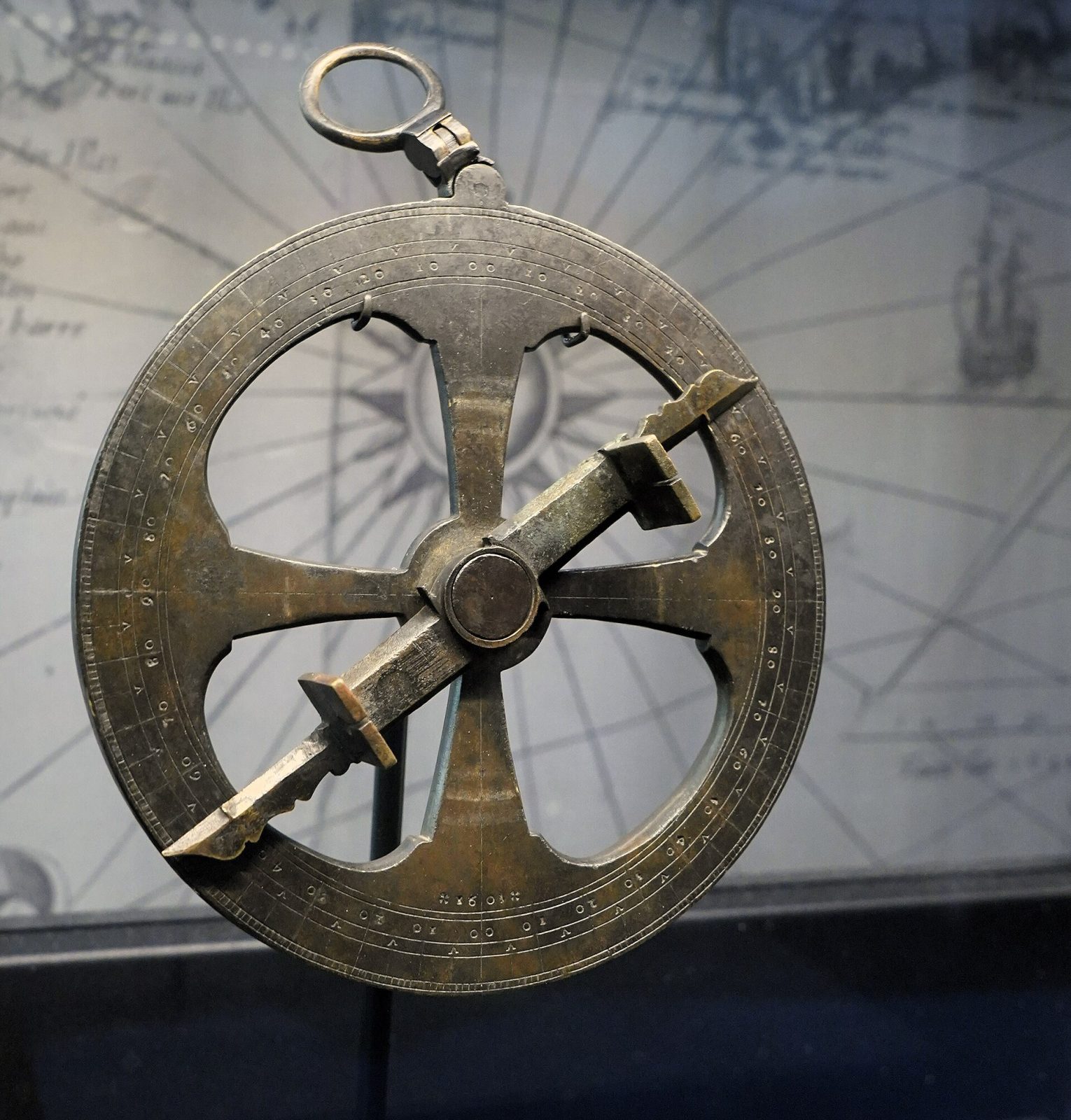
The disc is 175 millimetres across and weighs 344 grams, made of leaded bronze. It is engraved with the royal arms of Portugal and the armillary sphere, the personal emblem of King Manuel I. In November 2016 engineers from WMG at the University of Warwick took a portable laser scanner to Muscat and built a 3D model of it. The model revealed 18 marks around the edge, invisible to the naked eye, spaced at five-degree intervals. That was the proof: this was a mariner's astrolabe, hung from its top bracket to measure the sun's height and so find a ship's latitude. Made between about 1496 and 1501, it is the earliest verified example known, and the only one decorated with a national coat of arms.
The ship is thought to be the Esmeralda, part of Vasco da Gama's second voyage to India in 1502, commanded by his uncle Vicente Sodré. Left behind to guard Portuguese interests off India, Vicente and his brother Brás instead went raiding Arab shipping off the coast of Arabia. In May 1503, while their ships lay off Al Hallaniyah, a storm wrecked them, and both brothers died. Among about 2,800 objects raised were a bronze bell marked with what is read as 1498, stone cannonballs carved with initials, and a rare silver índio coin of Manuel I, struck for the India trade and only the second known.
Guinness World Records certified the astrolabe and the bell as the oldest of their kind, though some historians prefer to call the astrolabe "one of the earliest". Both are in the National Museum of Oman in Muscat, where they were on display in 2023.
Written for Global Finds from the University of Warwick (2019), Mearns, Parham and Frohlich in the International Journal of Nautical Archaeology (2016), Archaeology magazine (2016) and the National Museum of Oman. Photo: the Sodré astrolabe in the National Museum of Oman, Francesco Bini, Wikimedia Commons, CC BY-SA 4.0.
Linked finds
Source: University of Warwick (2019)