King Muryeong's Gold Earrings: a drainage worker's spade hit an unknown royal tomb, emptied in a single night
Famous find Made in the early 6th century AD, buried in 525 · Found in 1971 See it on the timeline →
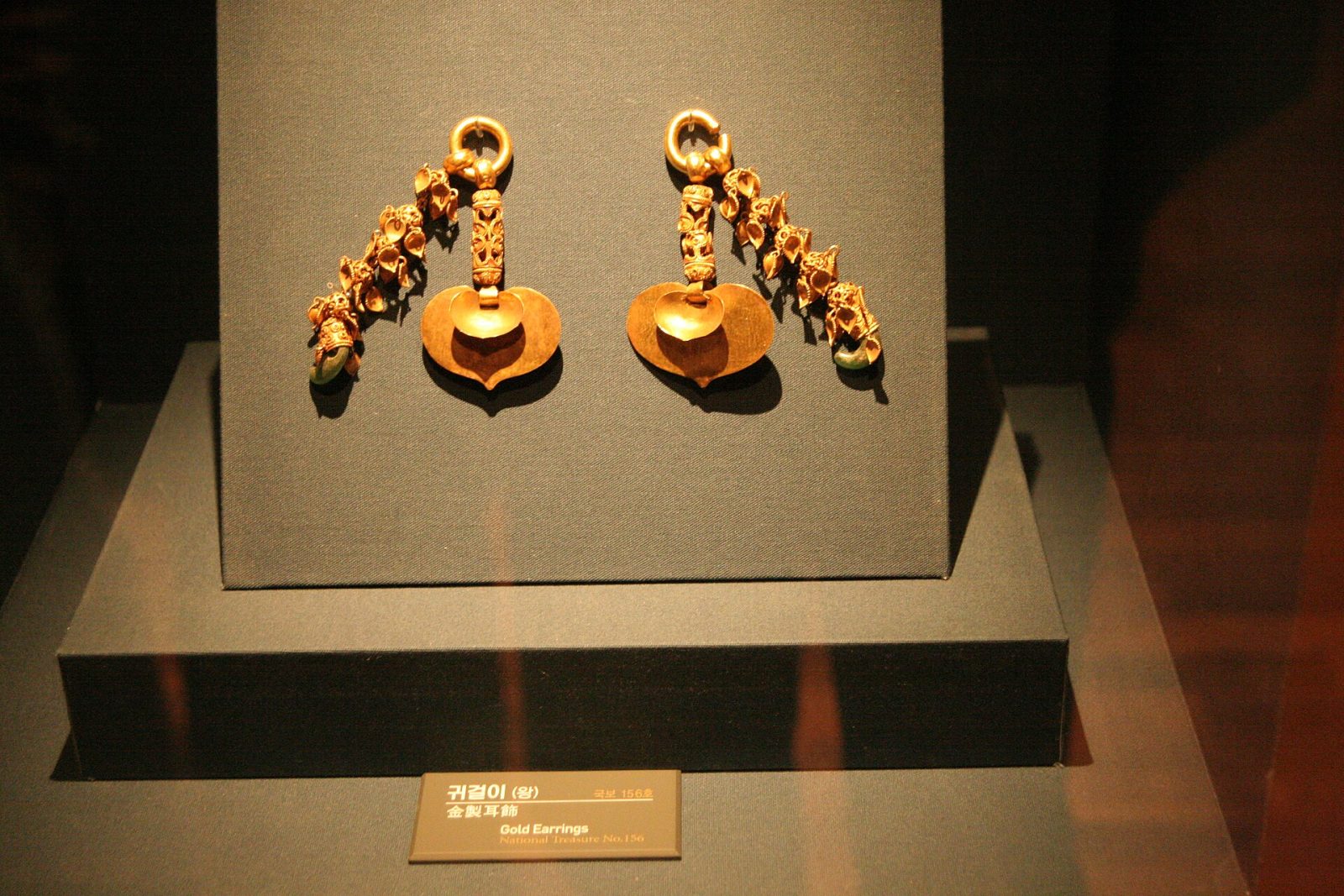
On 5 July 1971 workers digging a drain at the Songsan-ri royal tombs in Gongju, South Korea, struck the brick arch of an unknown, unlooted tomb. It was King Muryeong's, buried in 525. Among some 4,600 objects were his near-pure gold earrings.
On 5 July 1971, workers at the Songsan-ri royal tombs in Gongju, South Korea, were digging a drainage channel into the hillside behind Tomb 6, a tomb looted long before, to stop rainwater damaging its wall paintings. A spade struck something hard. Digging further, they uncovered a brick arch: the entrance to a tomb nobody knew was there. The work was stopped and the National Museum of Korea sent a team, led by its director, Kim Won-yong.
Heavy rain delayed the opening overnight. The next afternoon, after a small ritual offering of rice wine, watermelon and dried fish, the team removed the top bricks of the sealed entrance, and a cloud of white vapour poured out of the chamber. Inside was an intact royal burial of the Baekje kingdom, one of the three kingdoms of early Korea. Two inscribed stones named the occupant as King Sama, better known as King Muryeong, who died in 523 at the age of 62 and was buried in 525, and his queen, who was buried beside him in 529. It was the first Korean royal tomb ever identified for certain by its own inscription. Coins from the Liang dynasty of China lay on one of the stones, as payment to the spirits of the earth for the burial plot.
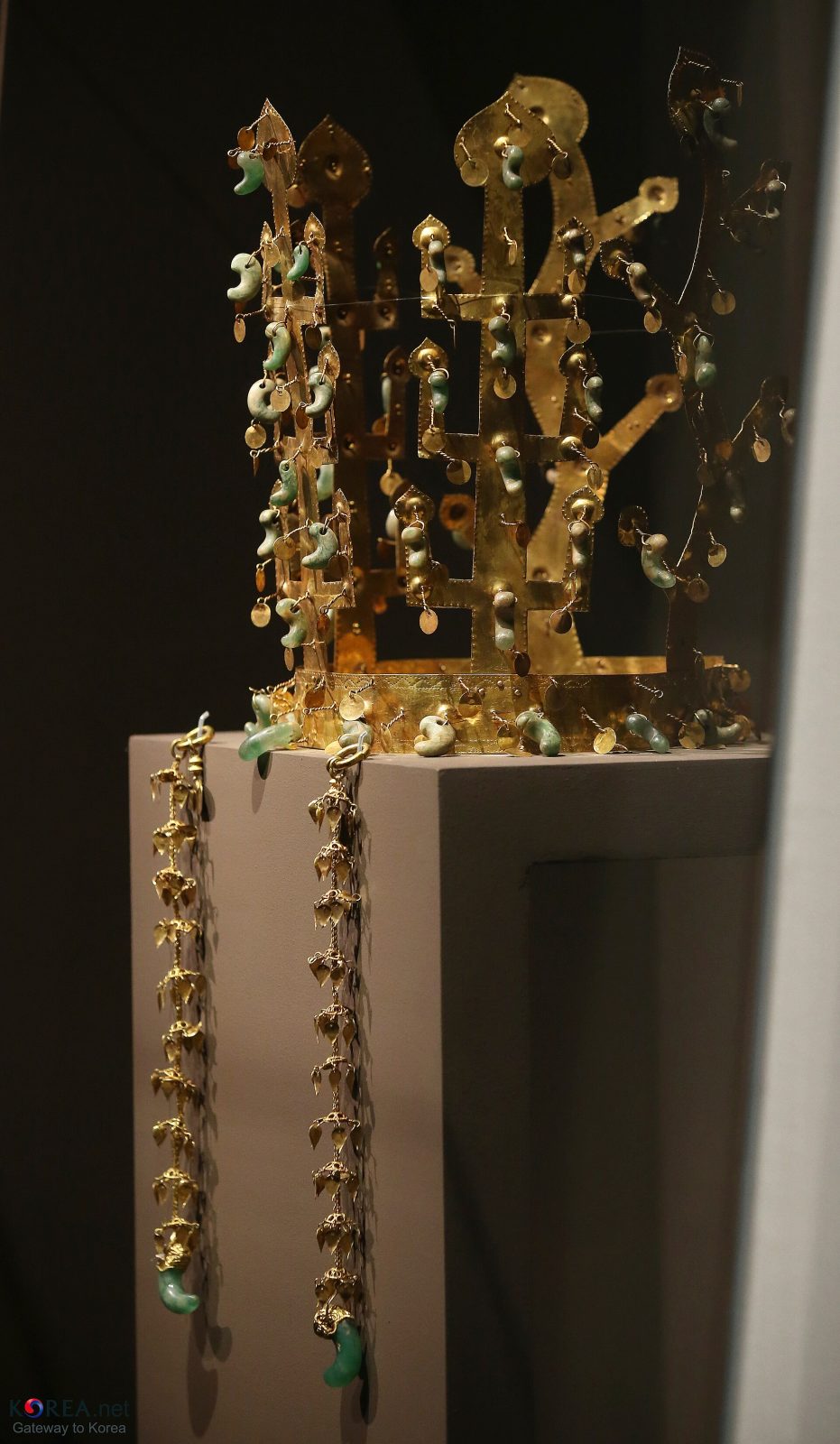
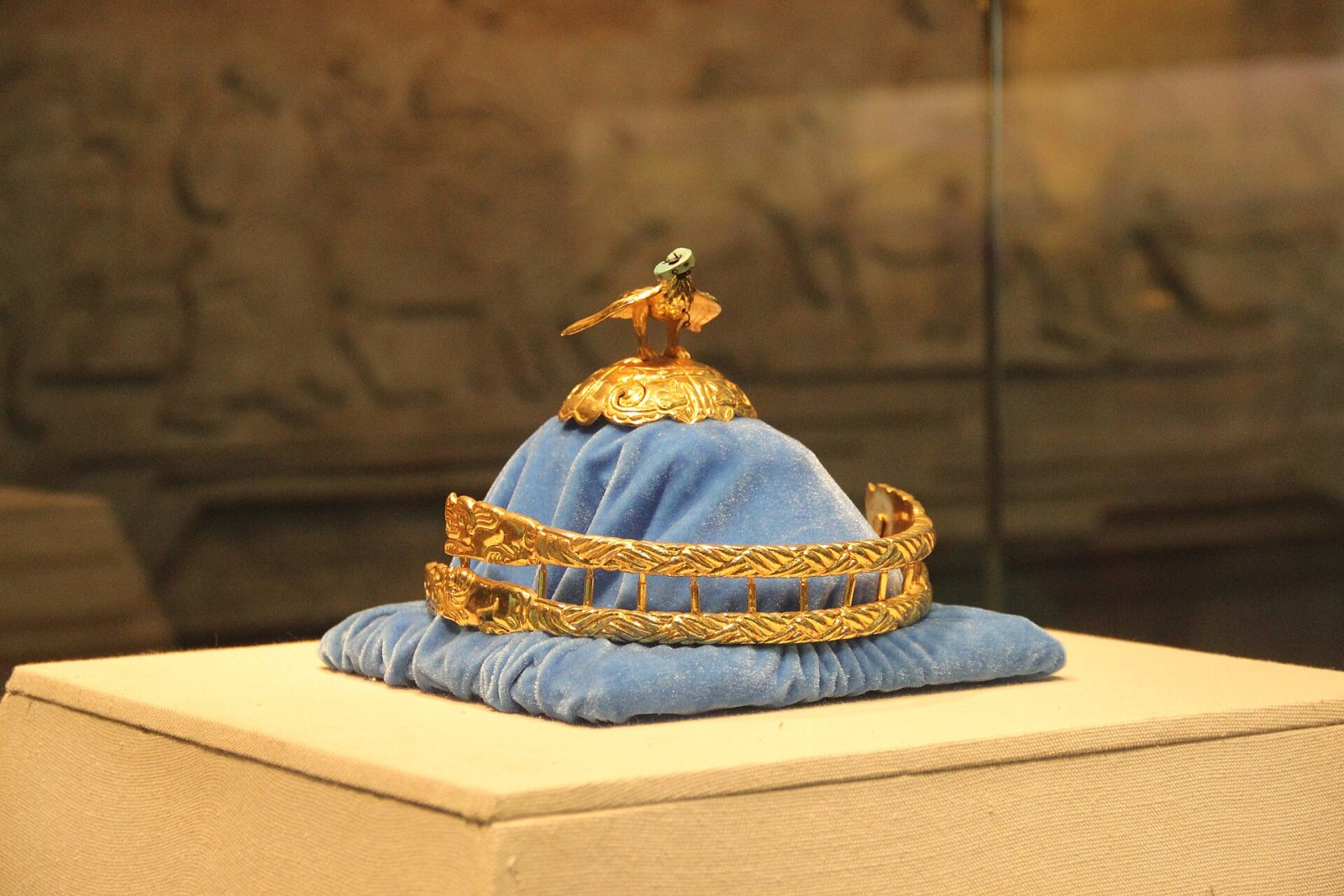
The tomb held about 4,600 objects, among them gold crown ornaments, gold and silver hairpins, bracelets, mirrors and pottery. The king's gold earrings are among the most admired. Each has a thick main hoop, a hollow middle section built from tiny gold panels joined together, and two pendants: a large heart-shaped gold leaf and a chain of small gold ornaments. Modern analysis showed the gold is almost pure, close to 24 carat.
There was a darker side. Under pressure from crowds and journalists, the tomb was emptied in about 17 hours, some objects reportedly scooped up into sacks. Kim Won-yong later admitted several times that the excavation had been badly done.
The earrings are designated a National Treasure of Korea and are displayed with the other finds from the tomb at the Gongju National Museum.
Written for Global Finds from the National Archives of Korea, the JoongAng Daily (2021), the Journal of Korean Art and Archaeology and Kyunghyang Weekly (2022). Photo: King Muryeong's gold earrings in the Gongju National Museum, mentaldesperado, Wikimedia Commons, CC BY-SA 2.0.
Source: JoongAng Daily (2021)