The Bidor Bodhisattva: tin miners in Malaysia dug up an eight-armed bronze figure weighing 63 kilograms
Famous find Made between the 7th and 12th centuries AD · Found in 1936 See it on the timeline →
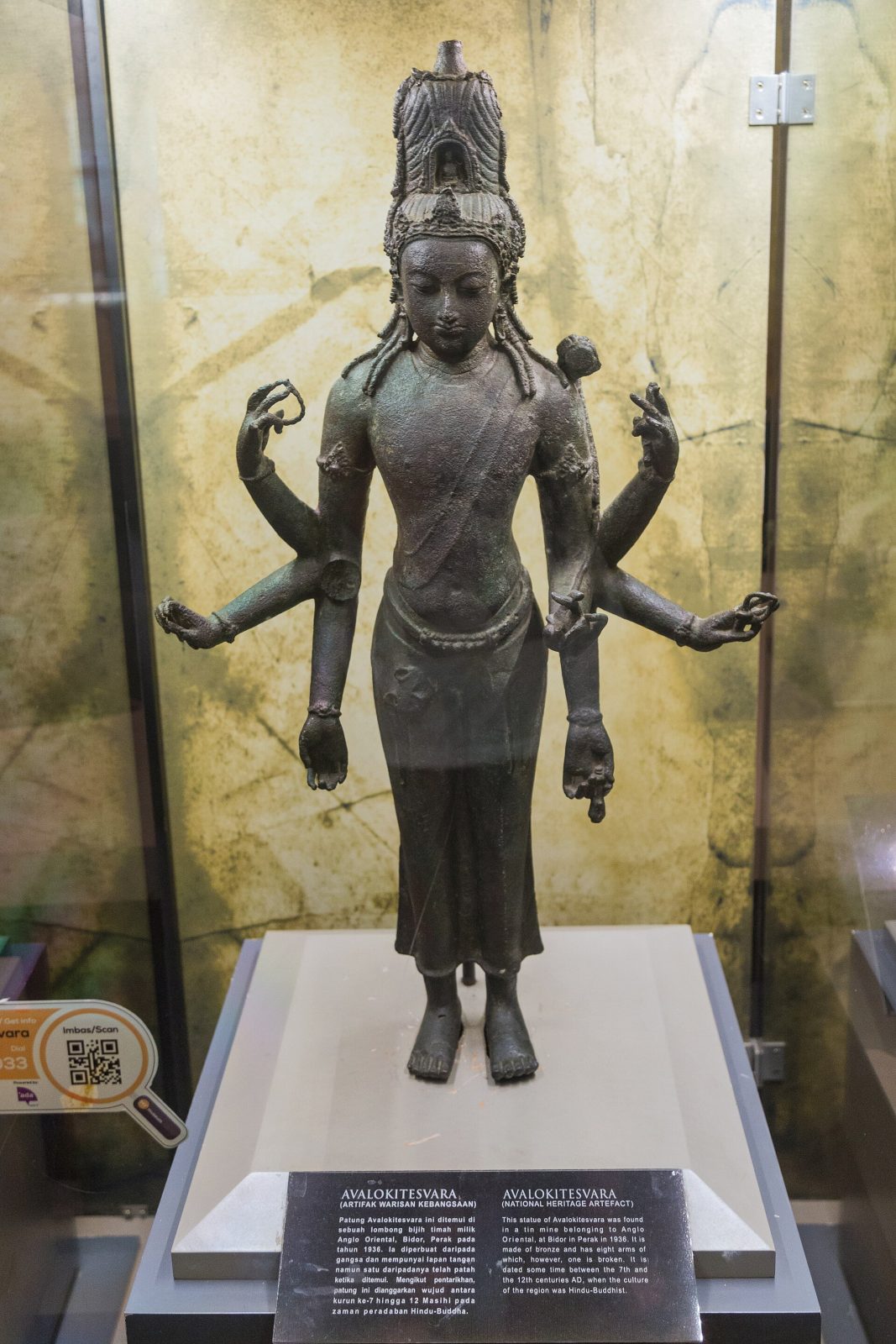
In 1936 miners working a tin mine at Bidor in Perak, Malaysia, uncovered a bronze statue of the Buddhist bodhisattva Avalokiteshvara with eight arms, 93 cm tall and weighing 63 kg. Made between the 7th and 12th centuries, it is now in the National Museum in Kuala Lumpur.
In 1936, miners working a tin mine owned by the company Anglo Oriental at Bidor, in the state of Perak on the Malay Peninsula, then under British rule, uncovered a large bronze figure in the ground. Tin mining in Perak meant stripping and washing away huge quantities of earth, and over the years the mines turned up many objects buried long before. Who exactly found the figure, and at what depth, was not recorded. Nor is it known how it came to be there. It may have been hidden for safety, or buried when the shrine it stood in fell into ruin, but there is no evidence either way.
It is a standing statue of Avalokiteshvara, the bodhisattva of compassion, one of the most important figures in Buddhism. It is 93 centimetres high and weighs 63 kilograms, cast in bronze with eight arms, one of which was already broken. Images of Avalokiteshvara with many arms show his power to reach out and help all beings. The National Museum of Malaysia dates it to between the 7th and the 12th centuries AD, when the culture of the region was Hindu-Buddhist.
In those centuries the Malay Peninsula lay on the sea routes between India and China, and its ports and river valleys were part of a world of trading kingdoms. The greatest was Srivijaya, centred on Sumatra, which was a major centre of Buddhist learning, and the Bujang Valley in Kedah has the ruins of temples from the same period. The Bidor statue is important evidence that Buddhism flourished in Perak long before the arrival of Islam. Some local historians have linked it to an early kingdom called Gangga Negara, others to Srivijaya, but no inscription tells us who made it or where it stood.
The statue is now one of the treasures of the National Museum of Malaysia in Kuala Lumpur, where it was photographed on display in 2008 and 2016.
Written for Global Finds from the National Museum of Malaysia. Photo: the Bidor Avalokiteshvara in the National Museum of Malaysia, Kuala Lumpur, Marcin Konsek, Wikimedia Commons, CC BY-SA 4.0.
Source: National Museum of Malaysia