A national treasure worth £1,054: the tiny Anglo-Saxon beast from a Norfolk field that the government won't let leave Britain
Made in the late 5th or early 6th century · Found in 2024 See it on the timeline →
A gilded Anglo-Saxon mount just 3.4 centimetres long, found by a metal detectorist at Holme Hale in Norfolk in 2024, has been barred from export as a national treasure. Its clear image of a four-legged beast is extremely rare, yet a museum needs only £1,054 to keep it.
A small Anglo-Saxon mount found by a metal detectorist at Holme Hale, a village near Swaffham in Norfolk, in 2024 has been temporarily barred from leaving the United Kingdom. The government's Arts Minister, Ruth Mackenzie, called it "undeniably a national treasure". The finder has not been named, and the find was recorded with the Portable Antiquities Scheme as NMS-15F391.
The mount is made of copper alloy and gilded, and it is tiny: 33.7 millimetres long, 15.1 millimetres wide and just 2.1 millimetres thick, weighing 5 grams. It was made in the late 5th or early 6th century, in the first generations of Anglo-Saxon settlement in East Anglia. Its face is decorated in the chip-carved style, cut with sharp facets to catch the light, and shows a thin-bodied, long-snouted beast standing on four legs. On the back are the pierced stubs of two lugs, which suggest it was fixed to another object, perhaps a box, a belt, a scabbard or a piece of horse harness. The tail and part of the baseline are broken, but most of the gilding survives.
What makes it special is the animal itself. Most early Anglo-Saxon animal art is so stylised that the creatures dissolve into interlace and pattern. This one is clear and recognisable. Animals like this are thought to have played an important part in religious and mythological beliefs, and Helen Jacobsen of the Reviewing Committee on the Export of Works of Art said the mount's unique form and very rare imagery make it significant for research into the early Anglo-Saxon kingdoms and into the links between East Anglia and southern Scandinavia.
The mount was sold at auction by Noonans, and an export licence was applied for. The Reviewing Committee found that it met all three of the Waverley criteria for a national treasure: closely connected with our history and national life, of outstanding aesthetic importance, and of outstanding significance for study. The decision on the licence is deferred until 3 November 2026, to give a UK museum the chance to buy it at the recommended price of £1,054, plus VAT of £40.80. If an offer is made, there is a second deferral of three months while the money is raised.
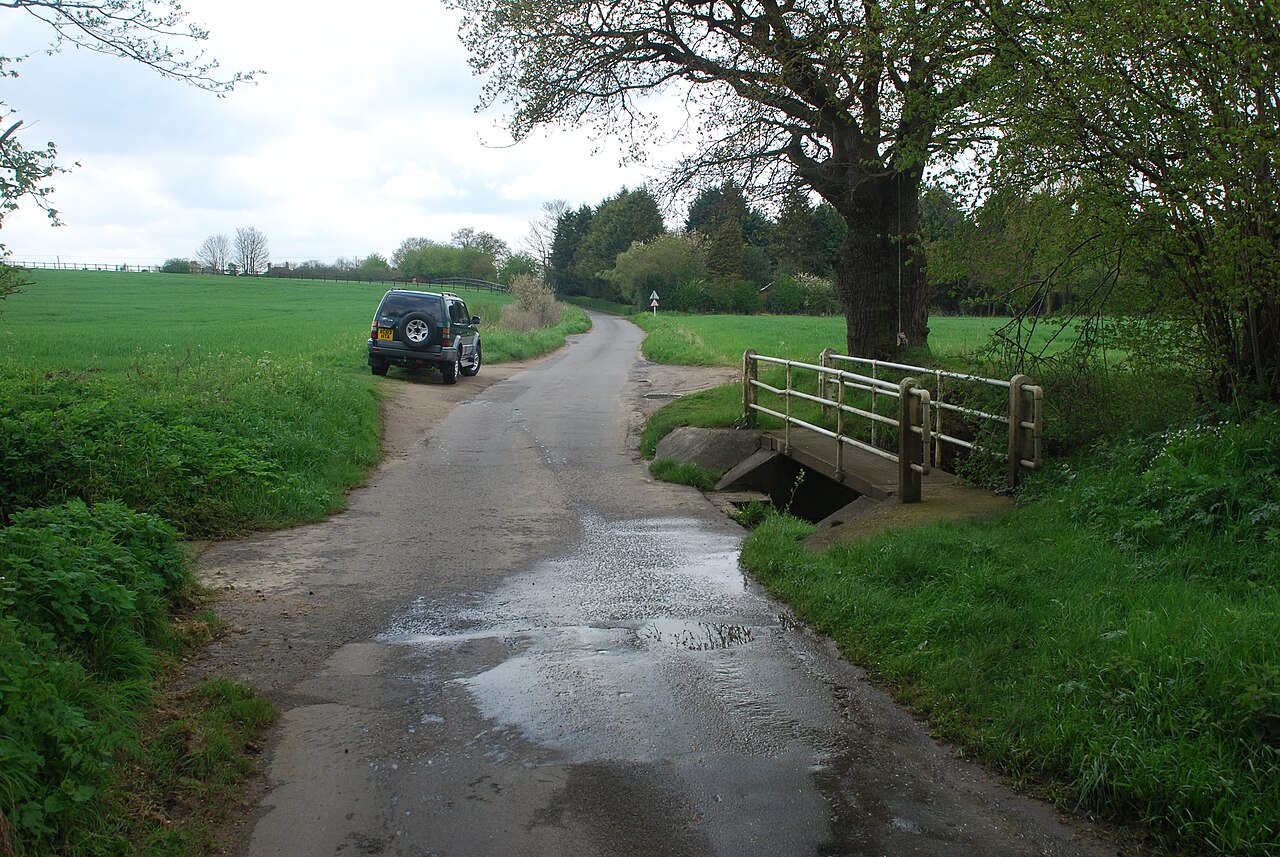
Reported by GOV.UK (Department for Culture, Media and Sport, 4 September 2026) and Lynn News (2026). Written for Global Finds from those reports. Photo: the village of Holme Hale, Norfolk, not the find itself, John Walton, Wikimedia Commons, CC BY-SA 2.0.
Source: GOV.UK (Department for Culture, Media and Sport)
Also reported by