The Double Leopard: a detectorist found one of only three of Edward III's failed gold coins, and it sold for £460,000
Famous find Struck between January and July 1344 · Found in 2006 See it on the timeline →
In February 2006 a metal detectorist in southern England found a gold double leopard of Edward III, a coin issued for barely six months in 1344. Only two others were known, found in the River Tyne in 1857. It sold for £460,000, a record for a British coin.
In February 2006, a metal detectorist searching land somewhere in southern England dug up a gold coin. The exact place has never been made public, to protect the site, and the finder's name has not been published either. The coin was a double leopard of Edward III, one of the rarest coins in English history.
England had had no gold coinage of its own for almost a century when, in December 1343, Edward III contracted two mint-masters from Florence, George Kirkyn and Lote Nicholyn, to make one. On 27 January 1344 three new gold coins were proclaimed: the double leopard, worth six shillings, the leopard and the half leopard. They were valued too highly for the gold they contained, merchants would not take them at face value, and production stopped in July. On 20 August 1344 they ceased to be legal tender, and most were melted down and replaced by a heavier coin, the noble.
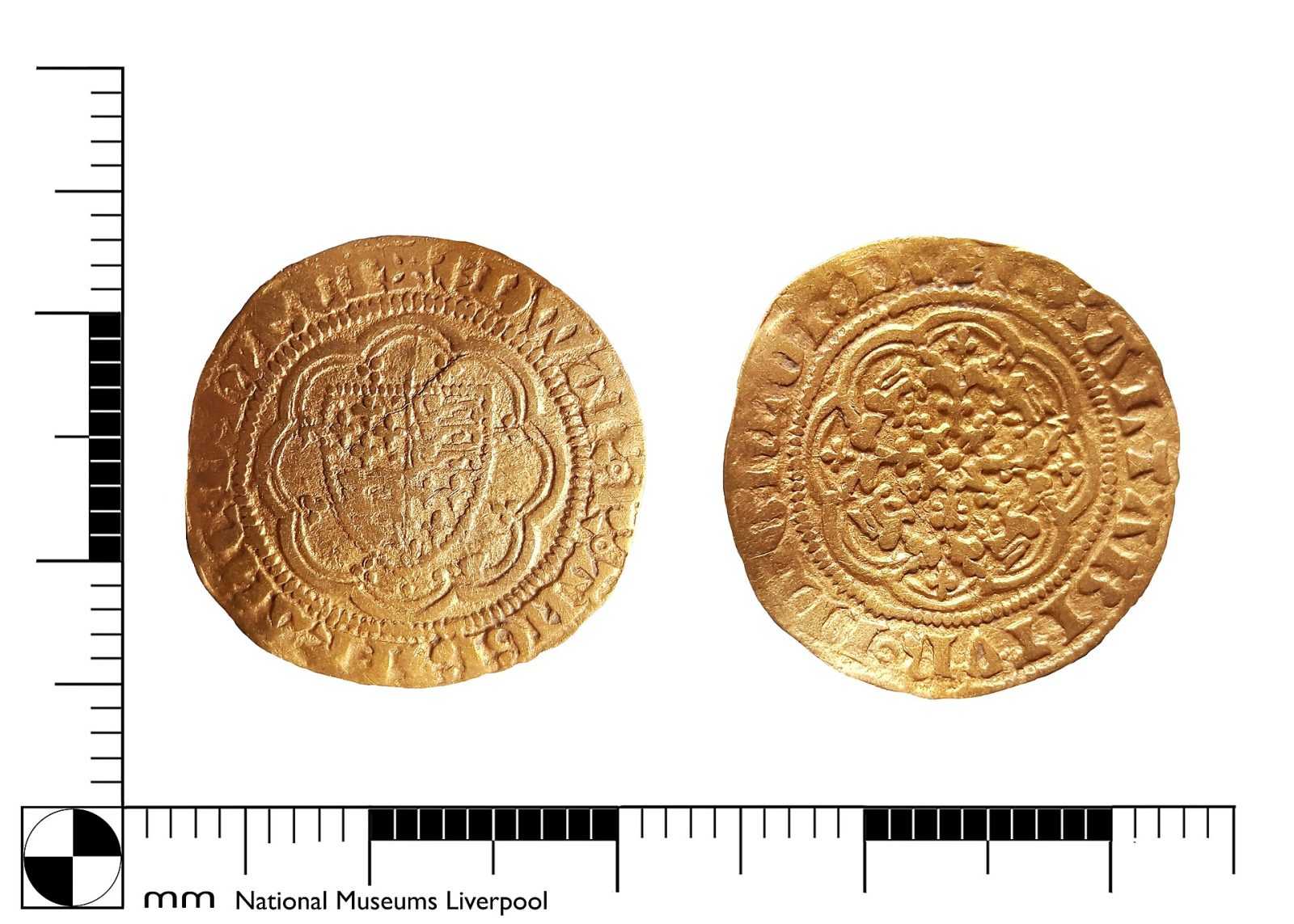
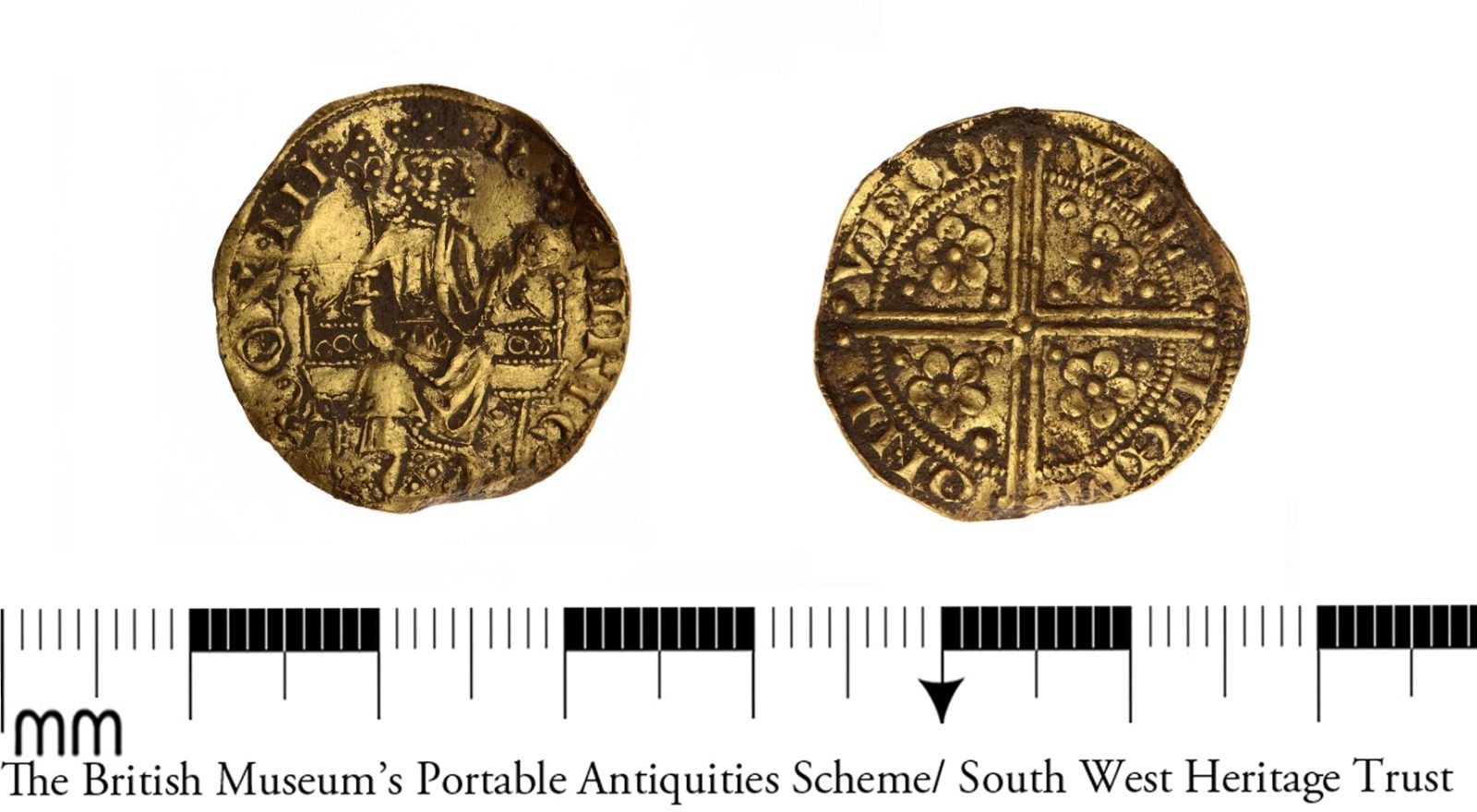
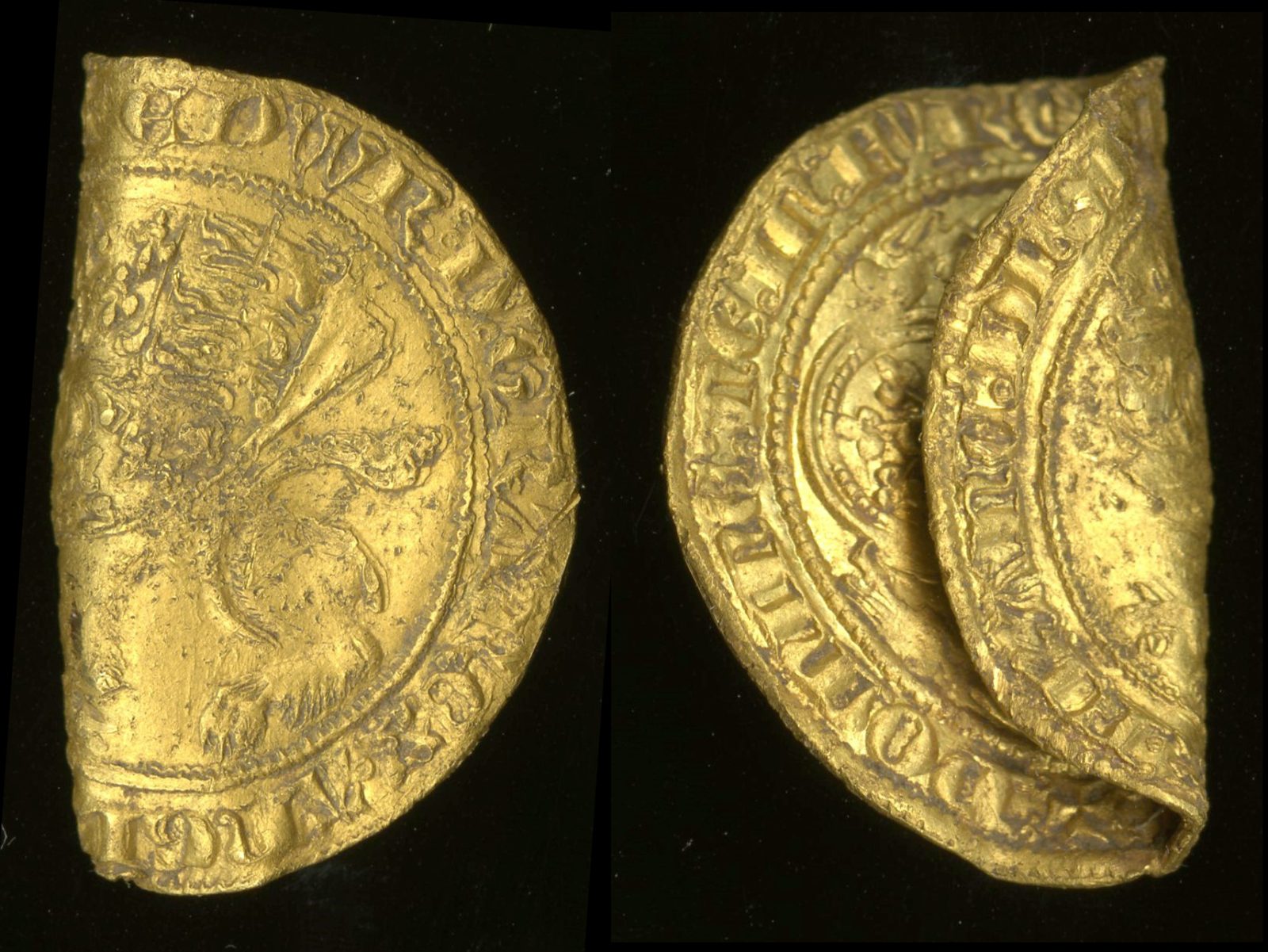
The double leopard shows the king enthroned under a Gothic canopy, flanked by two leopards, the heraldic lions of England, on a field scattered with the fleurs-de-lis of France, whose crown Edward claimed. The design echoes the throne of King Solomon, which the Bible describes with lions at its side. On the reverse, around an ornate cross, runs a verse from St Luke, "Jesus, passing through the midst of them, went his way", used in the Middle Ages as a charm against thieves on the road. The coin weighs just under 7 grams.
Only two others were known, found together in the River Tyne by schoolchildren in 1857 and now in the British Museum. Each of the three was struck from different dies.
On 29 June 2006 the coin was sold at Spink in London, by agreement with the landowner. Estimated at £100,000 to £150,000, it fetched £400,000, or £460,000 with the buyer's premium, then a record for a British coin. The buyer, a coin investment fund, lent it to the Fitzwilliam Museum in Cambridge, and in about 2016 it was sold privately to an American collection. It is not on public display.
Written for Global Finds from Spink (2006), the Fitzwilliam Museum and NGC (2016). Photo: a gold leopard of 1344 from the same short-lived issue, found folded in Norfolk and recorded with the Portable Antiquities Scheme (not the double leopard), The British Museum, Helen Geake, Wikimedia Commons, CC BY 2.0.