The Pereshchepina Treasure: children found 25 kilograms of gold, perhaps the grave goods of a founder of Bulgaria
Famous find Buried after AD 646 · Found in 1912 See it on the timeline →
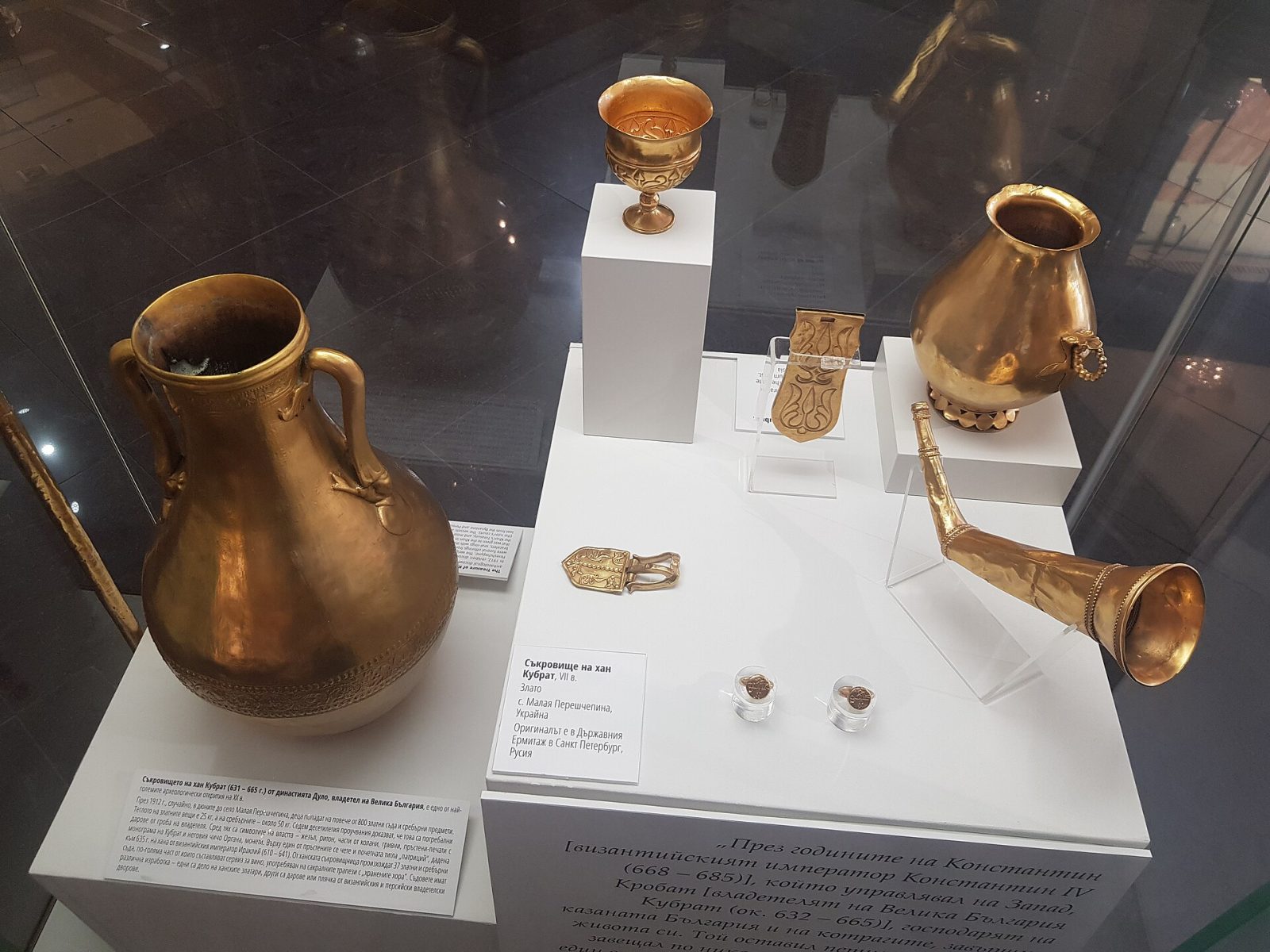
In June 1912 shepherd children on the bank of the Vorskla near Mala Pereshchepyna in Ukraine found a buried chest of gold and silver: about 25 kilograms of gold and 50 of silver, with Byzantine and Persian vessels and rings naming Kubrat, ruler of Old Great Bulgaria.
On 11 June 1912, shepherd children playing on the bank of the river Vorskla near the village of Mala Pereshchepyna, in the Poltava region of what is now Ukraine, found gold in the sand. Villagers dug out the rest before archaeologists arrived, and what they found was one of the richest treasures ever recovered in Eastern Europe.
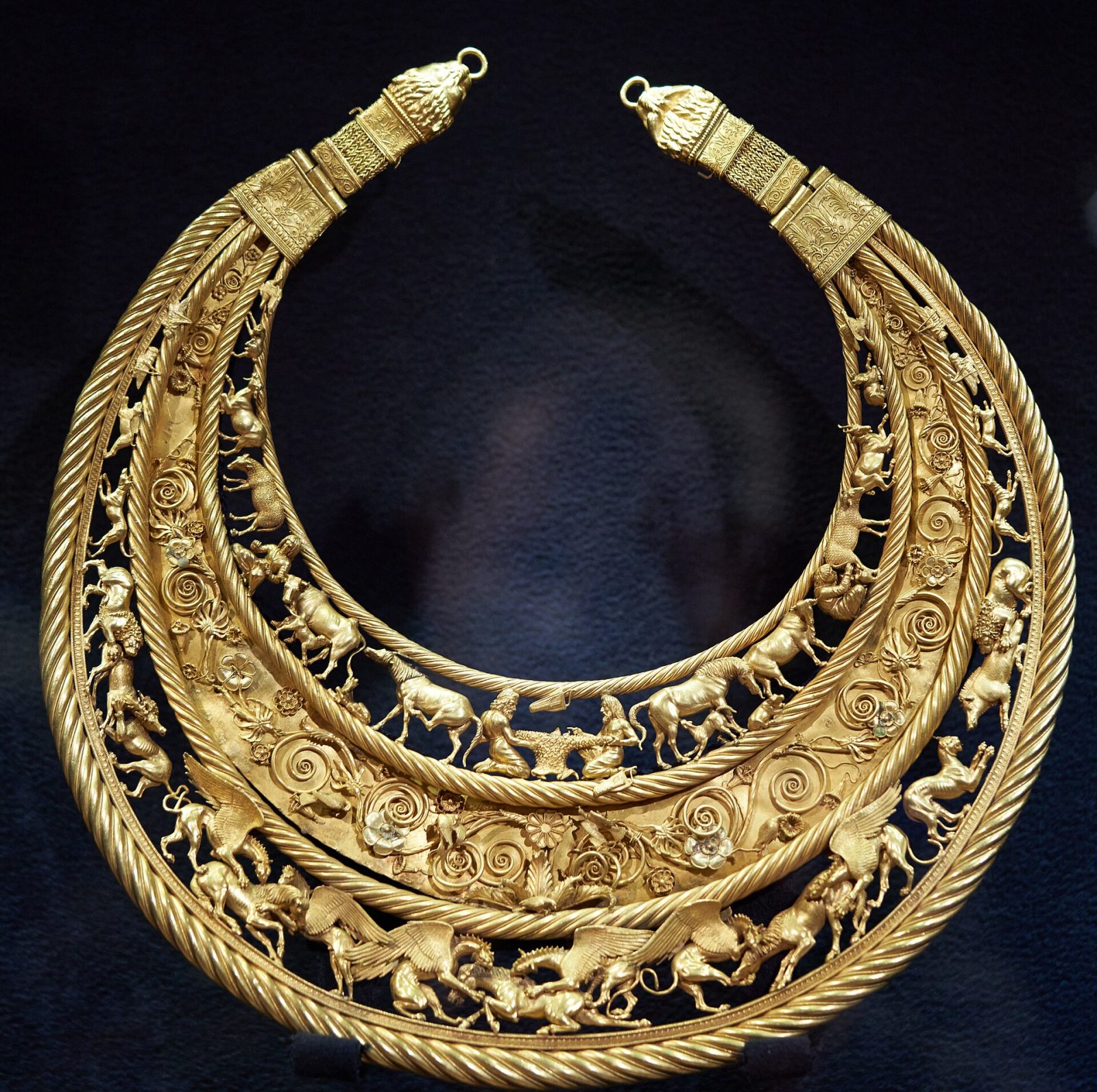
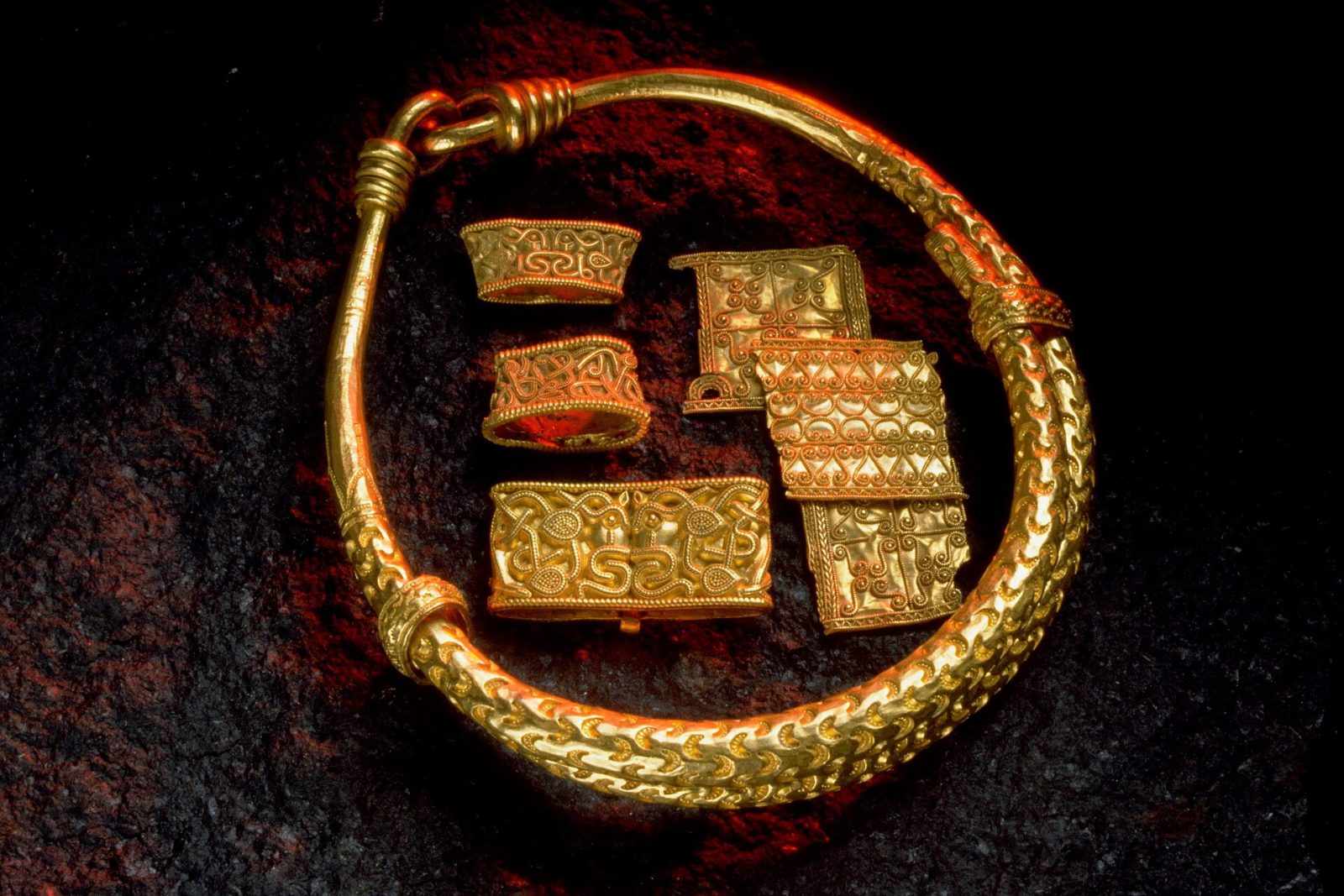
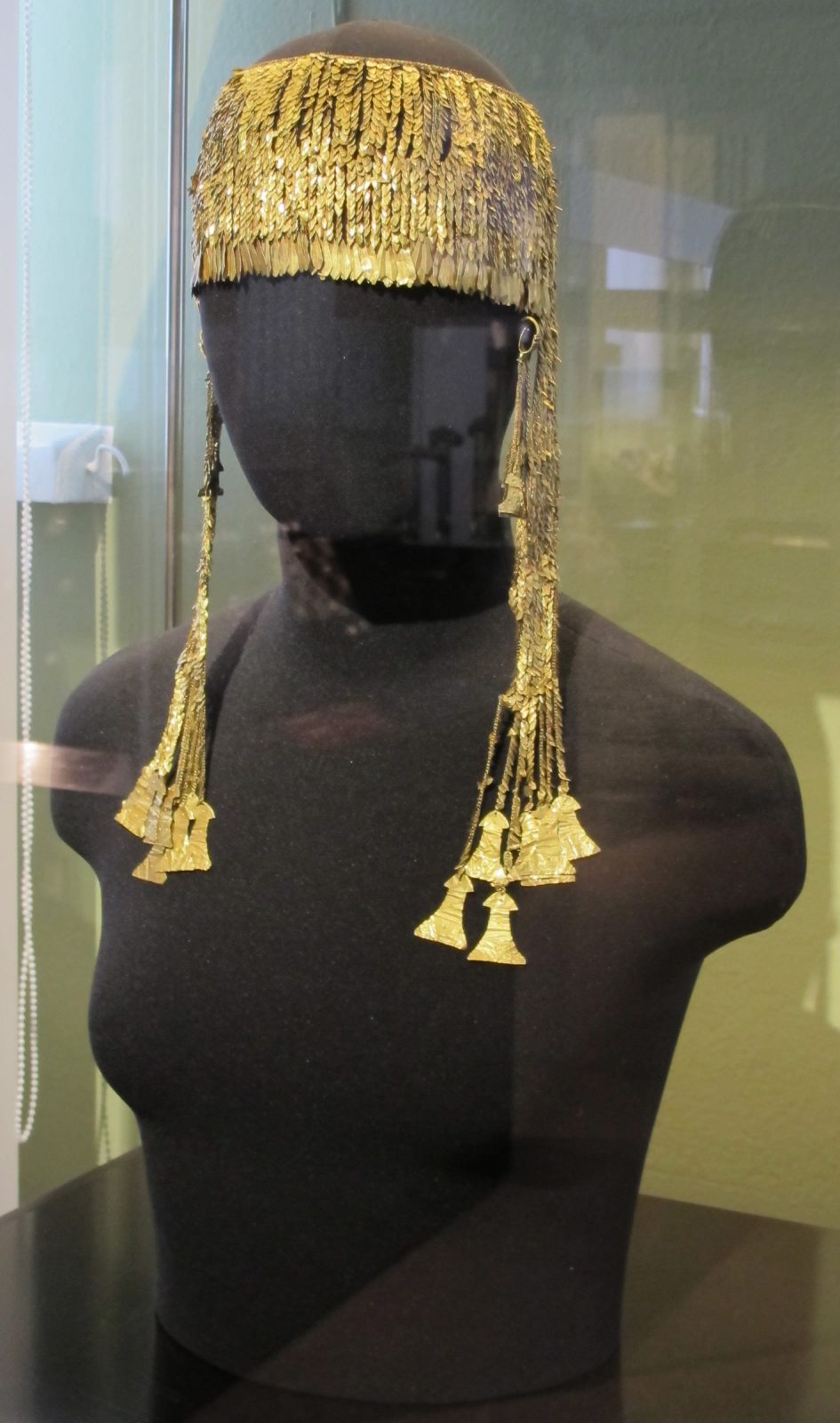
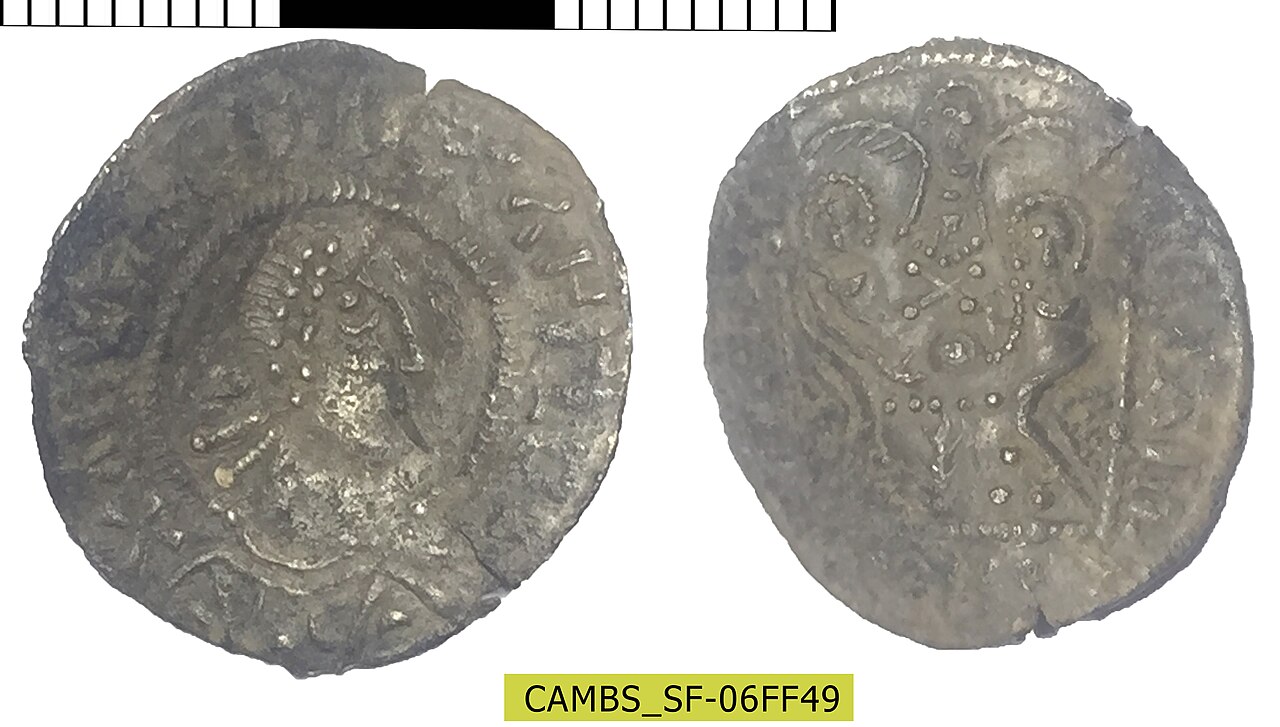
There were more than 770 objects, about 25 kilograms of gold and 50 kilograms of silver, which seem to have lain in a wooden chest about a metre by a metre and a half, faced with square gold plates. Among them were gold and silver vessels made in the Byzantine Empire and in Sasanian Persia and Central Asia, including a Persian gold jug and bowl and a silver dish bearing the name of Paternus, a bishop of Tomis on the Black Sea in about AD 500. There were gold bracelets, a torc, rings, belt and harness fittings, silver stirrups, a sword with a hilt and scabbard faced in gold, and a necklace of Byzantine gold coins, the latest struck between 642 and 646, so the treasure was buried after that.
Gold signet rings carry the name of Kubrat, with the Byzantine title of patrician. Kubrat ruled the Old Great Bulgaria on the steppes north of the Black Sea in the 7th century, and his sons led the Bulgars who founded the Bulgarian state on the Danube. In 1984 the archaeologist Joachim Werner argued that the treasure came from Kubrat's own burial, and many scholars agree, although others see it as a memorial complex left by the Khazars.
The Imperial Hermitage in St Petersburg bought almost all of it, and it is kept in the Hermitage's Gold Room, seen by guided tour. A few pieces stayed in Ukraine, in the museums of Poltava and Kyiv. The sword and ring went on loan to Sofia in 2019, the first time they had left Russia, and Bulgaria displays replicas of the treasure.
Written for Global Finds from O. V. Komar in the Encyclopedia of Modern Ukraine, the National Gallery, Sofia (2019) and the Burgas Museums. Photo: a replica of the Pereshchepina Treasure in Sofia (not the original), Јакша, Wikimedia Commons, CC BY-SA 4.0.