The Wari-Bateshwar Coins: a schoolteacher saved a handful of silver from a labourers' pot and found a lost city
Famous find Struck about 600 to 200 BC · Found in 1933 See it on the timeline →
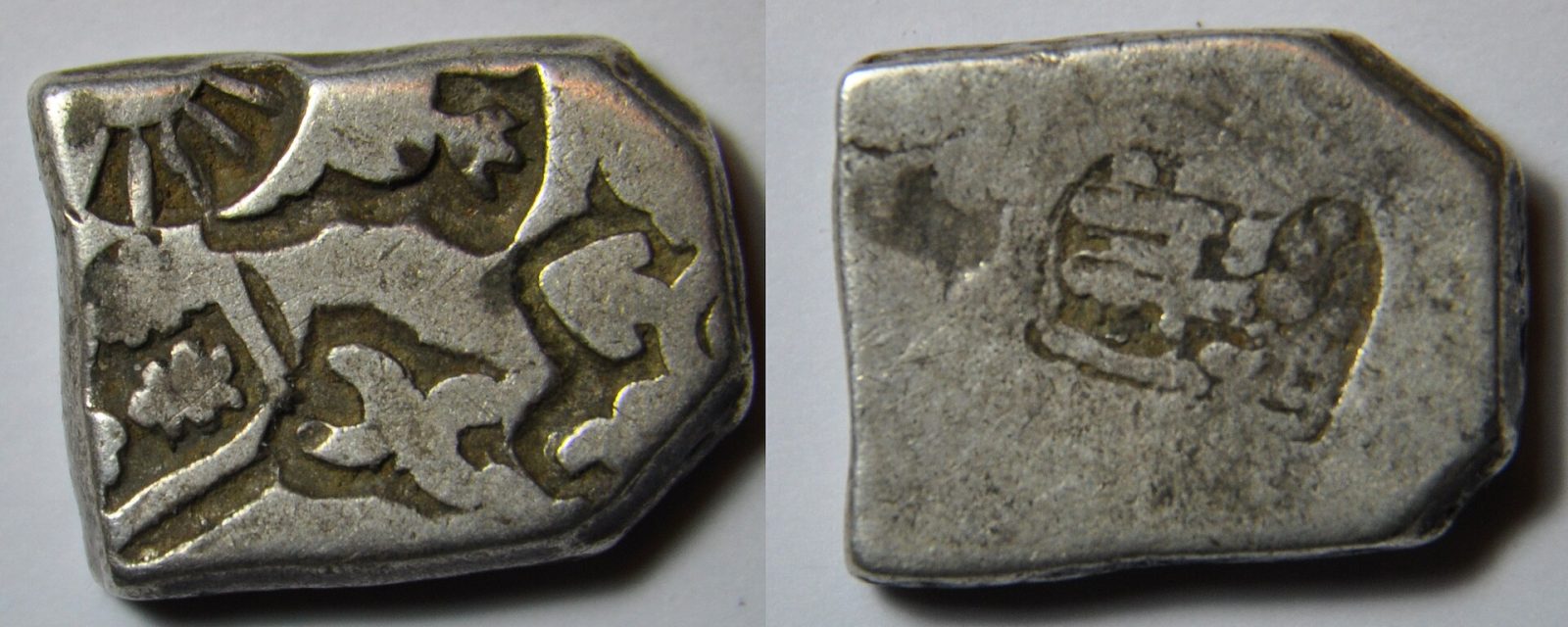
In 1933 labourers digging at Wari, in what is now Bangladesh, found a pot of tiny silver punch-marked coins up to 2,600 years old. A local schoolteacher, Hanif Pathan, saved some of them and spent his life searching the fields, leading archaeologists to a forgotten city.
In 1933, labourers digging earth at the village of Wari, about 40 miles north-east of Dhaka in what is now Bangladesh, broke into a terracotta pot full of small silver coins. A young schoolteacher from the neighbouring village of Bateshwar, Hanif Pathan, came across them and saved 20 or 30 of the coins. The rest disappeared. For the next three decades Pathan walked the fields of Wari and Bateshwar, especially after the monsoon rains had washed away the soil, collecting coins, beads and broken pottery. He wrote countless newspaper articles trying to interest the authorities, mostly in vain.
The coins were silver punch-marked coins, the earliest coinage of the Indian subcontinent. Each is a small round or square piece of silver weighing 1.7 to 1.9 grams, stamped with symbols, here including a boat, the sun and a fish. Archaeologists later recognised two series among them: coins of the pre-Mauryan period, perhaps from around 600 to 400 BC, and coins of the Mauryan empire, from around 400 to 200 BC.
Many more were lost. The largest hoard was found in 1956, when a man digging in the area found about 4,000 punch-marked coins, weighing over nine kilograms, in a terracotta pot. He sold them for 720 taka, and they were lost, probably melted down. Other finders sold coins secretly or turned them into jewellery. "At least 99 percent of the coins unearthed so far from 10 points since 1933 have been lost," Hanif Pathan's son, Habibullah, told The Daily Star in 2008.
Habibullah, also a teacher, took up his father's search, and in 2000 archaeologists from Jahangirnagar University began excavating at Wari-Bateshwar. They found a fortified town with a citadel and moat, occupied from around 500 BC, and in 2004 recovered a complete hoard of coins still in its pot, which went to the Department of Archaeology. Some scholars have suggested that the town was a trading port mentioned by the geographer Ptolemy, though this is unproven. Habibullah keeps the family's finds in a small museum at his home in Bateshwar, and an open-air museum now stands at the site.
Written for Global Finds from The Daily Star (2008), Archaeology magazine (2013) and Banglapedia. Photo: a Mauryan silver punch-marked coin of the same series, not from Wari-Bateshwar, Jean-Michel Moullec, Wikimedia Commons, CC BY 2.0.
Source: The Daily Star (2008)