The Colyton Helm: a gold coin Edward III's subjects refused to use, withdrawn within months and found in a Devon field
Famous find Struck in 1344 · Found in 2015 See it on the timeline →
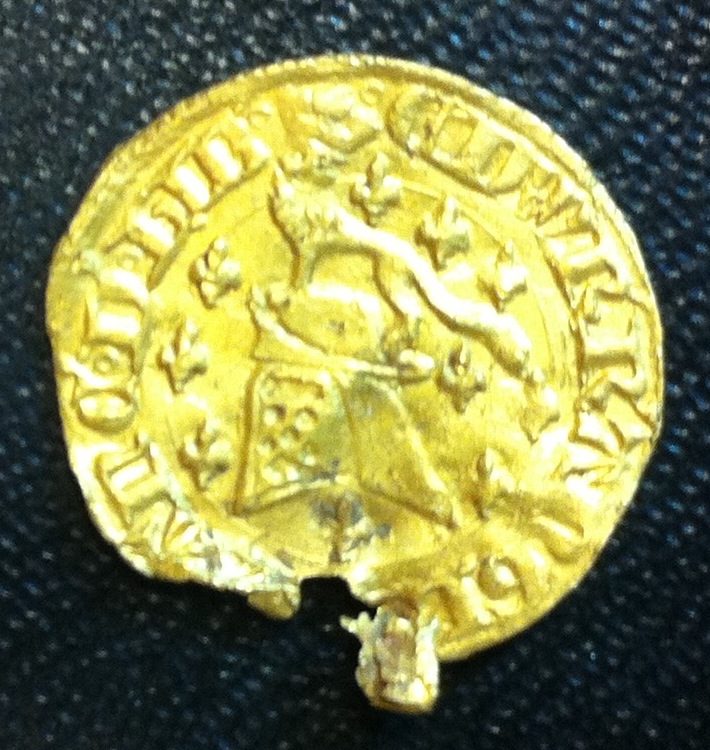
In April 2015 a detectorist near Colyton in Devon found a gold helm, or quarter-florin, of Edward III, struck in 1344 and withdrawn within months because nobody would accept it. Only about five are known, and it sold for £50,000.
In April 2015, a metal detectorist searching farmland in the parish of Colyton, in east Devon, found a small, damaged gold coin. The finder's name has not been published, but the coin was taken to the Finds Liaison Officer and recorded by the Portable Antiquities Scheme, which rated it of national importance.
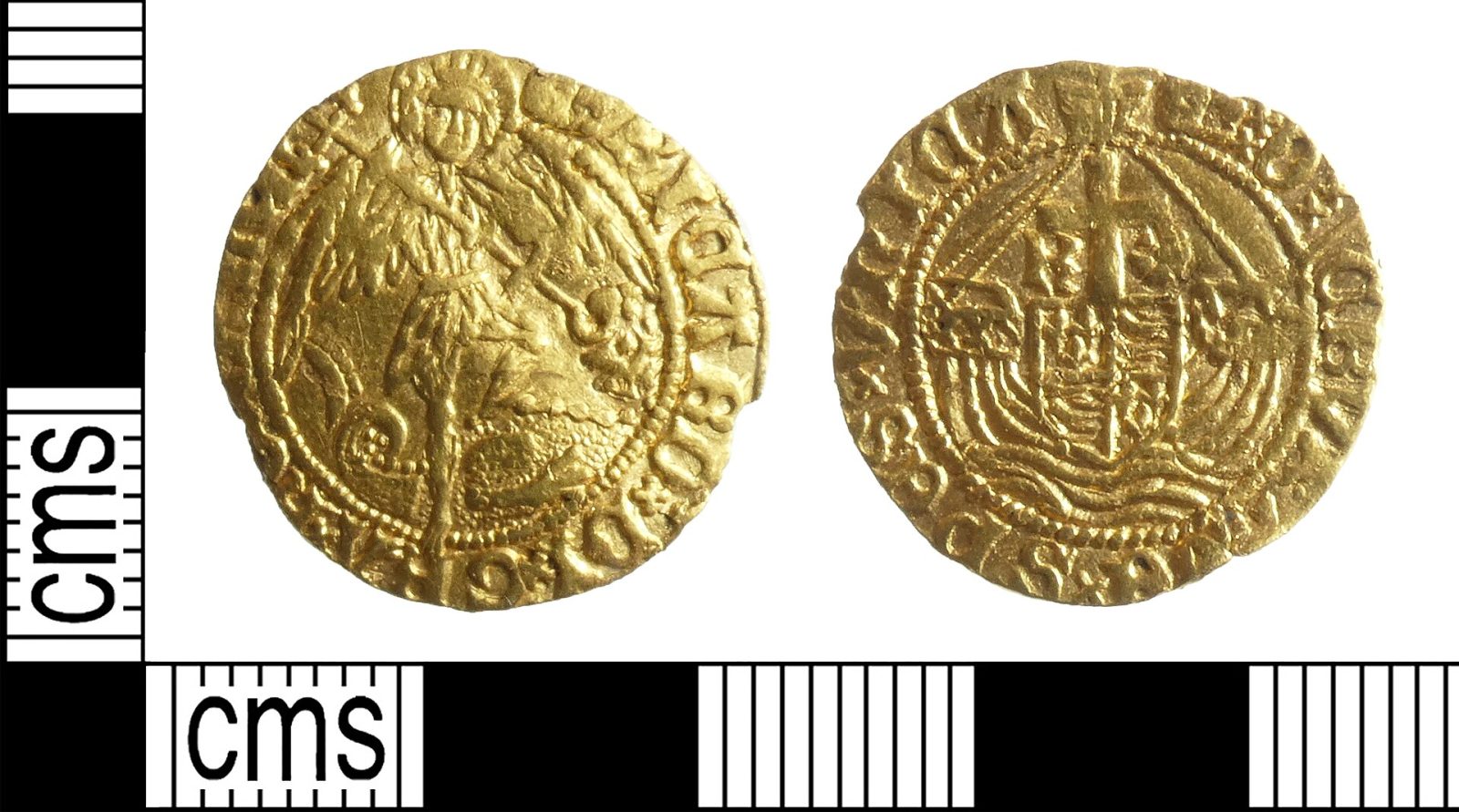
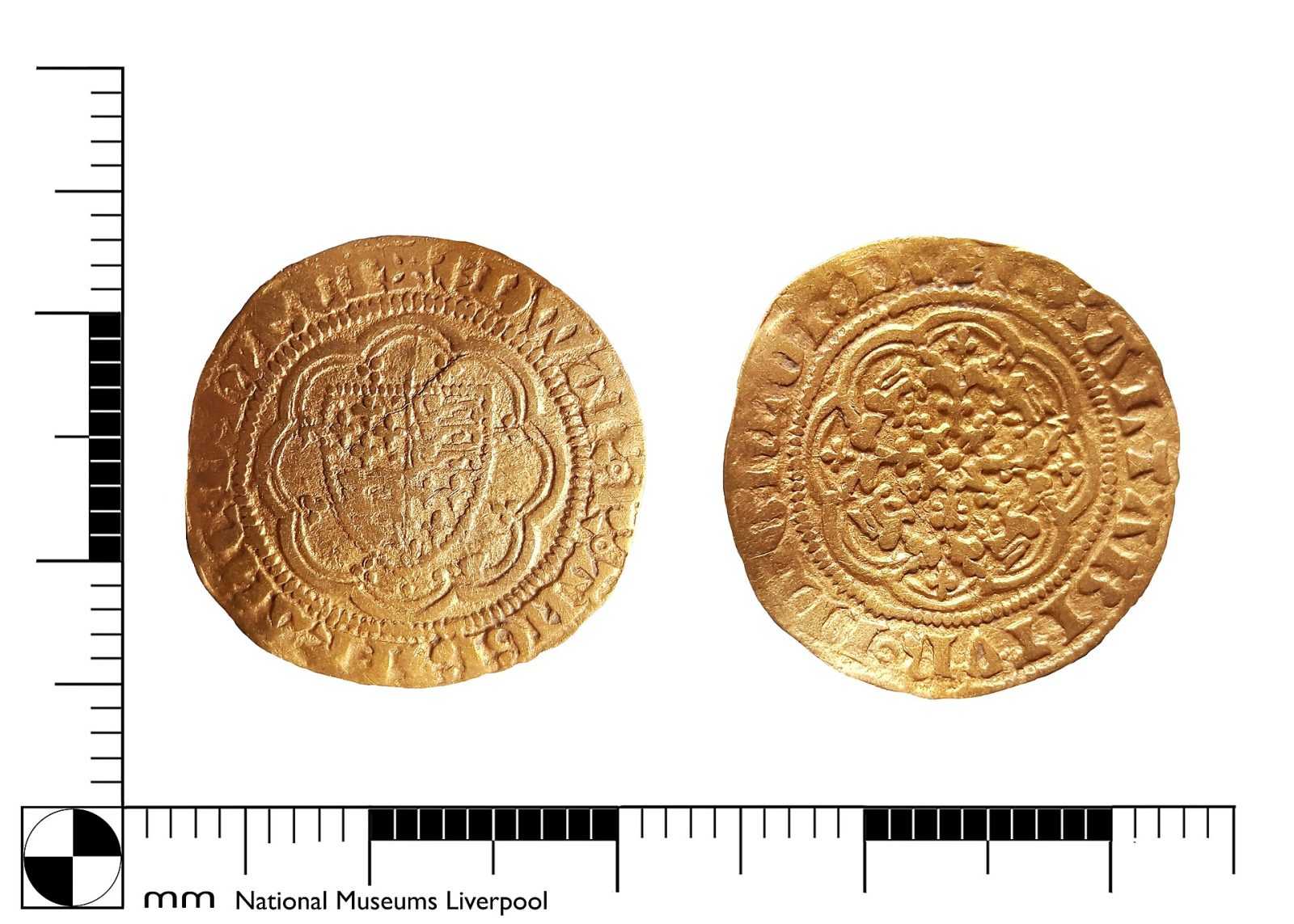
It is a helm, also called a quarter-florin, one of the first gold coins of Edward III. It weighs about 1.76 grams. On the front a knight's helmet, crested with a leopard, sits on a field scattered with French fleurs-de-lis, around the king's titles as king of England and France and lord of Ireland. The back has an ornate cross and the words EXALTABITUR IN GLORIA, "he shall be exalted in glory". A piece of the edge had been pushed out of place, and it was later put back.
The helm belonged to Edward III's first attempt at an English gold coinage, struck at the London mint between January and July 1344, together with the leopard and the double leopard. It was worth one shilling and sixpence. The new coins were valued too high for the gold in them, merchants and the public would not accept them, and within months they were withdrawn and melted down, replaced by the gold noble. That is why so few survive. When the Colyton coin was sold, the auction house Spink counted only about five helms known: two in the British Museum, one in the Hunterian in Glasgow and two in private hands, one of them dug up in 2013. Spink also described it as the first British coin with the French royal title on the front, a sign of Edward's claim to the French throne, which led to the Hundred Years' War.
As a single coin it was not Treasure, and after recording it was returned to the finder. Spink sold it in London in September 2015 for £50,000, above its estimate of £30,000 to £40,000. It is in a private collection, and it features in the Portable Antiquities Scheme's book 50 Medieval Finds (2018). Its bigger sister, the double leopard, is also on Global Finds.
Written for Global Finds from Spink (2015), the Portable Antiquities Scheme and M. Lewis, 50 Medieval Finds from the Portable Antiquities Scheme (2018). Photo: the Colyton helm before repair, Sam Moorhead, Portable Antiquities Scheme, Wikimedia Commons, CC BY 2.0.
Linked finds
Source: Spink (2015)