The York Gold Shilling: a week-old detector, a field at Fulford, and the first coin ever struck in York
Famous find Struck about AD 620 to 660 · Found in 2015 See it on the timeline →
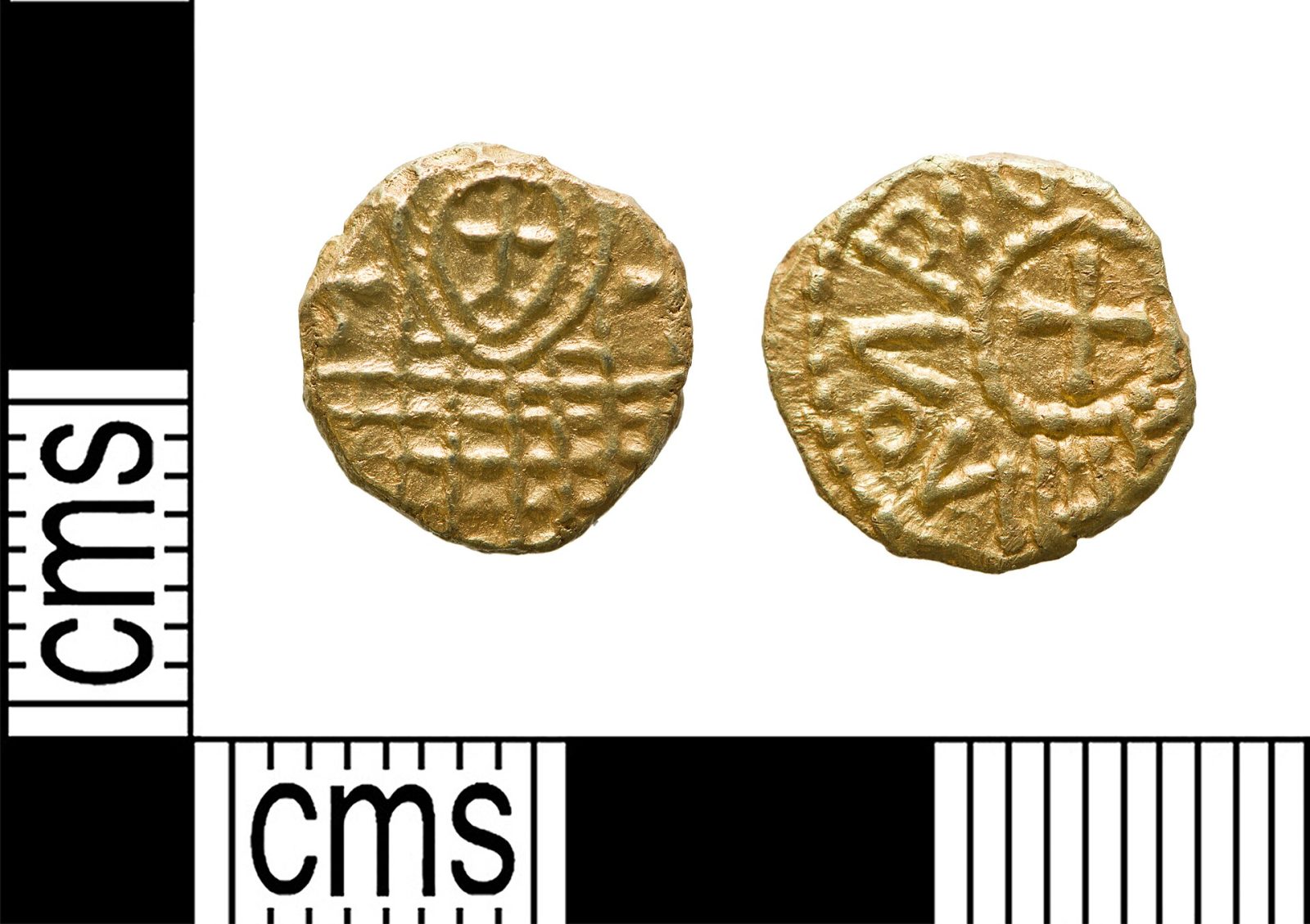
On 1 December 2015 Ian Greig, who had bought his first metal detector a week earlier, found a tiny Anglo-Saxon gold shilling at Fulford on the edge of York. It belongs to the first coinage ever struck in York, and only about nineteen of its type were known.
On 1 December 2015, Ian Greig went out with the metal detector he had bought only a week before and searched cultivated land at Fulford, on the southern edge of York, owned by the parish council. Among the first things he dug was a tiny gold coin, smaller than a modern five-pence piece. He took it to the Yorkshire Museum, and the curator of numismatics, Andrew Woods, later told the BBC that his jaw "absolutely hit the floor".
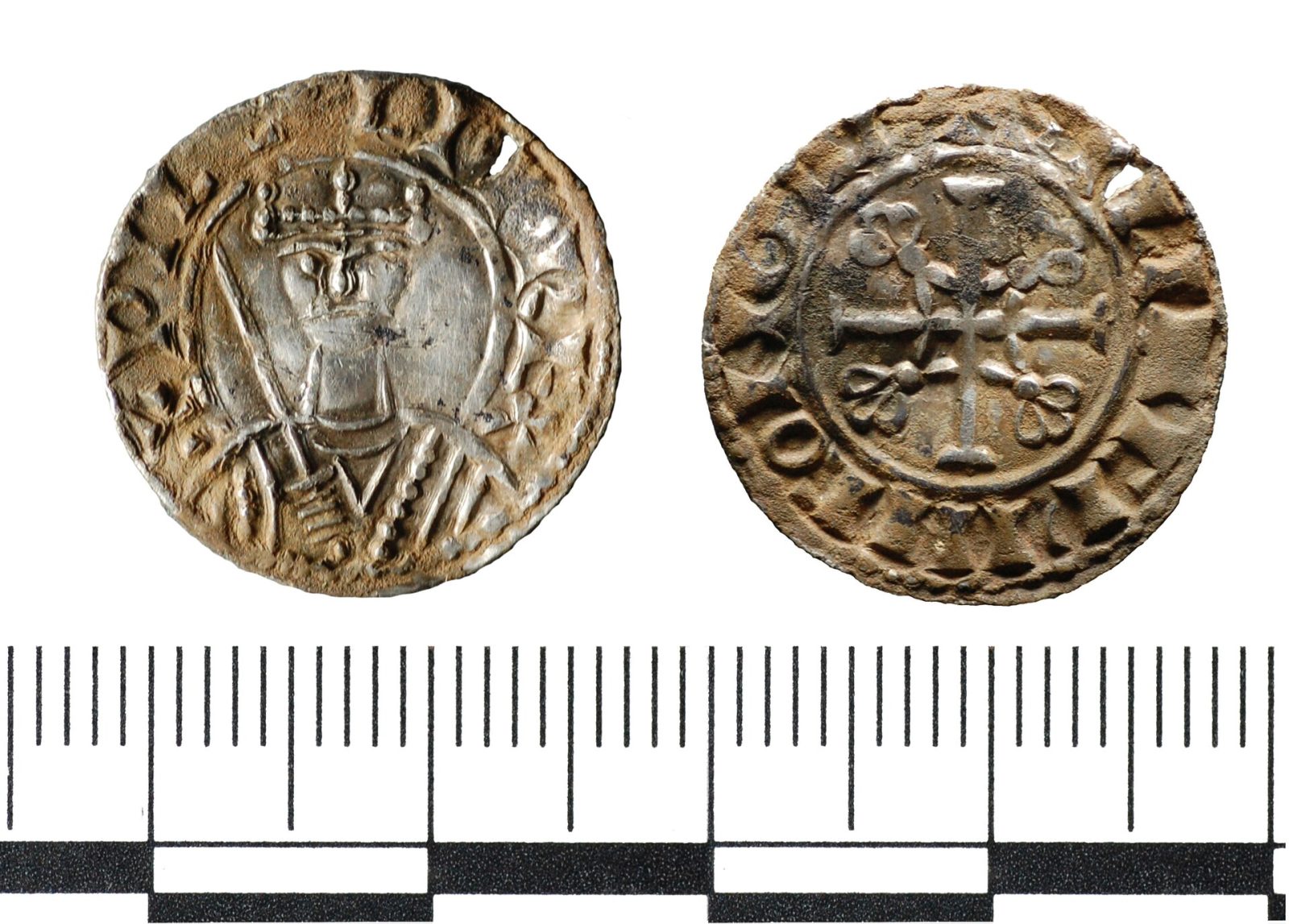
It is an Anglo-Saxon gold shilling, also called a thrymsa, of the type known as the York group. It is 10.6 millimetres across and weighs 1.26 grams. On the front is a stylised figure facing outwards and holding two crosses. On the back is a small cross in a beaded border, with a legend struck off-centre, of which only a few letters can be read. Coins of this group are usually only about 60 per cent gold.
These are the first coins ever made in York, struck in the 7th century, when the city was part of the kingdom of Northumbria and Christianity had only recently arrived. They are usually dated to about 620 to 660. Only about nineteen coins of this type were known, and this was the first found so close to the York mint since several turned up in the centre of the city in the 1840s. Woods suggested the figure might be Paulinus, the first bishop of York, but stressed that this could not be proved, and numismatists still disagree about what the legends on these coins say.
As a single coin it was not Treasure, so it belonged to the finder and the landowner. The BBC reported it was worth £5,000 to £7,000. Ian Greig turned down an offer from a private collector because he wanted the coin to be seen by the public, and he was talking to the Yorkshire Museum about buying it. It was recorded by the Portable Antiquities Scheme and returned to him, and where it is now has not been published.
Written for Global Finds from BBC News (2016), the Portable Antiquities Scheme (YORYM-504283) and the Early Medieval Corpus of coin finds at the Fitzwilliam Museum. Photo: the Fulford gold shilling, Andrew Woods, York Museums Trust, Portable Antiquities Scheme, Wikimedia Commons, CC BY 2.0.
Linked finds
Source: BBC News (2016)