The Edward V Angel: a gold coin of the lost Prince in the Tower, mistaken for a bottle top in a Dorset field
Famous find Struck between April and June 1483 · Found in 2016 See it on the timeline →
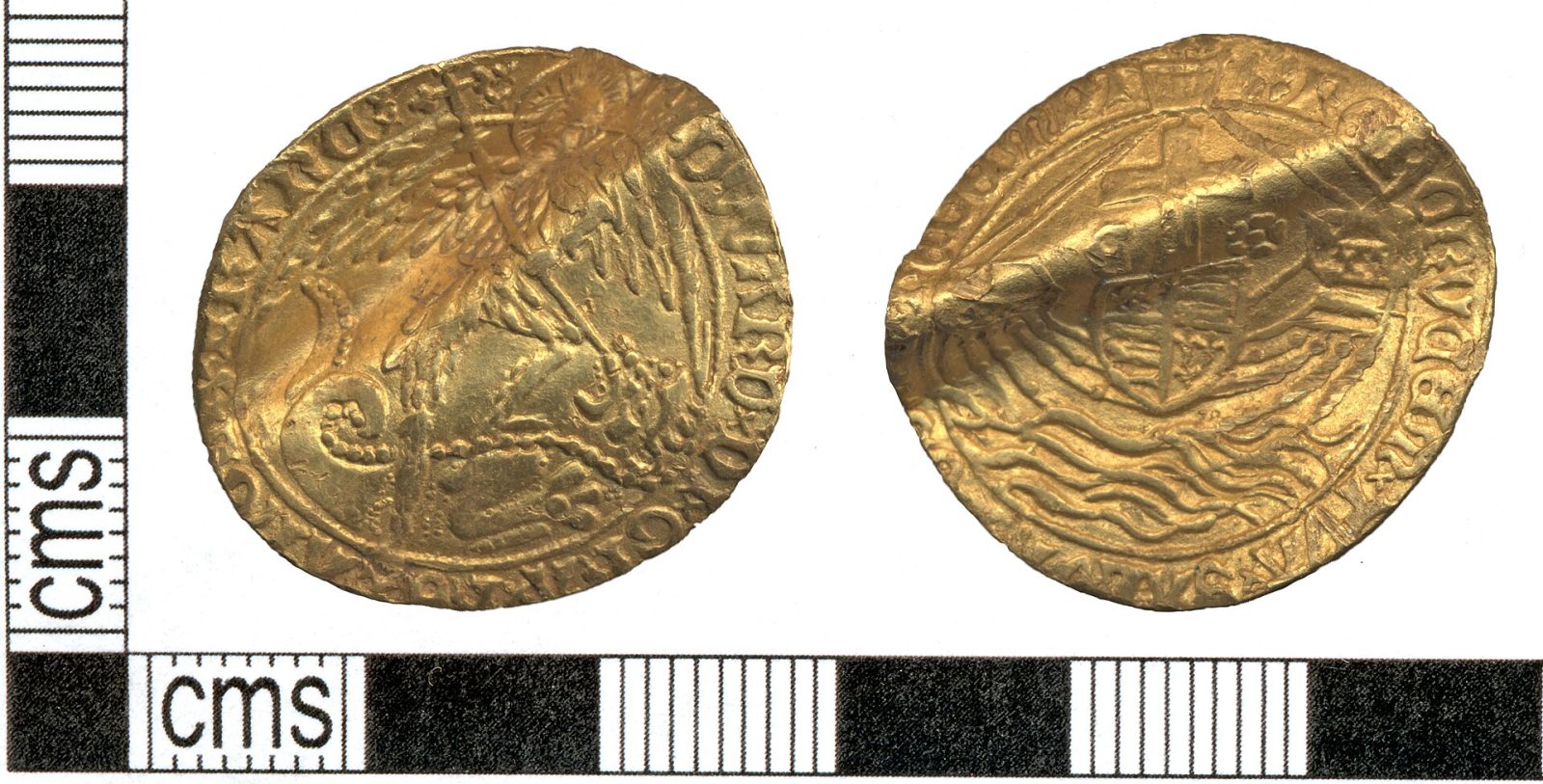
In August 2016 Brian Biddle, detecting for only 18 months, dug what he thought was a bottle top in a field at Tolpuddle in Dorset. It was a gold angel struck in 1483 in the name of Edward V, the boy king who vanished in the Tower of London.
In August 2016, Brian Biddle, a 64-year-old heating engineer from Bournemouth, was detecting in a farmer's field at Tolpuddle in Dorset with members of the Stour Valley Search and Recovery Club. He had been detecting for only about eighteen months. Four or five inches down was a small, bent piece of metal that he took at first for a bottle top. It was gold.
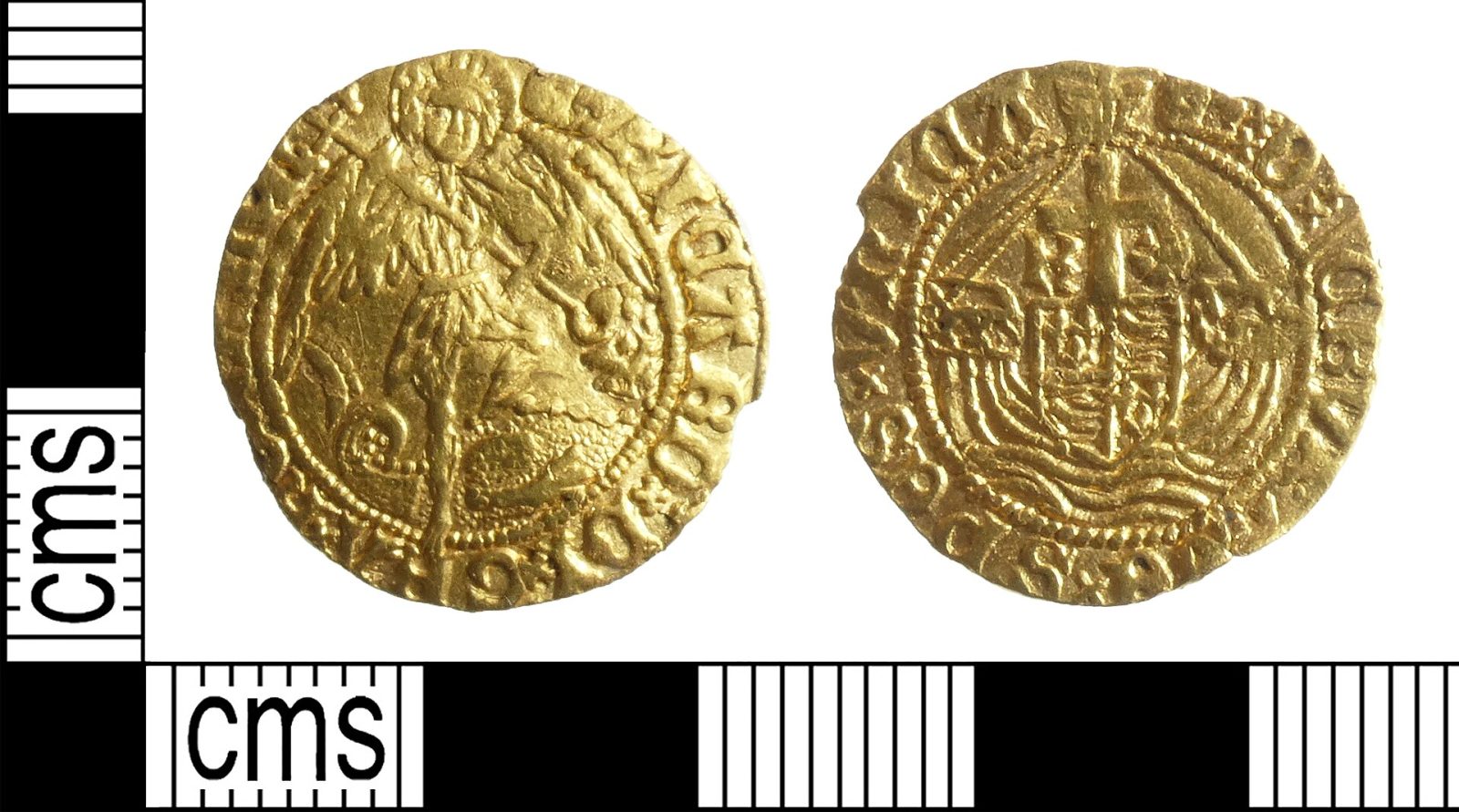
It is a gold angel, the coin named after the archangel St Michael, who is shown on the front spearing a dragon, with a ship on the back. The coin recorded by the Portable Antiquities Scheme in Dorset that year is 27 millimetres across, weighs 5.02 grams and is creased. What makes it special is the legend EDWARD DI GRA, together with the mint marks of a halved sun and rose, which have led specialists to attribute it to Edward V rather than to his father, Edward IV. Some numismatists still argue over which king these coins belong to, but very few are known.
Edward V became king at the age of twelve when his father died on 9 April 1483. His uncle Richard, Duke of Gloucester, was made Protector, and the boy was lodged in the Tower of London, joined by his younger brother. In June Richard had the late king's chamberlain, Lord Hastings, who ran the royal mint, executed, and at the end of June the boy was declared illegitimate and his uncle took the throne as Richard III. The two princes were never seen in public again. Coins in Edward V's name could only have been struck in those few weeks, which makes them among the rarest of English gold coins.
As a single gold coin, it was not Treasure under the law of the time. It was registered with the local Finds Liaison Officer and auctioned by Dix Noonan Webb in London on 15 March 2017. Against an estimate of £12,000 to £15,000 it sold for £42,000, £50,400 with the buyer's premium, to a private collector, and Brian shared the proceeds with the farmer.
Written for Global Finds from the Bournemouth Echo via The E-Sylum (2017), Numismatic News and the Portable Antiquities Scheme. Photo: the Edward V angel recorded by the Portable Antiquities Scheme in Dorset in 2016, Ciorstaidh Hayward Trevarthen, Somerset County Council, Wikimedia Commons, CC BY 2.0.