The Eric Penny: a sword-struck coin of York's last Viking king, found in a Yorkshire field
Famous find Struck about AD 947 to 954 · Found in 2020 See it on the timeline →
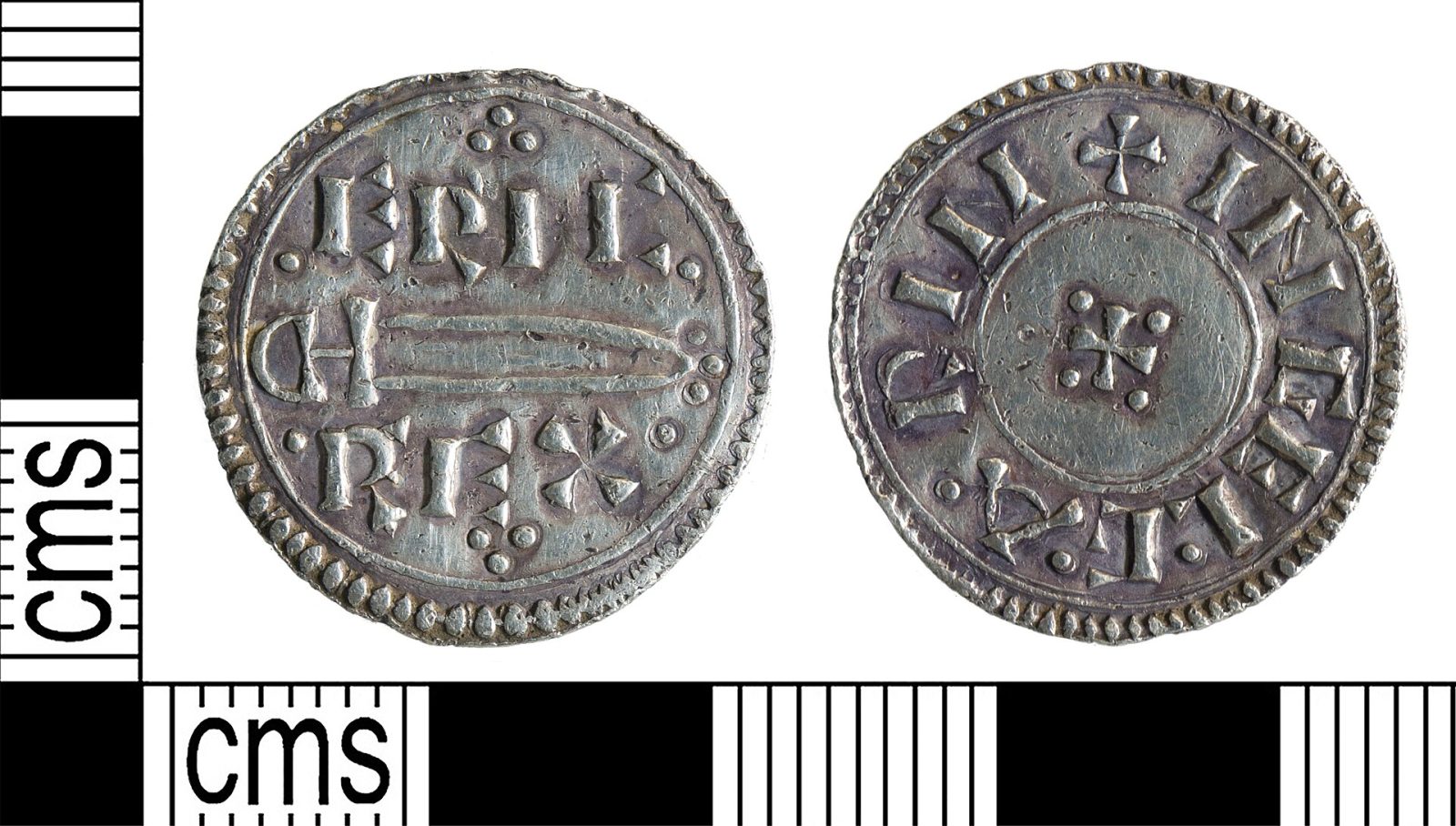
In 2020 a coin found by a metal detectorist near Bridlington in East Yorkshire was recorded as a silver penny of Eric, the last Viking king of York, perhaps the famous Eric Bloodaxe. It was the first single find of his coinage recorded by the Portable Antiquities Scheme.
In 2020, Rebecca Griffiths, the Finds Liaison Officer at York Museums Trust, recorded a small silver coin found by a metal detectorist on cultivated land in the Bridlington area of East Yorkshire. The detectorist's name and the exact findspot have been kept private. When the coin was identified it turned out to be very rare indeed: a penny of Eric, the last Scandinavian king of York.
The coin is almost unworn. It weighs 1.4 grams and is about 21 millimetres across. On the front, the words ERIC REX, "King Eric", are split into two lines by a sword lying across the coin. The back has a small cross and the name of the moneyer, Ingelgar, who struck it at York. The sword design copies an earlier York coinage of the 920s, struck in the name of St Peter.
Eric ruled York twice in the troubled years around 950, before he was driven out in 954 and the city came under English kings for good. He is usually identified with Eric Bloodaxe, the Norwegian king's son of the sagas, but historians have questioned whether the Eric of York and the Norwegian Eric were really the same man, so the coin's record says only that it is possibly Eric Bloodaxe. Either way, these are among the rarest coins of Viking England. A specialist auction house reckoned in 2017 that only about eighteen of these sword pennies were known.
The Portable Antiquities Scheme's annual report in the journal Medieval Archaeology described it as the first single find of a coin of Eric recorded by the scheme. As a single silver coin it was not Treasure, and after recording it was returned to the finder. It is not on public display.
Written for Global Finds from the Portable Antiquities Scheme's report in Medieval Archaeology (ed. J. Naylor), the Portable Antiquities Scheme record YORYM-BA2295 and Coin World. Photo: the Eric penny from the Bridlington area, Rebecca Griffiths, York Museums Trust, Portable Antiquities Scheme, Wikimedia Commons, CC BY 2.0.
Linked finds
Source: Portable Antiquities Scheme report, Medieval Archaeology