The Gloucester Penny: a club detectorist's unique coin of William the Conqueror that filled a gap in history
Famous find Struck about 1077 to 1080 · Found in 2011 See it on the timeline →
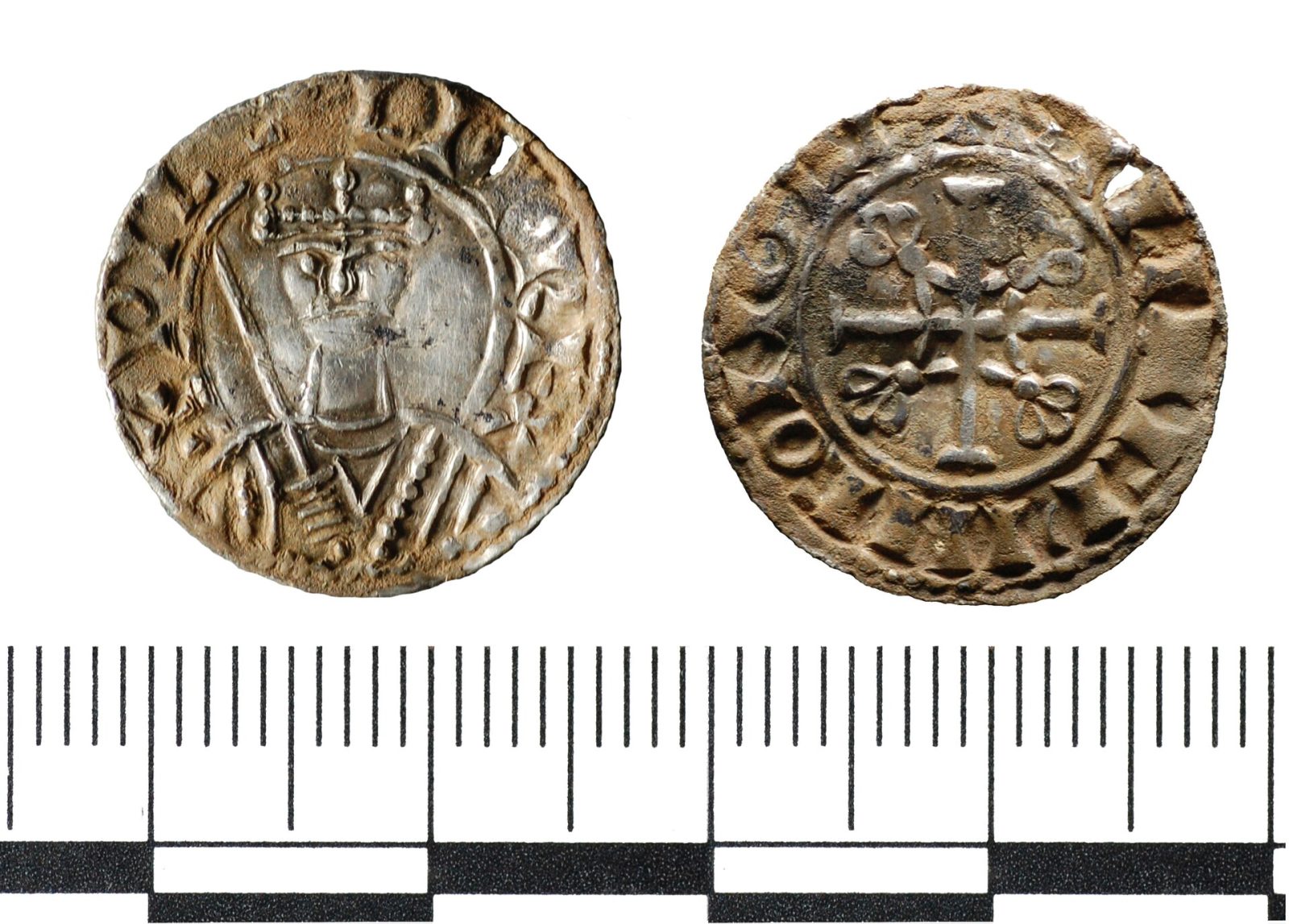
In November 2011 Maureen Jones of the Taynton Metal Detecting Club found a silver penny of William the Conqueror in a field just north of Gloucester. It was the only known Gloucester coin of its type, proving the city's mint worked through his whole reign.
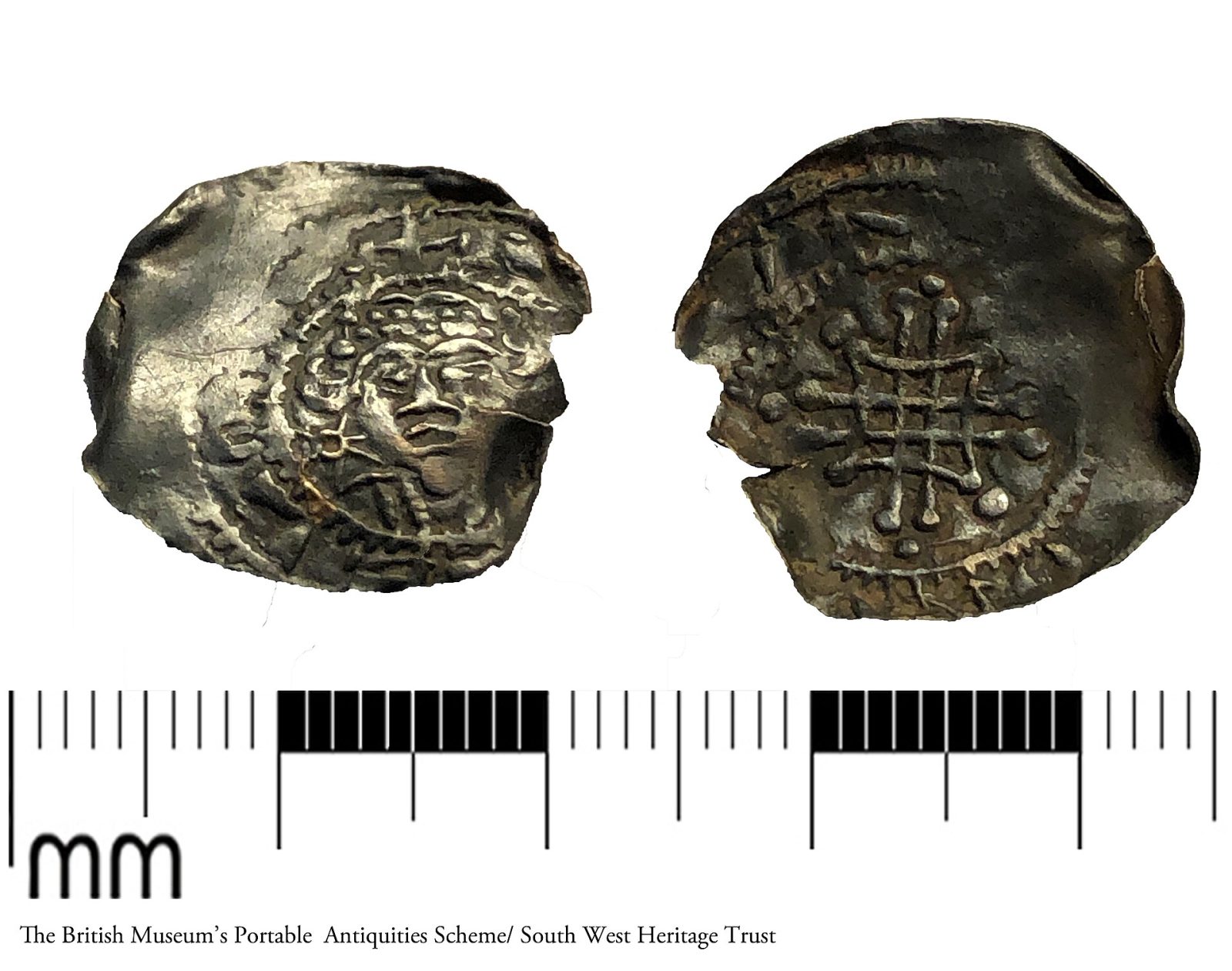
In November 2011, Maureen Jones, a member of the Taynton Metal Detecting Club, was out with two other women from the club in an open field just north of Gloucester when she dug up a small silver coin. She could tell it was a hammered penny, but not whose. She took it to Kurt Adams, the local Finds Liaison Officer, and it was identified by John Naylor of the Portable Antiquities Scheme as a penny of William the Conqueror.
It is a silver penny of the type known as the Sword type, 19 millimetres across and weighing 1.31 grams. On the front William faces out, crowned and holding a sword, with the inscription PILLELM REX, using the old English letter wynn for W. On the back is a cross over a four-sided shape with curved sides and fleurs at the corners. The legend names the moneyer Silacwine and the mint, Gloucester, though the die-cutter misspelt Silacwine's name.
The Sword type was struck in about 1077 to 1080, and no coin of that type from Gloucester had ever been recorded. Its discovery filled a gap in the record and showed that the Gloucester mint was working throughout William's reign. It also extended the known career of Silacwine, whose coins had previously stopped around 1077.
Gloucester mattered to the Conqueror. He held court there at Christmas, and it was at his Christmas court at Gloucester in 1085, according to the Anglo-Saxon Chronicle, that he ordered the great survey of England that became Domesday Book.
As a single silver coin it was not Treasure. It was recorded by the Portable Antiquities Scheme, which reported it in February 2012, and it was to be returned to Maureen Jones. It is in private hands and not on public display.
Written for Global Finds from BBC News (2012), Token Publishing (2012) and the Portable Antiquities Scheme (GLO-A6DDA1). Photo: the Gloucester penny of William I, Kurt Adams, Bristol City Council, Portable Antiquities Scheme, Wikimedia Commons, CC BY-SA 2.0.
Source: BBC News (2012)