The FitzRobert Penny: a Dorset find from the Anarchy, when a rebel earl's son struck coins in his own name
Famous find Struck about 1147 · Found in 2020 See it on the timeline →
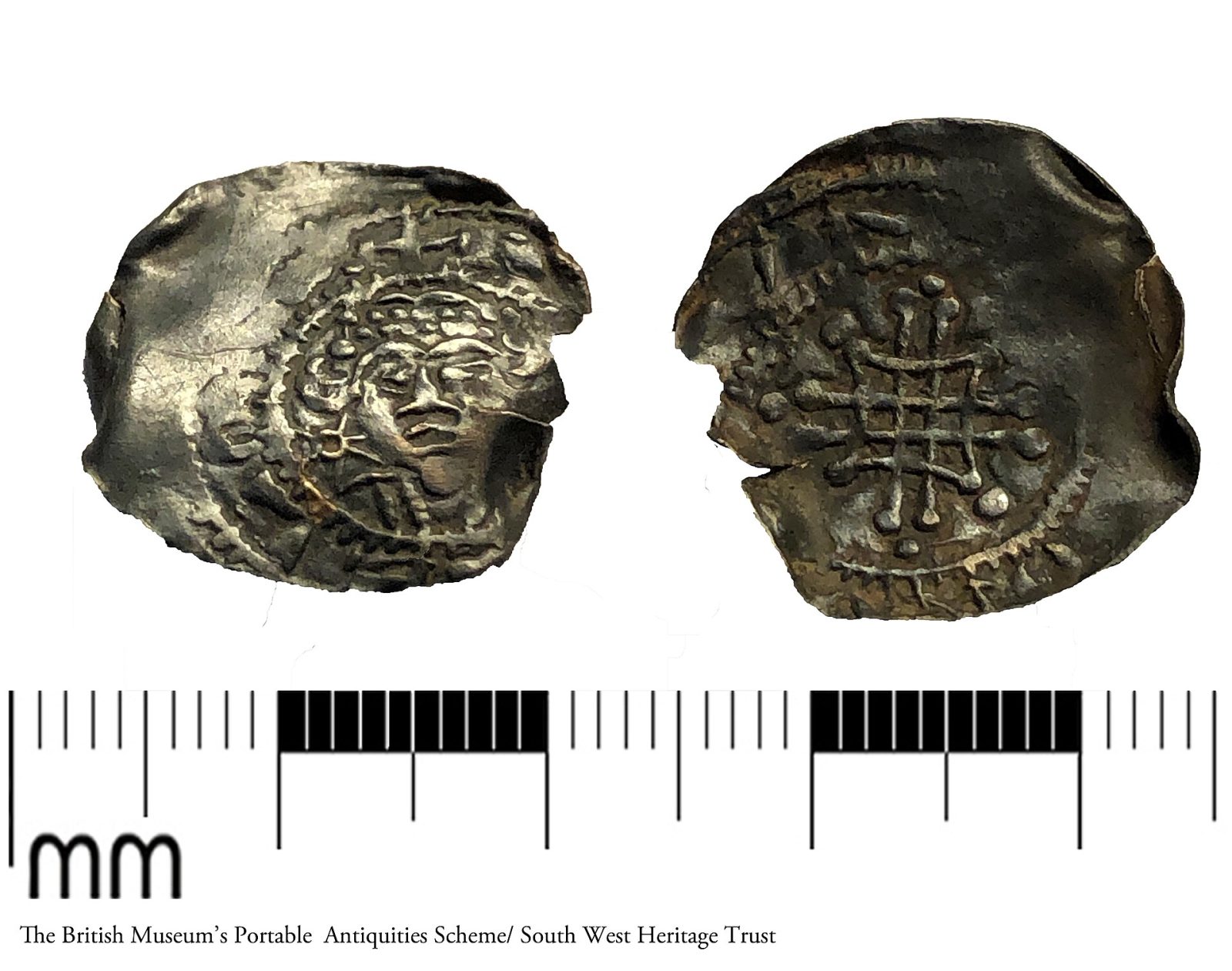
On 30 August 2020 a silver penny was found at Stalbridge Weston in Dorset, struck about 1147 by William FitzRobert, son of the Earl of Gloucester, during the civil war between Stephen and Matilda. It was only the ninth coin of his known.
On 30 August 2020, a small, chipped silver penny was found at Stalbridge Weston, a hamlet in the Blackmore Vale of north Dorset. It was recorded with the Portable Antiquities Scheme by Lucy Shipley and with the Early Medieval Corpus of coin finds at the Fitzwilliam Museum. The finder's name has not been published. The coin was not an ordinary penny of a king.
It was struck in the name of William FitzRobert, the son of Robert, Earl of Gloucester. Robert was the illegitimate son of Henry I and the half-brother of the Empress Matilda, and he led her side in the long civil war against King Stephen known as the Anarchy. In the chaos of those years, some great lords struck coins in their own names, and William's were made around 1147, the year his father died.
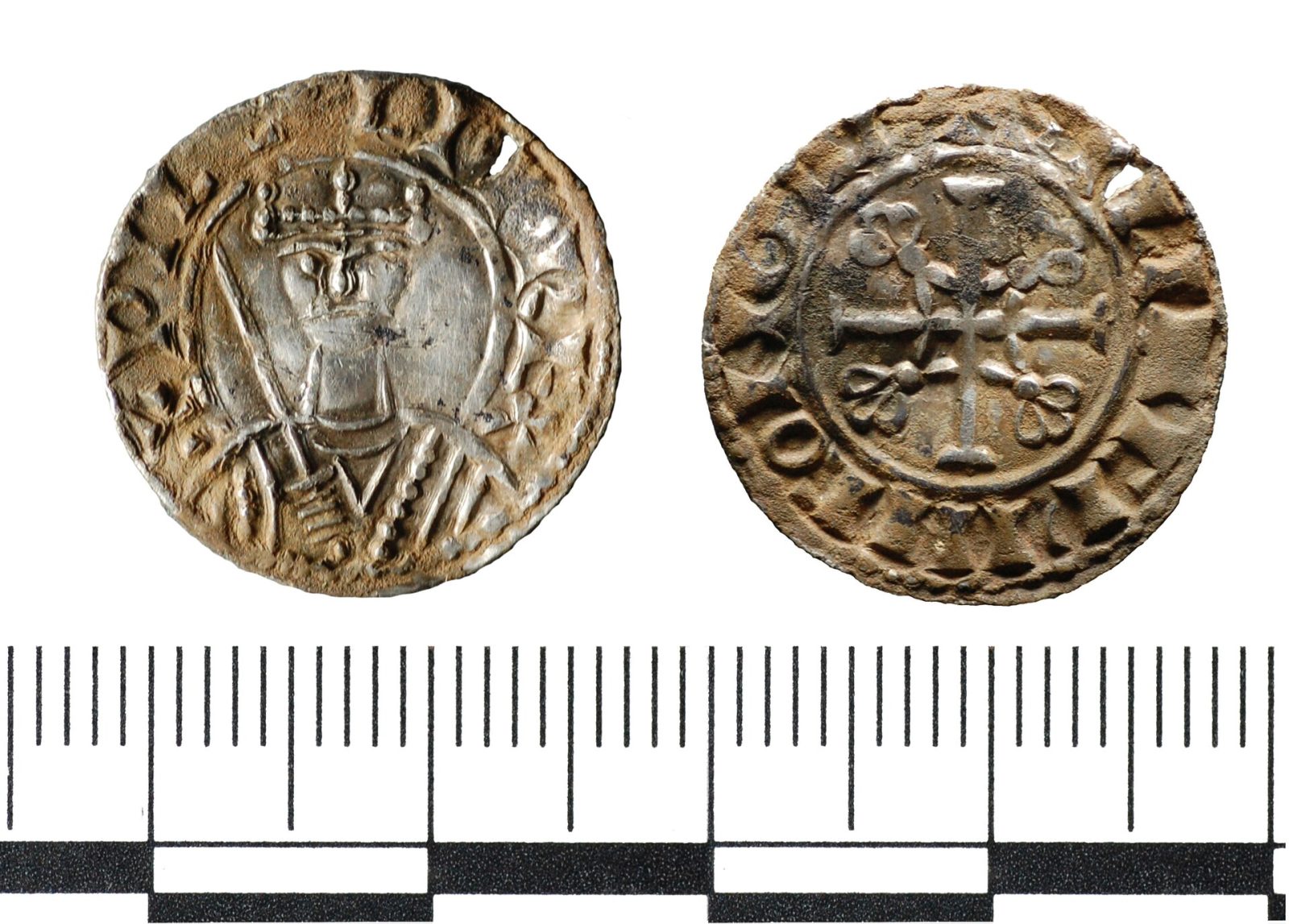
The penny weighs less than a gram and is split and crimped, but its design is clear: a crowned bust facing out with stars beside the neck, the name WILLELM, and on the back a cross set over a four-lobed shape. When the coin was sold, the auction house Spink described it as only the ninth recorded coin of William FitzRobert. The Fitzwilliam record notes it may be from Sherborne, which would be a new mint for this type; other coins of his have been attributed to Wareham. Sherborne Castle, a few miles from the findspot, was one of the most important strongholds in the west during the war.
William went on to become the second Earl of Gloucester and died in 1183.
As a single silver coin it was not Treasure. It was sold by Spink in New York on 17 January 2021, against an estimate of $6,000, for $13,000, and it is in a private collection.
Written for Global Finds from Spink (2021), the Early Medieval Corpus of coin finds (EMC 2020.0280) and the Portable Antiquities Scheme. Photo: the Stalbridge Weston penny of William FitzRobert, Lucy Shipley, Portable Antiquities Scheme, Wikimedia Commons, CC BY 2.0.
Linked finds
Source: Spink (2021)