The Caratacus Minim: a quarter-gram silver coin from Hampshire that named Britain's rebel hero as Cunobelinus's son
Famous find Struck about AD 40 to 43 · Found in 2016 See it on the timeline →
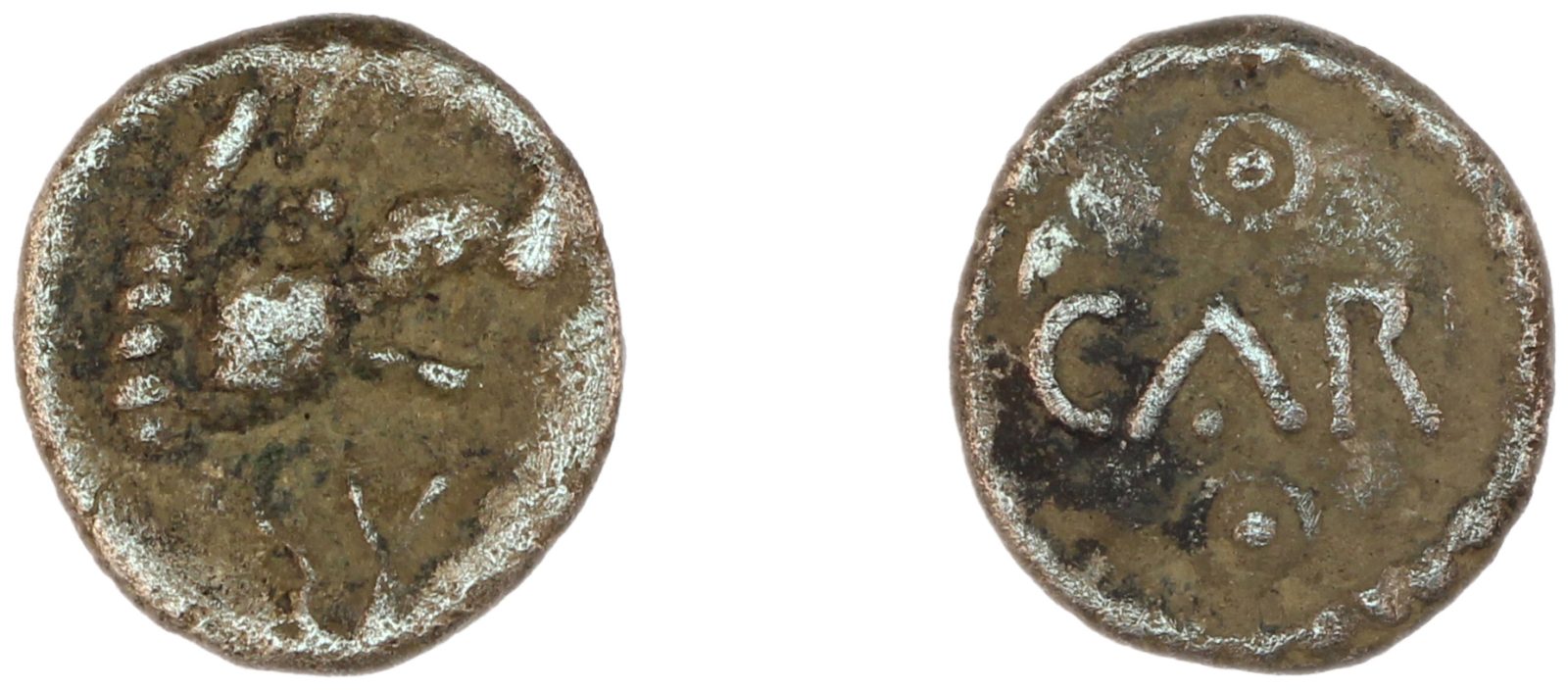
On 28 April 2016 detectorist Andrew Aartsen found a tiny silver coin at Greywell in Hampshire, weighing only 0.27 grams. Marked CAR and CV, it linked the British resistance leader Caratacus to his father Cunobelinus, settling a doubt that had lasted more than a century.
On Thursday 28 April 2016, Andrew Aartsen was metal detecting near Greywell in Hampshire, a few miles from the Iron Age and Roman town of Calleva, now Silchester, when he found one of the smallest coins a detectorist can hope to recover: a silver minim just 8.5 millimetres across and weighing 0.27 grams, about a quarter of the weight of a modern one-pence piece. He recorded it with the Portable Antiquities Scheme.
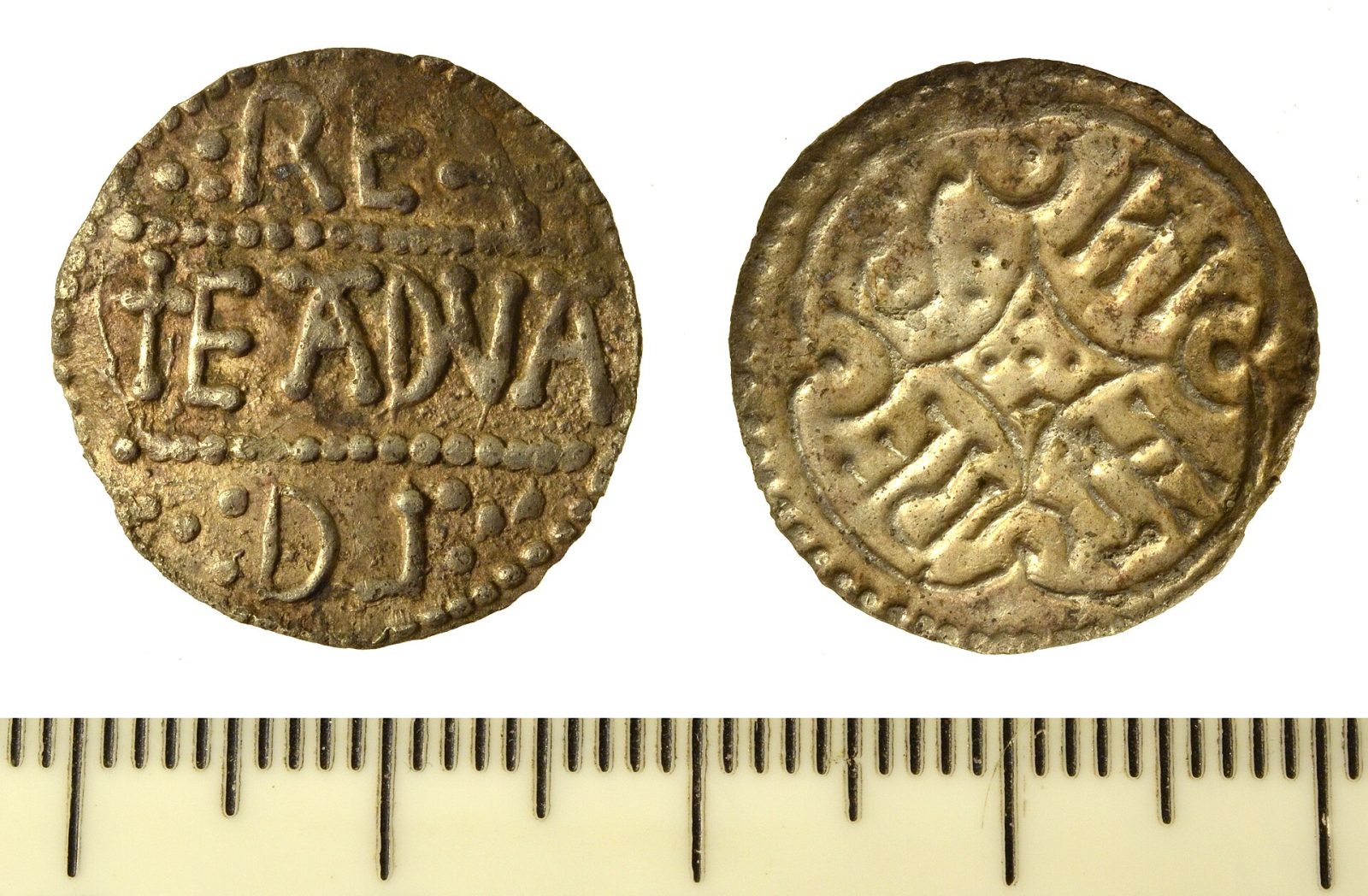
On one side are the letters CAR, between two ringed dots. On the other is a boar's head, and below it the letters CV. The design copies a minim of Epaticcus, Caratacus's uncle, and this exact type had never been published before.
Caratacus is one of the great figures of early British history. According to Roman writers, he was a son of Cunobelinus, the powerful king who ruled from Camulodunum, now Colchester, and after the Roman invasion of AD 43 he led the British resistance for years before being betrayed and taken to Rome, where his dignity is said to have won him a pardon from the emperor Claudius. Coins inscribed CARA had long been linked to him, but since the 19th century some scholars had doubted that they were really his. Sir John Evans even suggested there had been a second, otherwise unknown, Caratacus.
The Greywell coin offered an answer. The CV on its reverse is read as an abbreviation of Cunobelinus, naming the father alongside the son, as British rulers often did on their coins. The Iron Age coin specialist Chris Rudd called it the missing link. A gold stater of Caratacus found near Newbury in 2019, carrying the letters CVNO, has since added to the case. The minim was probably struck at Calleva around AD 40 to 43, in the last years before the Roman conquest.
As a single silver coin it was not Treasure. After recording it was returned to the finder and offered for sale through Chris Rudd in 2016, and it is presumed to be in a private collection.
Written for Global Finds from C. Rudd, "Who Was Caratacus?", Coin News (2016), and the Portable Antiquities Scheme (FASAM-EB7789). Photo: the Caratacus minim from Greywell, Sam Moorhead, Portable Antiquities Scheme, Wikimedia Commons, CC BY 2.0.
Linked finds
Source: Portable Antiquities Scheme (FASAM-EB7789, archived)