The Licinius Gold Multiple: a faint signal in the Wiltshire rain, mistaken for a Rolo wrapper, one of four known
Famous find Struck about AD 313 to 315 · Found in 2007 See it on the timeline →
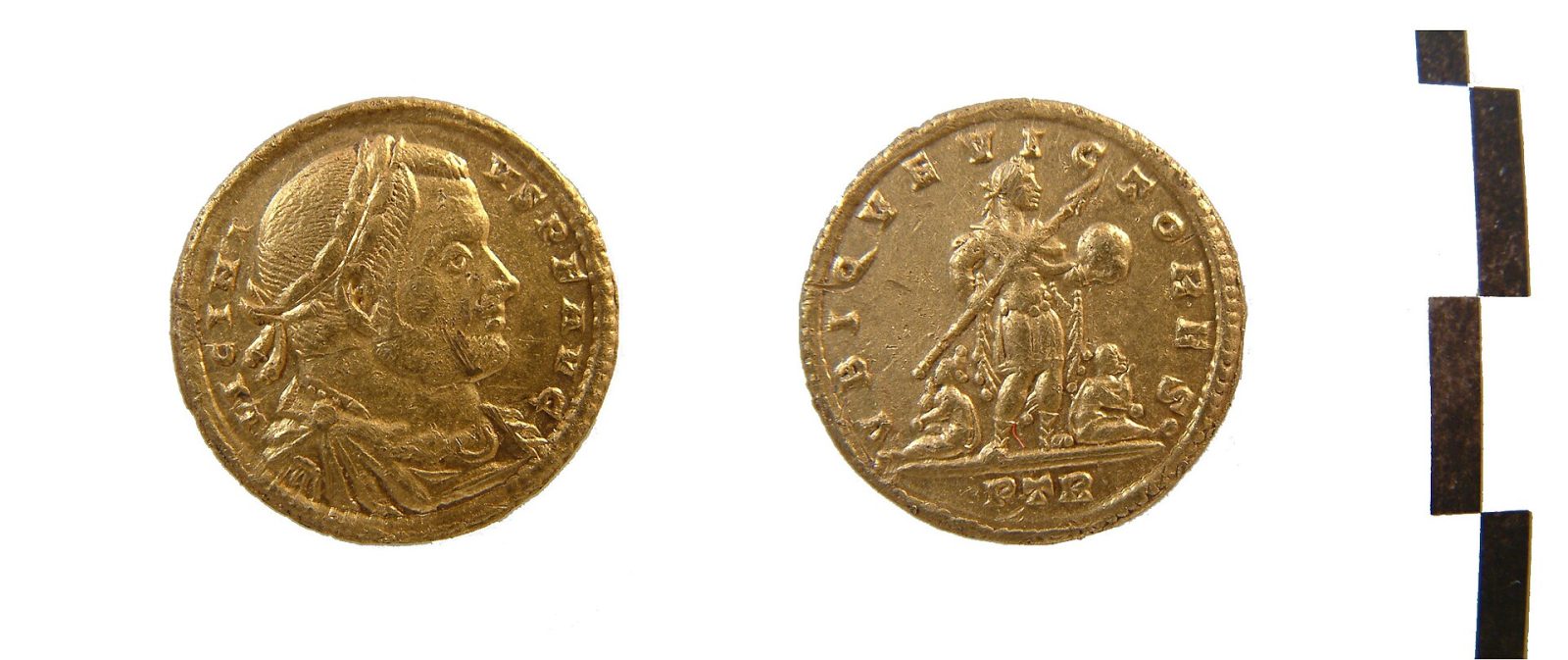
A detectorist in south Wiltshire, late for a club dig and searching alone in the rain, nearly ignored a faint signal he took for sweet-wrapper foil. It was a gold multiple of the Roman emperor Licinius I, struck at Trier around 313 to 315. Only four are known.
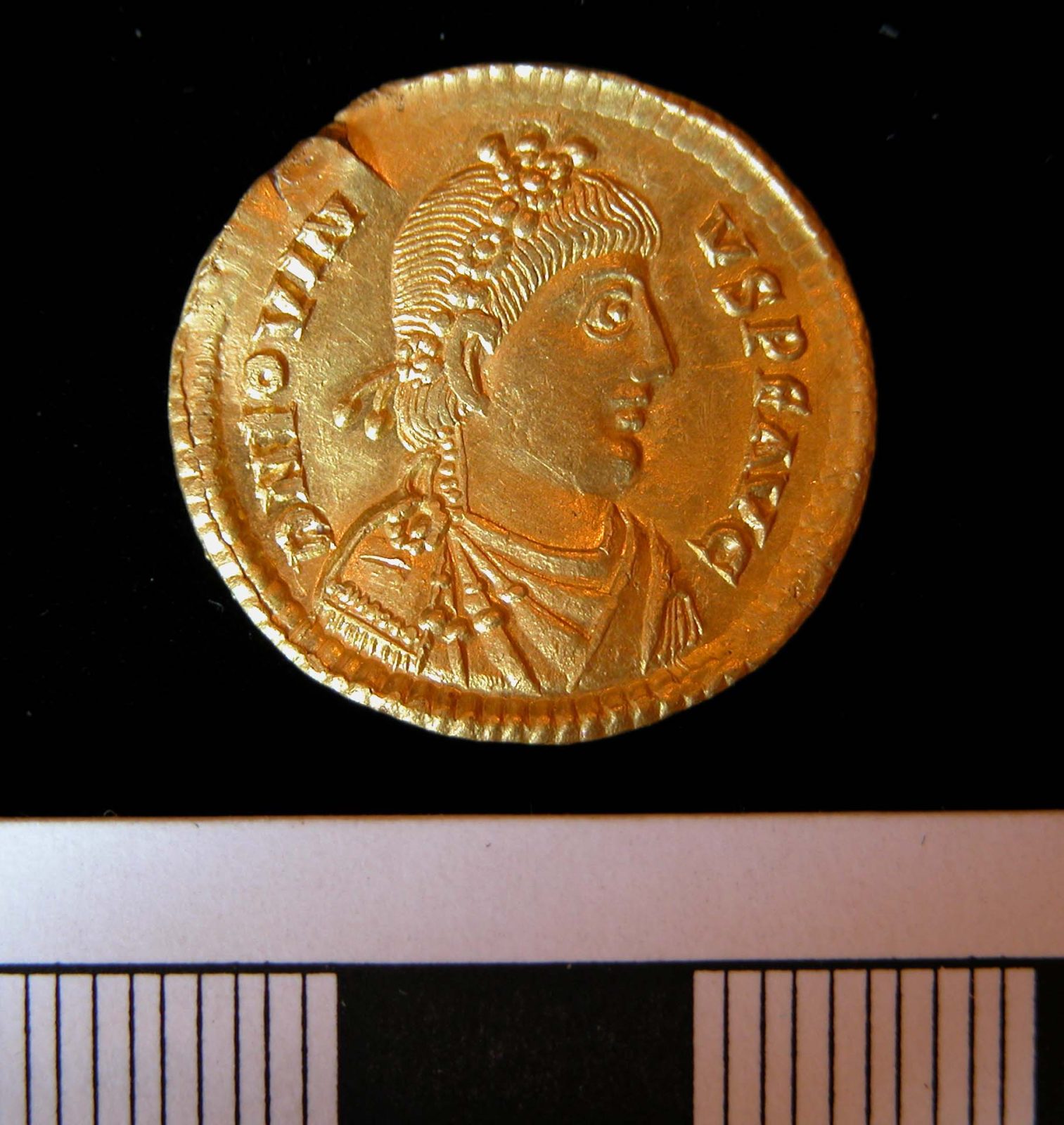
The finder, a detectorist from south Wiltshire whose name has not been published, arrived late for a group dig and found everyone had gone, with no phone signal to find them. Instead he went to a field nearby that had never produced many finds. It was raining and muddy, and for about fifteen minutes his detector was silent. Then came a faint signal he almost decided was not worth digging. About six inches down, a clod of earth showed a glint of gold. His first thought, he told the Salisbury Journal, was that it was the foil from a packet of Rolos. The coin was recorded with the Portable Antiquities Scheme through Salisbury and South Wiltshire Museum by 2007.
It is a gold multiple, a coin worth about one and a half solidi, the standard late Roman gold coin, weighing 5.32 grams and 21 millimetres across. On the front is the emperor Licinius I. On the back is the legend VBIQVE VICTORES, "victorious everywhere". It was struck at the mint of Trier, in what is now Germany, between 313 and 315.
Large gold pieces like this were not everyday money. Emperors gave them as gifts to officers and officials on special occasions, such as anniversaries and victories. The irony of this one is that Trier was the city of Constantine the Great, Licinius's fellow emperor and brother-in-law. The two ruled the Roman world together for a decade, until Constantine defeated Licinius in 324 and had him executed the following year.
Only three other examples of this coin are recorded, in the British Museum, the Hunterian Museum in Glasgow and the Ashmolean Museum in Oxford, and the Wiltshire coin was struck from different dies. It stayed with the finder, and in December 2013 it was offered at auction by Dix Noonan Webb in London with an estimate of up to £30,000. It is in a private collection.
Written for Global Finds from the Portable Antiquities Scheme (WILT-D86FB6), the Salisbury Journal via The E-Sylum (2013) and SWNS (2013). Photo: the Licinius gold multiple from south Wiltshire, Katie Hinds, Salisbury and South Wiltshire Museum, Portable Antiquities Scheme, Wikimedia Commons, CC BY-SA 2.0.
Source: The E-Sylum (Salisbury Journal and Dix Noonan Webb, 2013)