The Bornholm Amulet: an Arab silver coin from the Viking age, scratched with a Christian prayer in runes
Famous find Coin struck about 885 to 896; runes added about 1050 to 1100 · Found in 1770 See it on the timeline →
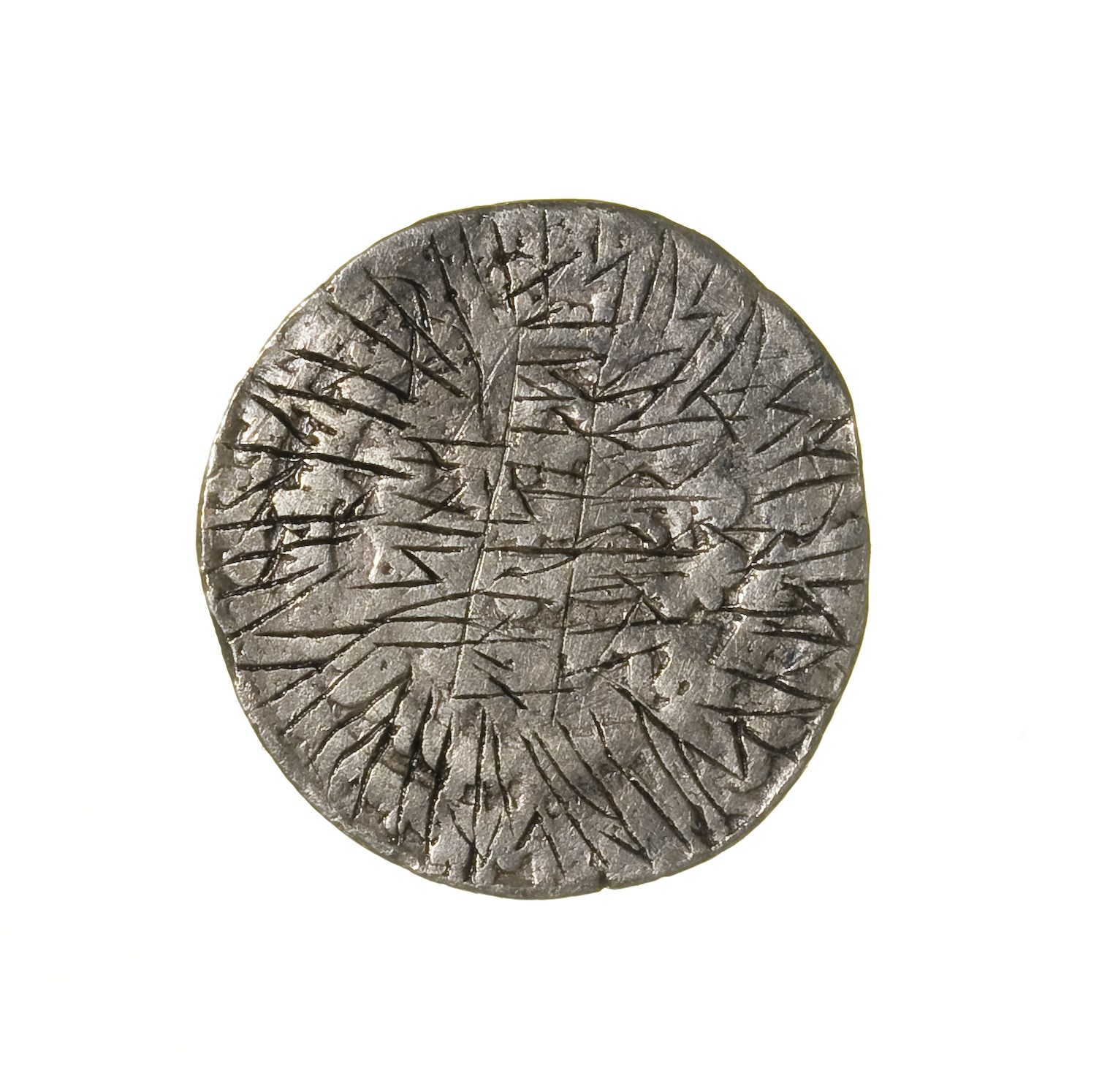
Found on the Danish island of Bornholm around 1770, this worn Islamic silver coin of the late 9th century was later scratched on both sides with a Christian prayer in Latin, written in runes. It is probably the oldest Church Latin text in runes from Denmark.
Some time around 1770, someone on the Danish island of Bornholm, in the Baltic Sea, found an old silver coin. Who found it, and exactly where, was never recorded. It was handed in to the National Museum in Copenhagen in 1821, and it has been there ever since.
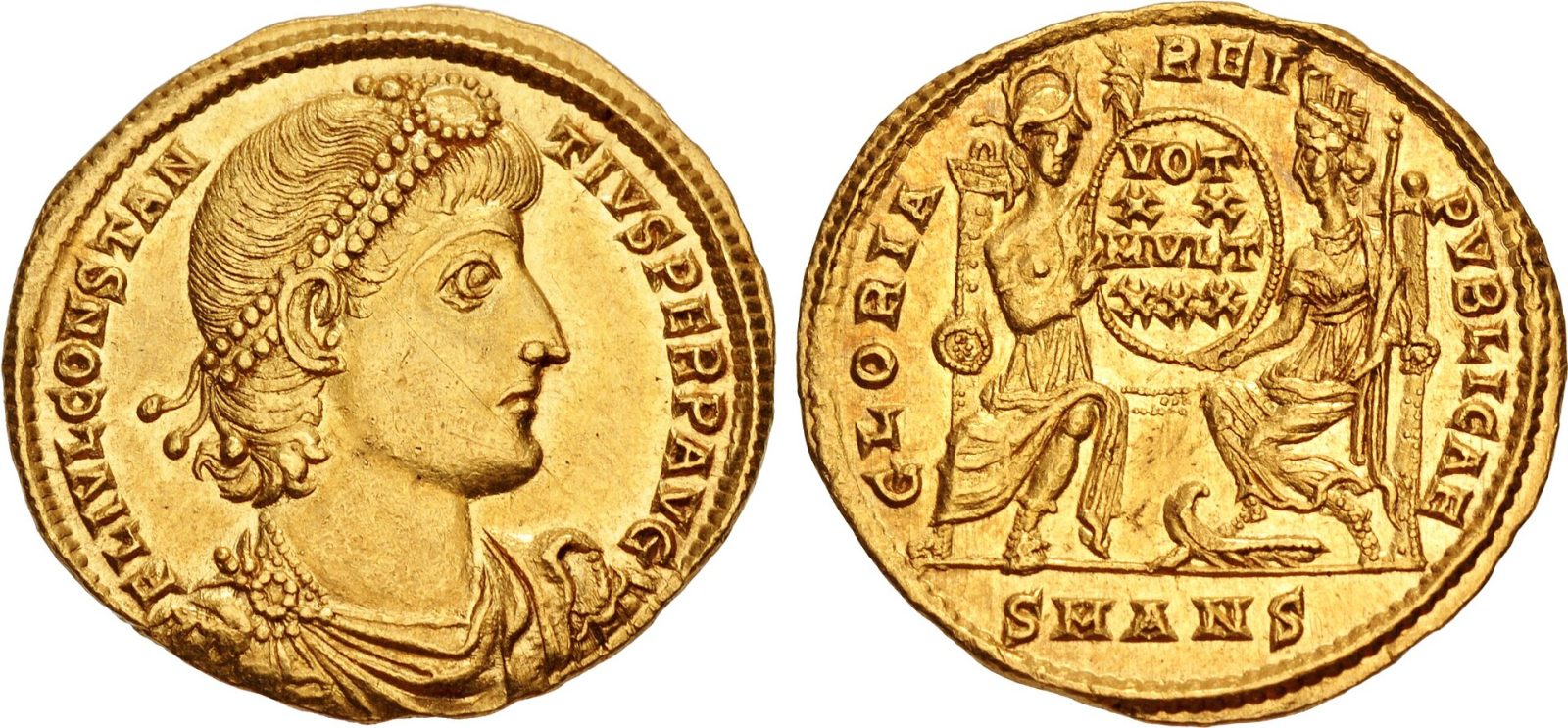
The coin is Islamic, a silver dirham about 2.5 centimetres across, struck in the Muslim world in the late 9th century, probably between about 885 and 896, though it is so worn that dating it has been difficult. Coins like this reached Scandinavia in huge numbers in the Viking age, traded north along the rivers of Russia in exchange for furs, slaves and other goods, and many ended up on Bornholm and Gotland.
What makes this one special is what someone did to it about two centuries later. Both faces have been covered with tiny runes, between 3 and 8 millimetres high. They spell out not Old Norse but Latin. On one side, around the edge and in three lines across the middle, the runologist Marie Stoklund read: "Jesus Christ, son of the living God. In the name of the Father and the Son and the Holy Ghost." On the other: "Christ. The gracious blood lives, may it preserve life everlasting." She dated the runes to the second half of the 11th century, after Denmark had become Christian. It is probably the oldest text in Church Latin written in runes anywhere in Denmark.
So an Arab coin, brought north by Viking traders, became a Christian charm, perhaps worn to protect its owner against illness, or placed in a grave. It has no loop for hanging, and how it was used is still debated.
For more than two centuries it was the only runic amulet of its kind known from Bornholm. Then detectorists began working with Bornholm Museum, and by 2005 seventeen medieval runic amulets had been recorded from the island, about a third of all those known from Denmark.
Written for Global Finds from M. Olesen, "Runic Amulets Made of Metal from Medieval Bornholm", Lund Archaeological Review (2005–06), and the National Museum of Denmark. Photo: the Bornholm amulet, Roberto Fortuna and Kira Ursem, National Museum of Denmark, Wikimedia Commons, CC BY-SA 2.0.