The Jovinus Solidus: gold of a two-year usurper, struck after Rome left Britain and found in a Kent wood
Famous find Struck about AD 411 to 413 · Found in 2004 See it on the timeline →
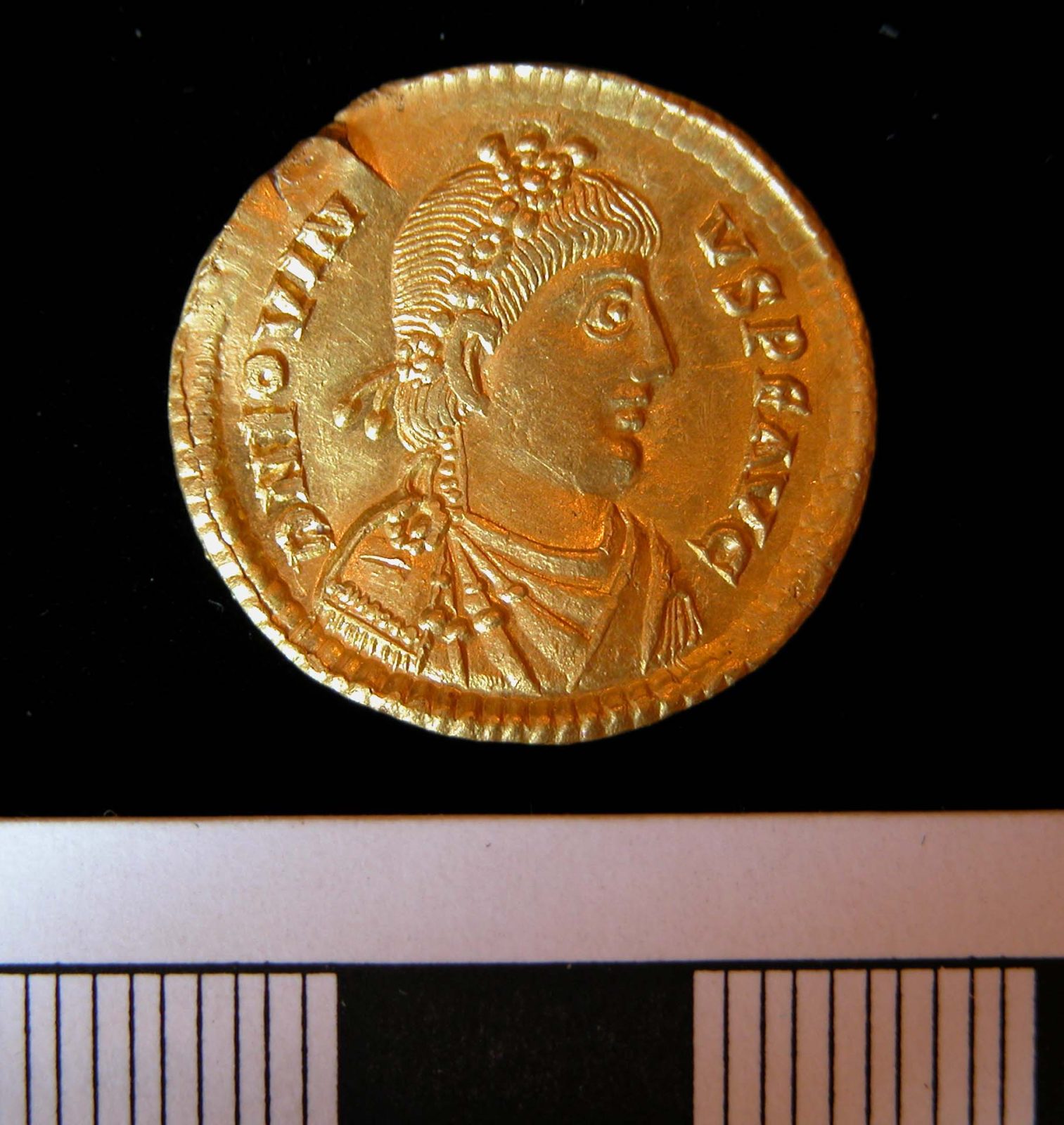
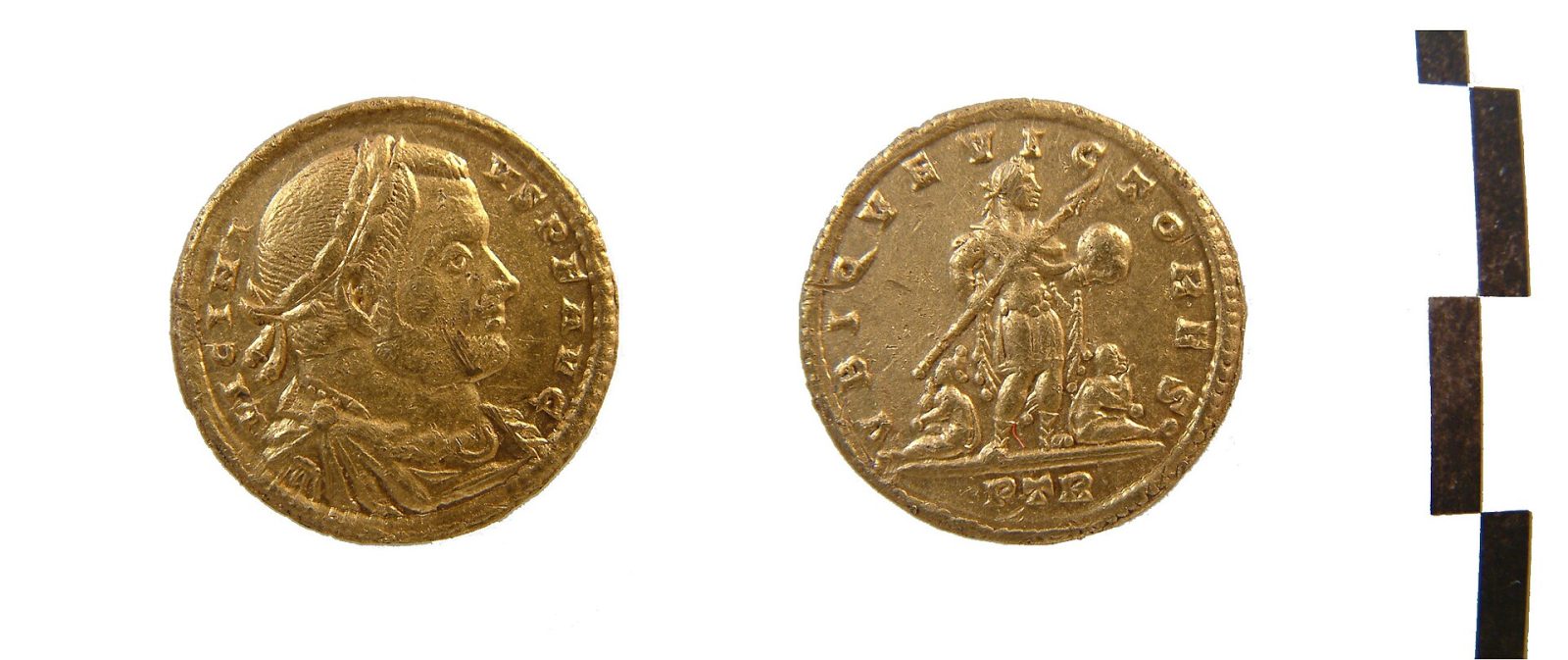
On 7 May 2004 a detectorist in woodland at Willesborough Lees near Ashford in Kent found a gold solidus of Jovinus, a usurper who ruled part of Gaul from 411 until his execution in 413. It was struck after Roman rule in Britain had ended.
On Friday 7 May 2004, a metal detectorist searching woodland at Willesborough Lees, on the edge of Ashford in Kent, found a small gold coin in very fine condition. The finder's name has not been published, although the dealer who later bought it described the finder as a policeman. It was recorded with the Portable Antiquities Scheme by Andrew Richardson, the Finds Liaison Officer for Kent.
It is a solidus, the standard gold coin of the late Roman Empire, weighing 4.47 grams and 20.6 millimetres across. On the front is the bust of the emperor Jovinus, wearing a diadem of rosettes, with the inscription D N IOVINVS P F AVG. On the back the emperor stands holding a standard with his foot on a captive barbarian, and the legend RESTITVTOR REIP, "restorer of the state". The mint mark shows that it was struck at Trier. There is a small split at the edge behind the head, but the coin is barely worn.
Jovinus was not a legitimate emperor. In 411, as the western Roman Empire was breaking apart, he was proclaimed emperor in Gaul, with the support of Burgundians and Alans, against the emperor Honorius. His reign lasted about two years. In 413 he was captured by the Visigothic king Athaulf and executed. His gold coins are rare.
What makes the Kent coin intriguing is its date. Roman rule in Britain had ended around 409 or 410, so this coin was struck after Britain had left the empire. Someone carried a usurper's gold across the Channel into a land that was no longer Roman, where it was lost or buried in what is now a wood in Kent.
After recording, it was returned to the finder and sold at Morton & Eden in London in November 2004 to an Italian dealer, who said that British Museum experts considered it the only solidus of Jovinus found in England. That claim has not been independently confirmed. It is in private hands.
Written for Global Finds from the Portable Antiquities Scheme (KENT-DEF360) and Morton & Eden (2004). Photo: the Jovinus solidus from Willesborough Lees, front, Andrew Richardson, Kent County Council, Portable Antiquities Scheme, Wikimedia Commons, CC BY-SA 2.0.