The Falster Solidus: 'the emperor looked up at me' - a detectorist's first Roman gold on the Danish island
Famous find Struck at Sirmium, AD 351 to 355 · Found in 2024 See it on the timeline →
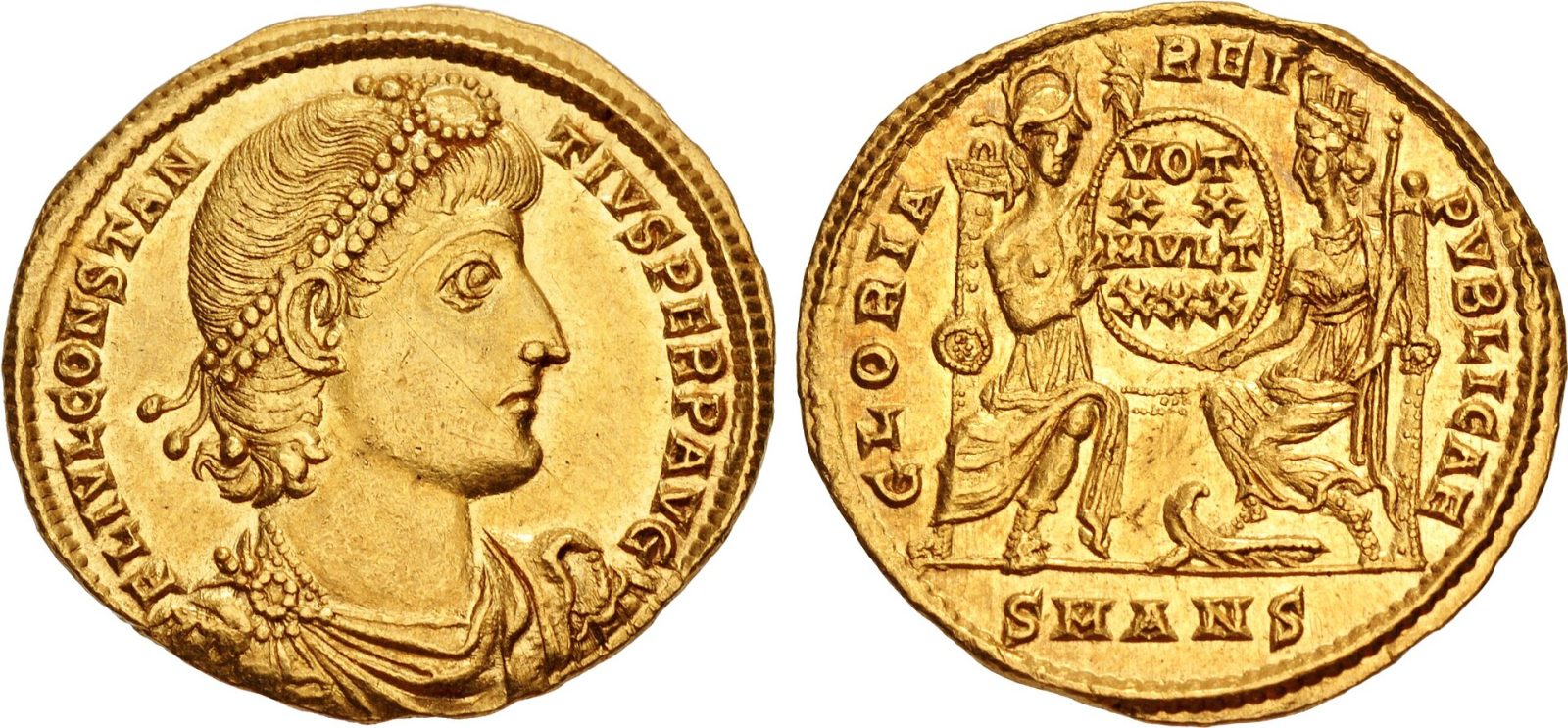
In May 2024 detectorist Linda Aarosin scraped away a little soil in a field in central Falster, Denmark, and saw an emperor's face looking up at her. It was a gold solidus of Constantius II, worn as a pendant, the first Roman gold coin found on the island.
In May 2024, Linda Aarosin, a deputy chief nurse in psychiatry from West Zealand who had been detecting for eight years, joined a small group invited by the detectorist Lennart Druschke Larsen to search a field near a pond in central Falster, an island in southern Denmark. It was a dry, sunny day, and she did not expect much, because her detector does not work well on dry fields. Then she got a signal just below the surface. When she scraped away a little soil, she said, the emperor looked up at her. She shouted something about gold, and Larsen came running, thinking she had hurt herself. The group danced, filmed it, and opened the bottle of champagne they had brought along just in case.
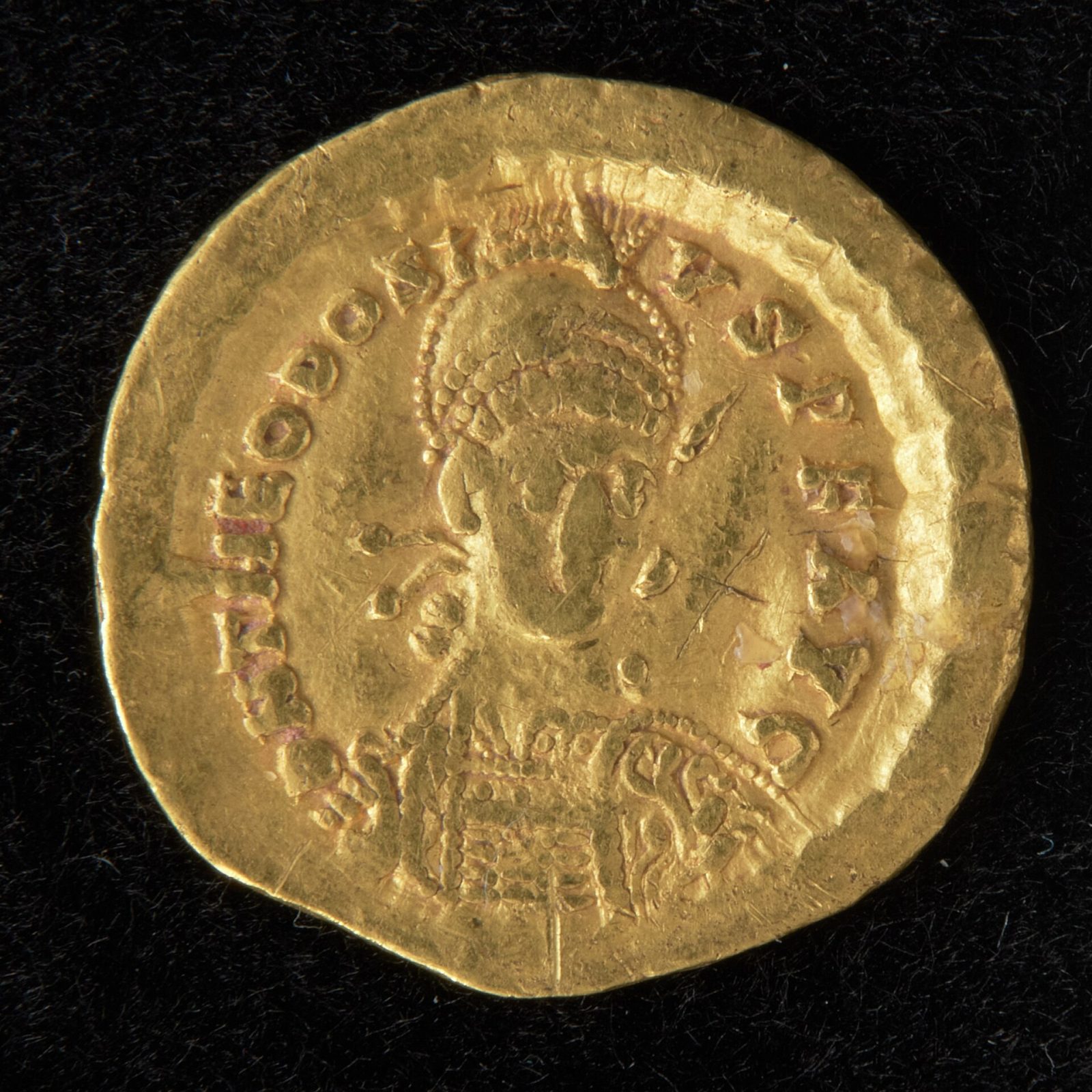
The coin is a gold solidus of Constantius II, son of Constantine the Great, who ruled from 337 to 361. It was struck at Sirmium, in what is now Serbia, between 351 and 355. On the back, two female figures hold a shield inscribed with the emperor's vows. A loop had been added so that it could be worn as a pendant, and with the loop it weighs about 6 grams. It shows almost no wear. Helle Horsnæs of the National Museum of Denmark called it insanely beautiful.
It was the first Roman gold coin ever found on Falster, and of a type never before found in Denmark. More than thirty Roman gold coins of the mid-4th century are known from Denmark, about half of them in hoards and most from Gudme on Funen, a great centre of power in the Iron Age. The museum's curator, Marie Brinch, said that central Falster was emerging as another rich centre in the Late Iron Age, with finds of gold rings and pendants nearby, and, in 2023, a die for stamping tiny gold-foil figures.
The coin went through Museum Lolland-Falster to the National Museum to be assessed as danefæ, treasure belonging to the state, for which the finder receives a reward.
Written for Global Finds from Museum Lolland-Falster (2024). Photo: a gold solidus of Constantius II of a similar design, struck at Antioch, not the Falster coin, Classical Numismatic Group, Wikimedia Commons, CC BY-SA 2.5.
Linked finds
Source: Museum Lolland-Falster (2024)