The Corrard Torc: a Fermanagh farmer's Bronze Age gold, kept for 18 months as an old car spring
Famous find Made about 1300 to 1100 BC · Found in 2009 See it on the timeline →
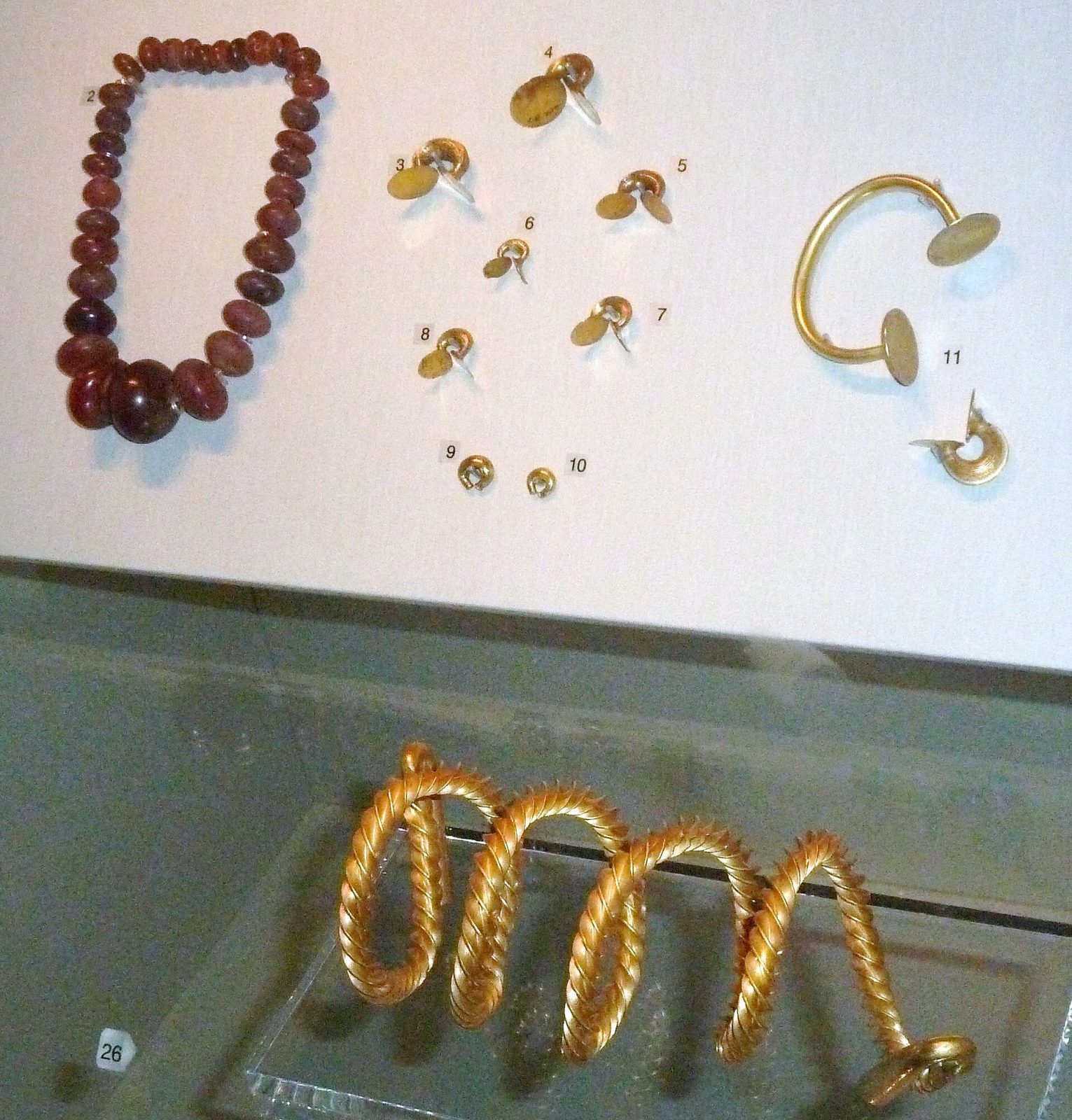
On 20 December 2009 farmer and detectorist Ronnie Johnston found a coiled gold bar in boggy ground beside Upper Lough Erne in County Fermanagh. He took it for a car suspension spring. It was a 3,000-year-old gold torc, now in the Ulster Museum.
On 20 December 2009, Ronald Johnston, a farmer and amateur metal detectorist from Maguiresbridge in County Fermanagh, was searching boggy low ground in the old parkland of Corrard House, on the north shore of Upper Lough Erne. About 60 centimetres down he found a coil of metal lying at an angle in the ground. When he pulled it out by one end, the coil stretched. It looked like the suspension spring from a vintage car, and that is what he assumed it was.
About eighteen months later he saw a picture of a Bronze Age torc in a treasure-hunting magazine and realised what he had. An expert at Armagh County Museum advised him to report it, and he did. Archaeologists from Queen's University Belfast then surveyed the findspot with detectors and magnetometry but found nothing else.
The Corrard torc is a twisted gold bar torc of a type known as four-flange: a single square bar of gold hammered into a cross-shaped section, then twisted, with a cone-shaped terminal at each end. It is about 87 per cent gold and weighs about 720 grams. It was made in the Middle Bronze Age, about 1300 to 1100 BC. Unlike every other Irish torc of its kind, it is still coiled. The only other coiled example known from Ireland was straightened out after it was found. The coiling may have been deliberate, perhaps to put it out of use before it was offered in the bog.
It was declared Treasure at Belfast Coroner's Court on 30 March 2012 and acquired by National Museums Northern Ireland. The curator Greer Ramsey called it the most important single item of prehistoric gold jewellery ever found in Northern Ireland. It has been on display in the Ulster Museum in Belfast since July 2013. A very similar torc, found in East Cambridgeshire in 2015, is also on Global Finds.
Written for Global Finds from Queen's University Belfast's excavation report (excavations.ie, 2012), National Museums NI and the Fermanagh Herald (2013). Photo: Bronze Age gold in the Ulster Museum, Belfast, with the coiled Corrard torc in the lower half of the picture, Notafly, Wikimedia Commons, CC BY-SA 3.0.
Source: Queen's University Belfast excavation report (excavations.ie)