The Star Carr Pendant: an 11,000-year-old engraved shale charm, found by a student a metre from a famous trench
Famous find Made about 9000 BC · Found in 2015 See it on the timeline →
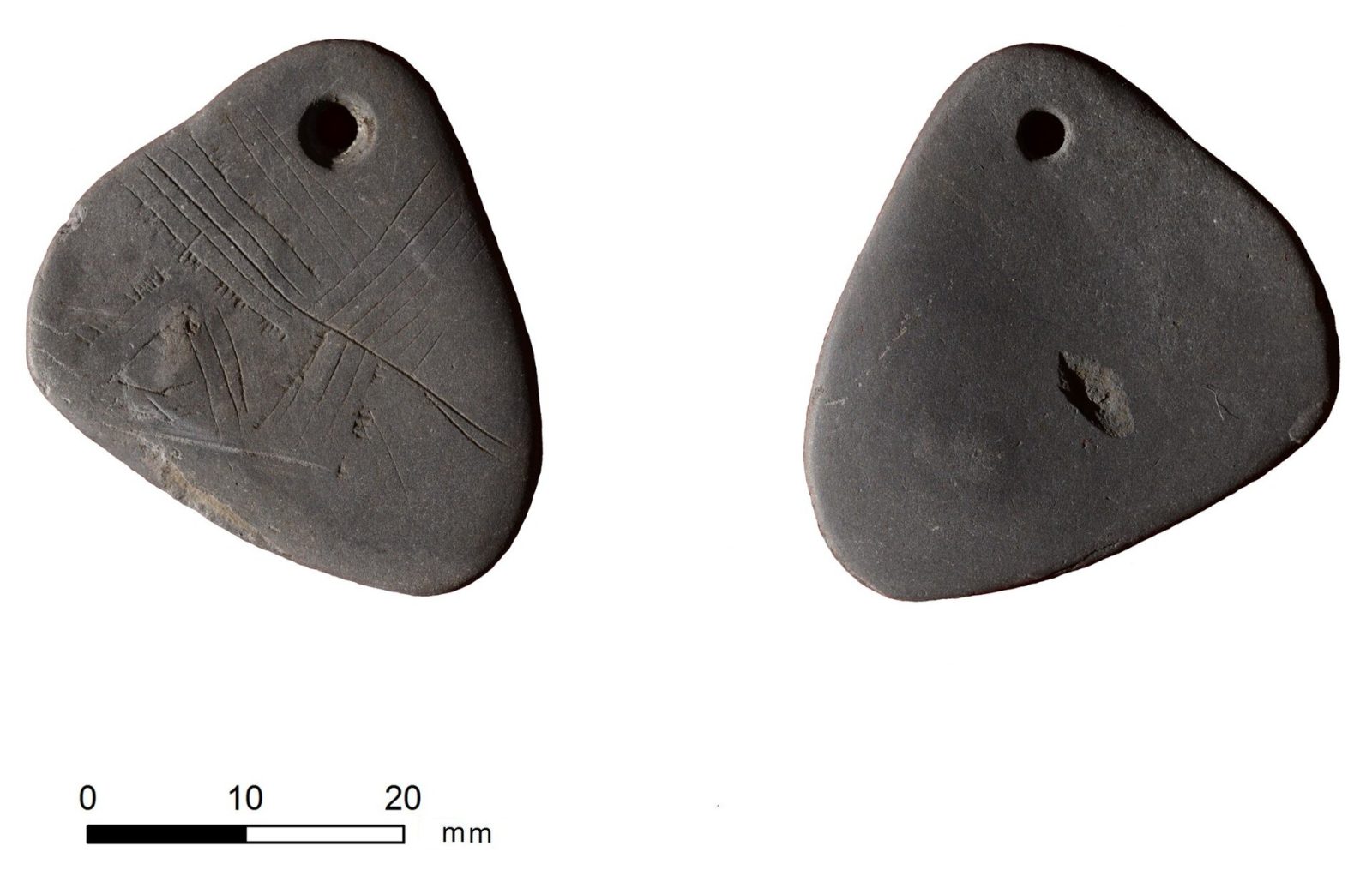
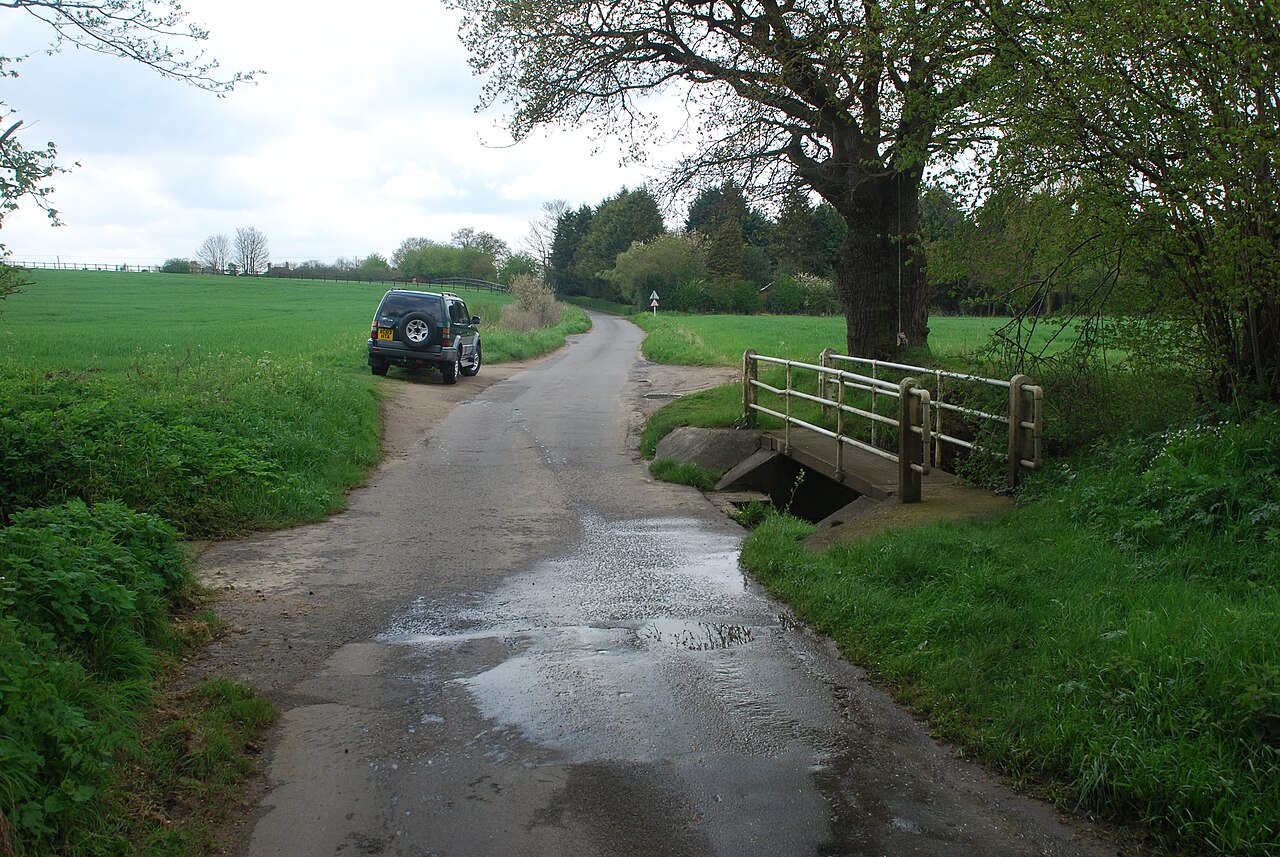
In 2015 student Tom Bell, volunteering on the dig at Star Carr in North Yorkshire, picked up what he thought was a smooth stone from the mud of an ancient lake. It was a shale pendant engraved about 11,000 years ago, the earliest known Mesolithic art in Britain.
In the last days of the 2015 excavation season at Star Carr, near Scarborough in North Yorkshire, Tom Bell, a 21-year-old undergraduate at the University of Chester who had volunteered on the dig for several years, picked up what he took for a smooth stone. Then he noticed the hole drilled through it, turned it over, and saw lines scratched into its surface. Mud had filled the hole and hidden the engraving until the moment it was lifted.
It is a small, roughly triangular pendant of shale, 31 by 35 millimetres and only 3 millimetres thick, with a single drilled hole and faint engraved lines, described as barbed, on one side. It lay in mud at the edge of a long-vanished lake, palaeo-Lake Flixton, in at least half a metre of water about ten metres from the old shore. The mud is dated to around 9000 BC, so the pendant is about 11,000 years old, made by hunter-gatherers when Britain was still joined to the continent by Doggerland. It is the earliest known Mesolithic art in Britain, and no other engraved shale pendant is known from Europe. Its closest parallels are amber pendants from Denmark.
Star Carr is one of the most famous Stone Age sites in Europe. Between 1949 and 1951 the archaeologist Grahame Clark, himself an expert on Mesolithic art, excavated there and found 21 red-deer antler headdresses. The pendant lay less than a metre from the end of his trench. Professor Nicky Milner of the University of York, who led the recent excavations, has suggested that it may have belonged to a shaman, though that is one possibility among several.
The pendant was studied with microscopes, residue analysis and 3D imaging, and the results were published openly in 2016, with a free 3D model that anyone can print. It went on show at the Yorkshire Museum in York in 2016, and it remains one of the museum's collection highlights.
Written for Global Finds from N. Milner and colleagues in Internet Archaeology 40 (2016), the University of York (2016) and the Yorkshire Museum. Photo: the Star Carr pendant, front and back, from Milner and colleagues, Internet Archaeology 40 (2016), Wikimedia Commons, CC BY 3.0.
Source: Internet Archaeology 40 (2016)