Queen Puabi's Headdress: gold leaves from an untouched royal tomb at Ur, announced by a telegram in Latin
Famous find Buried about 2600 to 2450 BC · Found in 1928 See it on the timeline →
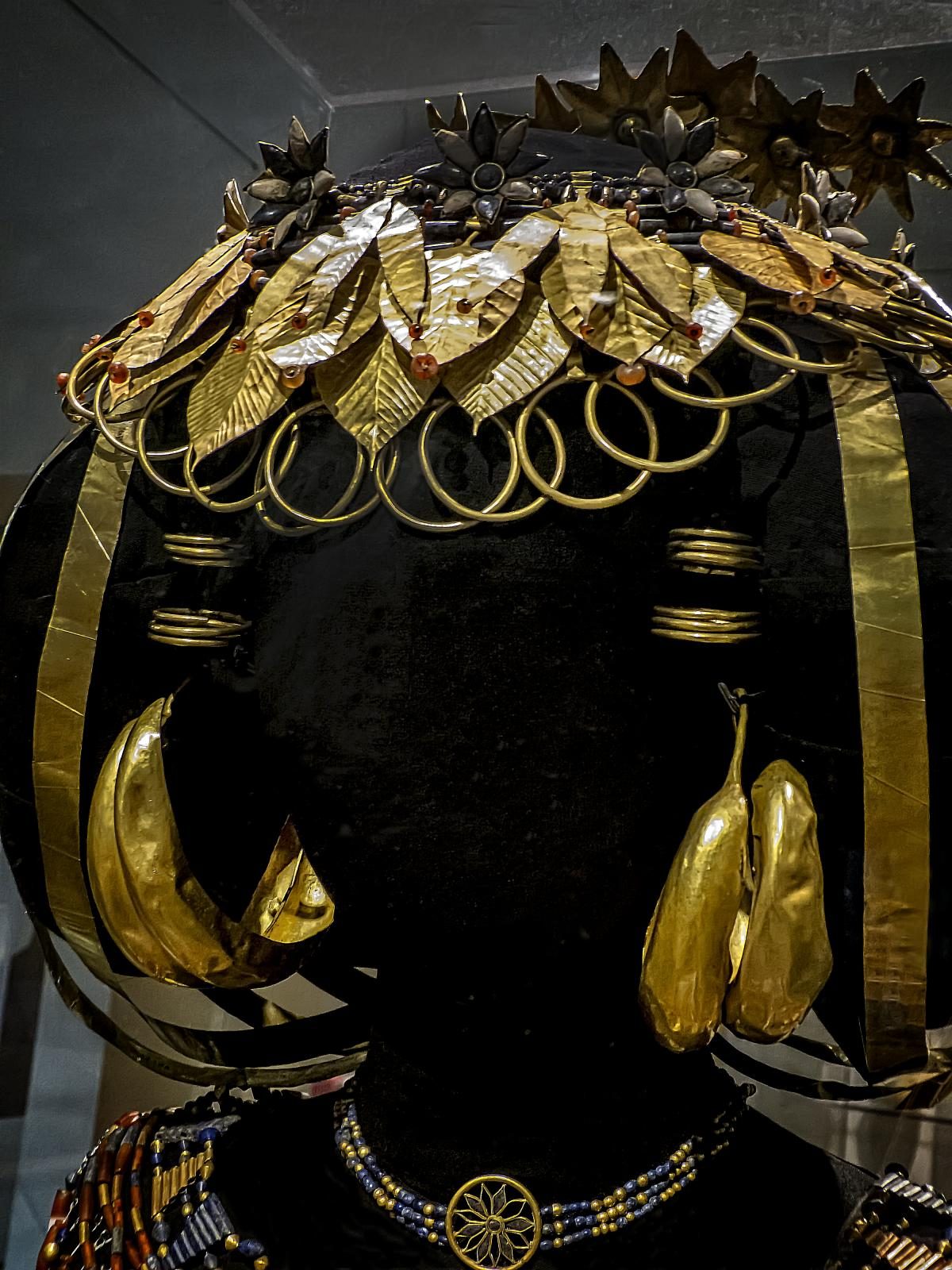
In the 1927–28 season at Ur in Iraq, Leonard Woolley's team found the intact tomb of Queen Puabi, buried around 2600 to 2450 BC. Her headdress of gold leaves, flowers and rings and a towering gold comb is one of the masterpieces of Sumerian jewellery.
In the winter of 1927 to 1928, the archaeologist Leonard Woolley was excavating the Royal Cemetery at Ur, in southern Iraq, for a joint expedition of the British Museum and the University of Pennsylvania Museum. Most of the graves had been robbed long ago. Then his team found one that had not. On 4 January 1928 the museum in Philadelphia received a telegram from Woolley, written in Latin so that the telegraph clerks could not read it, reporting that he had found the intact tomb of a queen, magnificent with jewels and golden cups.
The tomb, numbered PG 800, was a small vaulted chamber of limestone rubble at the bottom of a pit. The queen lay on a wooden bier, with attendants buried around her, and many more people lay in the pit outside, part of a mass burial that Woolley called a death pit. A cylinder seal on her body gave her name and title: Pu-abi, eresh, "queen". It mentions no husband, and many scholars think she held power in her own right. Woolley first read the name as Shub-ad.
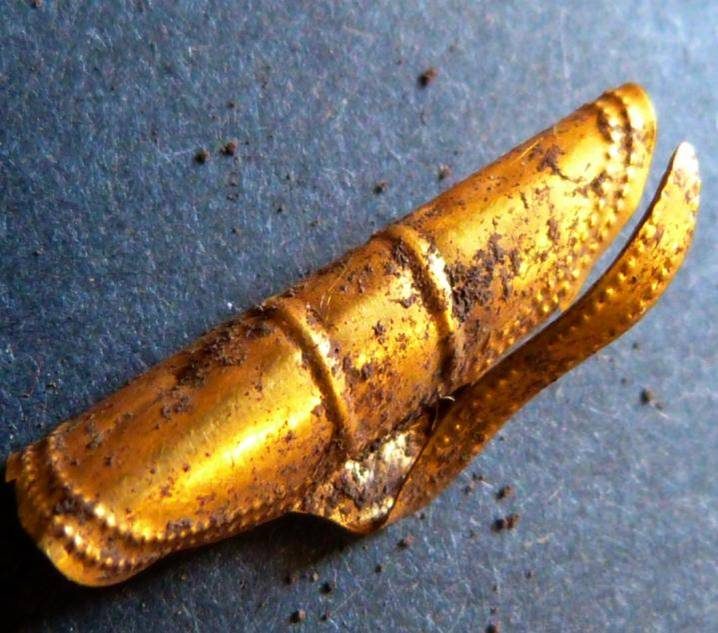
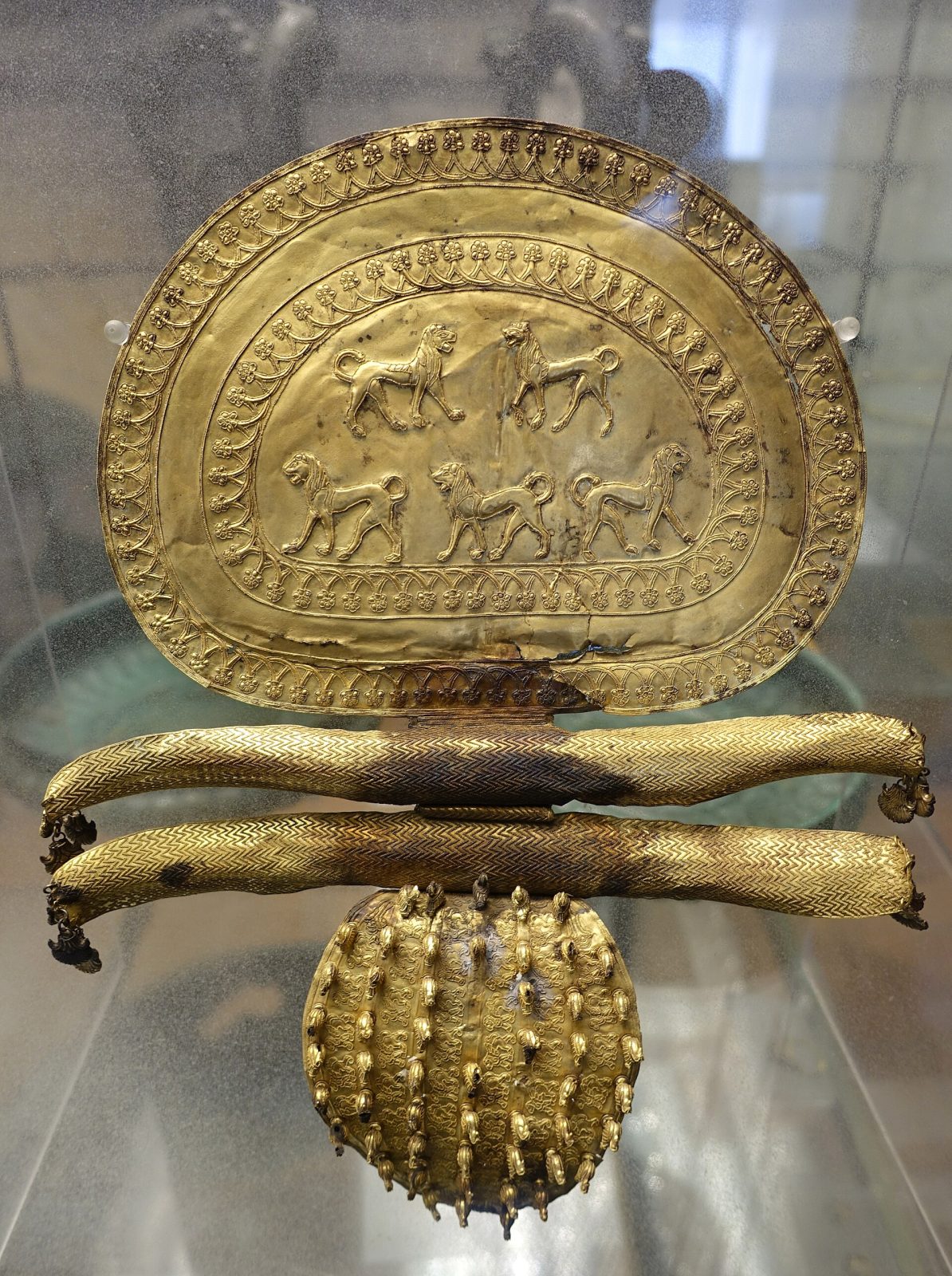
Her headdress is made of several separate pieces. A wreath of twenty gold poplar leaves hung on strings of lapis lazuli and carnelian beads; each leaf is hammered from a single piece of gold, its stem folded into loops to thread onto the beads. A second wreath has willow leaves and gold flowers inlaid with lapis, and a frontlet carries twenty gold rings. Above it all rose a large gold comb, about 30 centimetres across, topped with seven gold flowers with lapis centres. Large crescent-shaped gold earrings completed the set. It was buried about 2600 to 2450 BC.
The finds from Ur were divided between Baghdad, the British Museum and Philadelphia. Puabi's headdress went to the Penn Museum in Philadelphia, where it has been on display in the Middle East Galleries since 2018.
Written for Global Finds from the Penn Museum's collection records. Photo: Queen Puabi's headdress and jewellery in the Penn Museum, Philadelphia, Mary Harrsch, Wikimedia Commons, CC BY 2.0.
Source: Penn Museum