The Harford Farm Brooch: an Anglo-Saxon gold brooch with a runic note on the back: 'Luda repaired the brooch'
Famous find Made in the 7th century AD · Found in 1990 See it on the timeline →
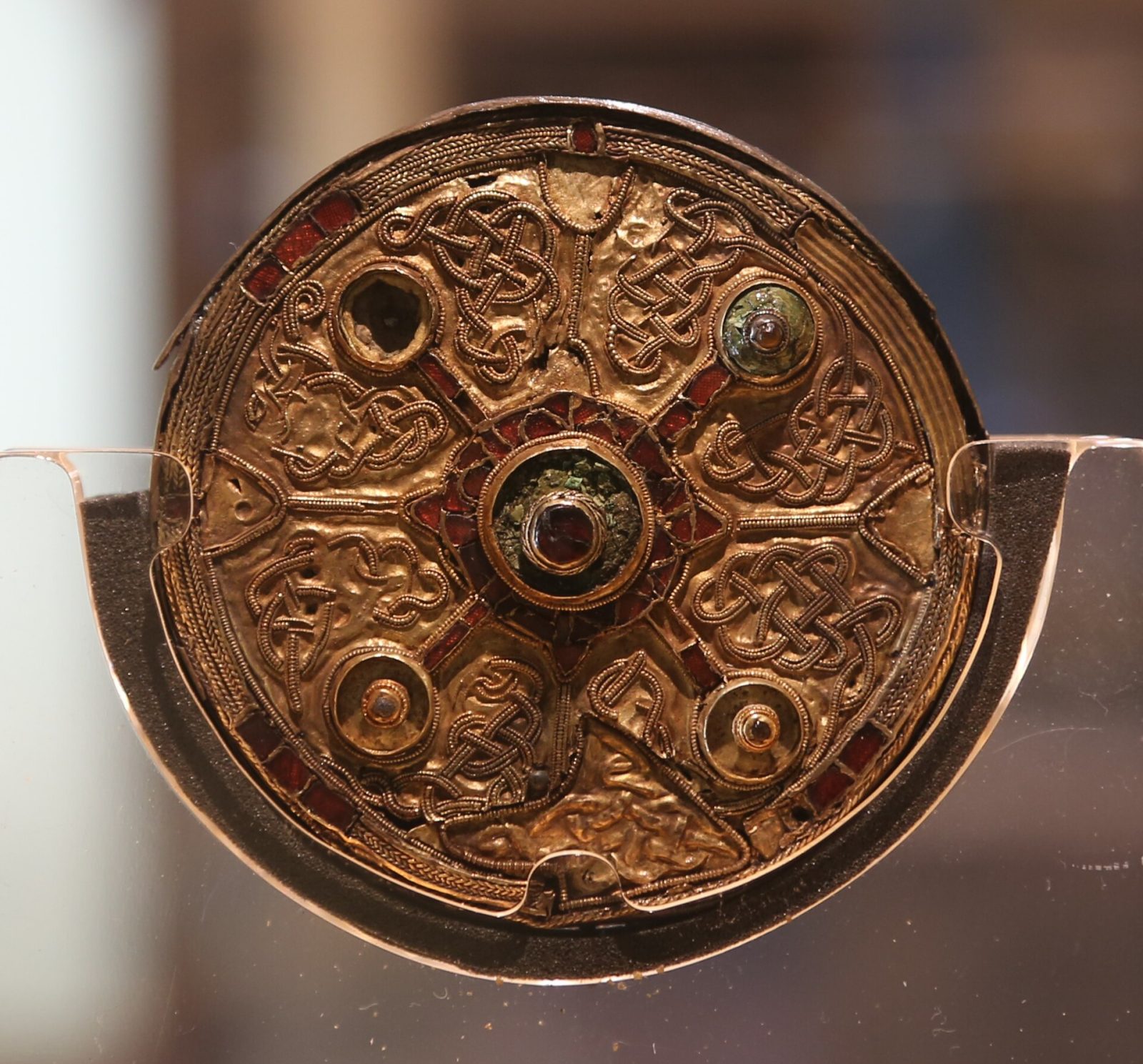
In 1990 archaeologists digging ahead of the Norwich Southern Bypass at Harford Farm, Caistor St Edmund, found an Anglo-Saxon gold and garnet disc brooch in a woman's grave. On its back, in runes, a repairer had signed his work: Luda.
In 1990 the Norfolk Archaeological Unit was excavating at Harford Farm, Caistor St Edmund, just south of Norwich, before the new Norwich Southern Bypass was built over the site. Near the Roman town of Venta Icenorum they uncovered an Anglo-Saxon cemetery of more than forty graves from the 7th century. In one, a woman had been buried with keys, rings, a toilet set and a knife, and near her chest lay a large brooch, face down.
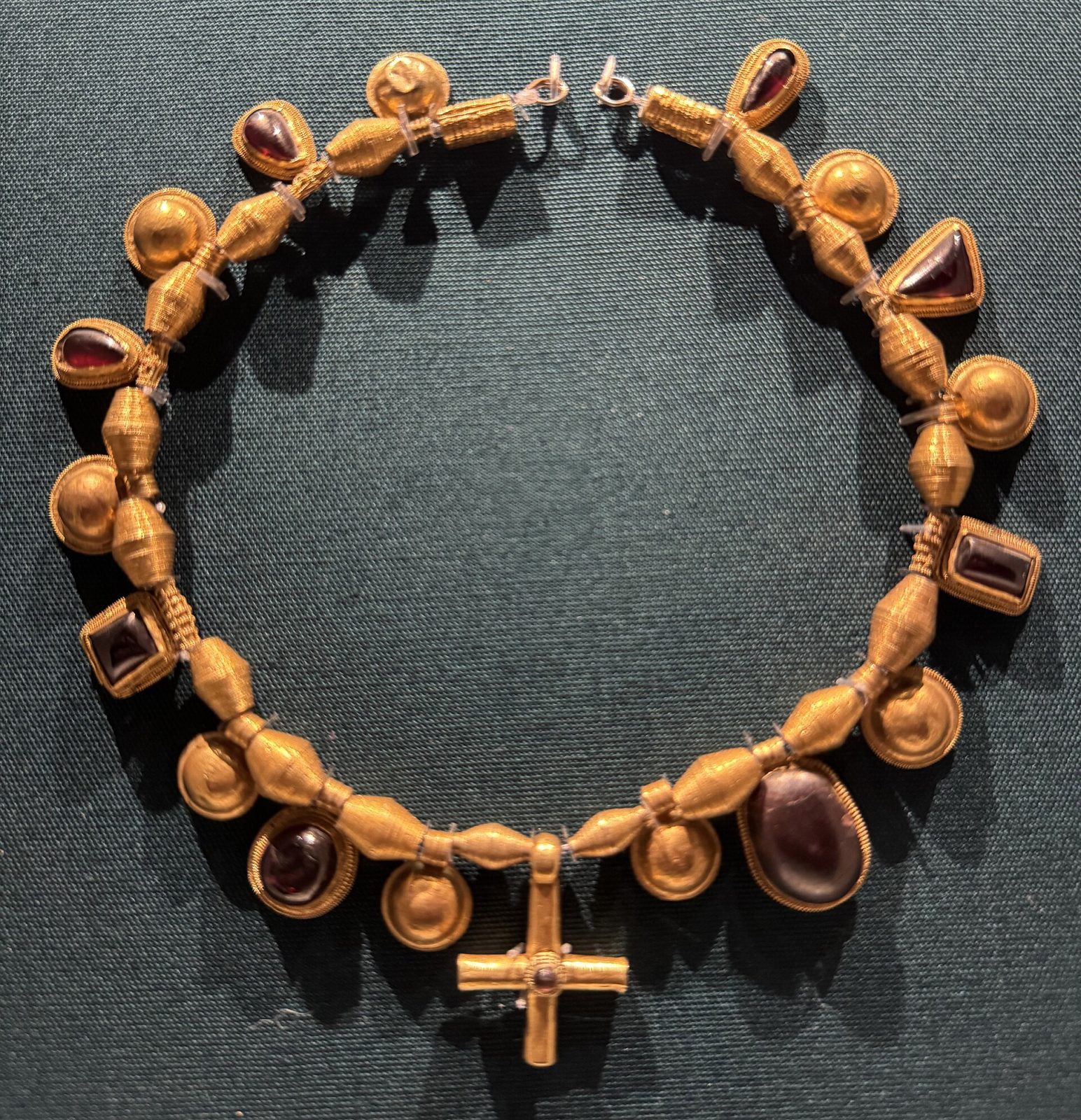
It is a composite disc brooch 72 millimetres across, with a gold front decorated with filigree wire and cells set with garnets, and raised bosses holding garnets and glass, all mounted on a silver backplate. Brooches of this kind were a speciality of Kent, and the Norfolk Museums describe it as the only one of its type known outside that county. It was made in the 7th century.
The real surprise is on the back. Scratched into the silver, in Anglo-Saxon runes, is the inscription luda:gibœtæsigilæ. Norfolk Museums translates it as "Luda repaired the brooch", and the repair can still be seen on the front, where it was not done very neatly. Another scholar, Alfred Bammesberger, has read it differently, as "may Luda make amends by means of the brooch", which would turn it into a gift with a story behind it. Either way, it is one of the earliest pieces of English writing on a personal object, and a rare case of a craftsman signing his work. A second, faint inscription on the pin-head has never been explained, and two snake-like beasts, biting each other's feet, are scratched beside the pin.
The finds from the cemetery were acquired by Norwich Castle Museum, with help from the Art Fund, and the brooch is displayed in the castle's Anglo-Saxon gallery.
Written for Global Finds from Norfolk Museums, the Art Fund, the Norfolk Historic Environment Record and K. Penn, East Anglian Archaeology 92 (2000). Photo: the Harford Farm brooch in Norwich Castle Museum, Geni, Wikimedia Commons, CC BY-SA 4.0.
Source: Art Fund