The Desborough Necklace: ironstone diggers shared out an Anglo-Saxon gold necklace, then handed it back for a small reward
Famous find Made in the late 7th century AD · Found in 1876 See it on the timeline →
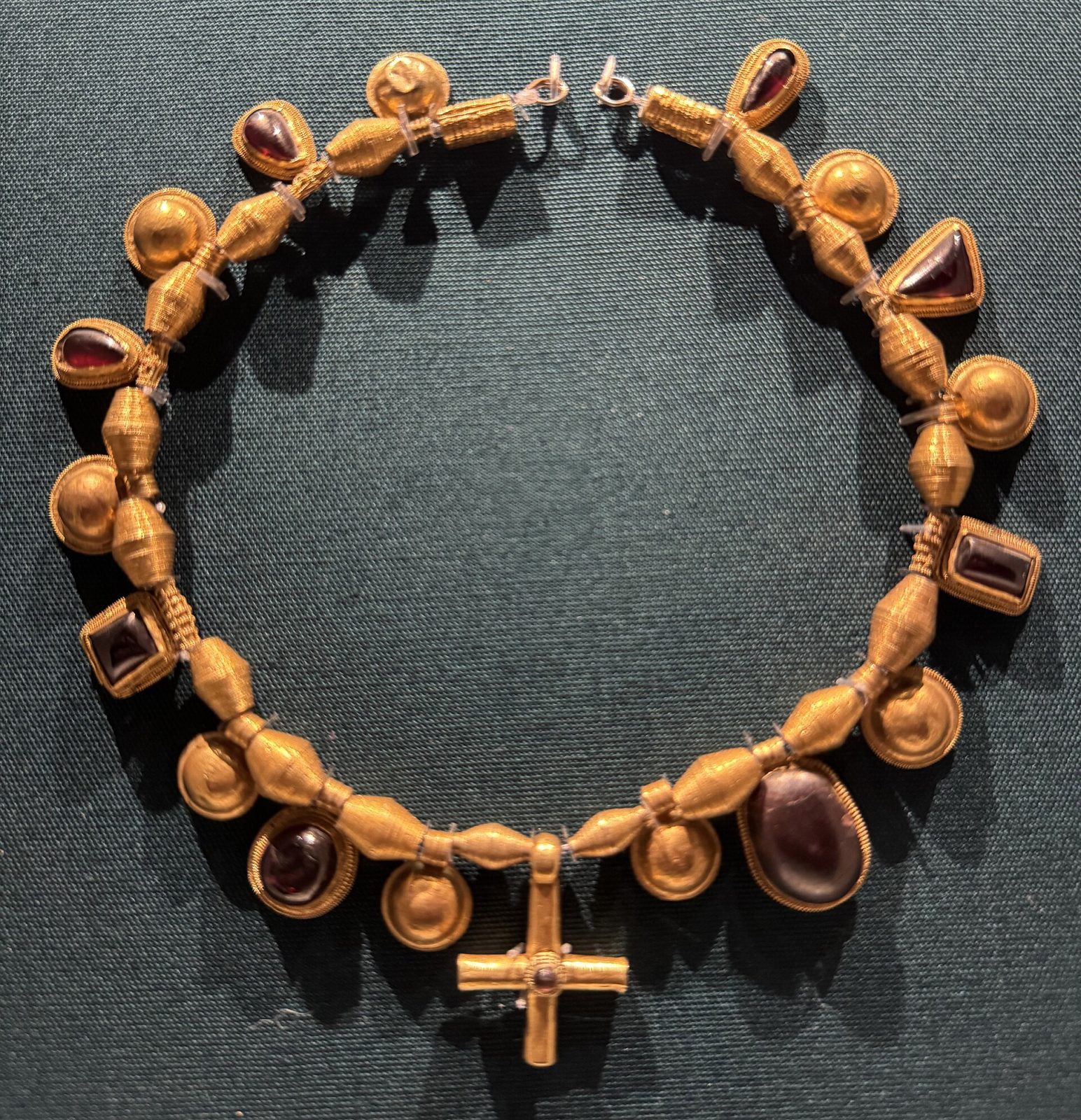
In 1876 workmen digging ironstone at Desborough in Northamptonshire broke into an Anglo-Saxon cemetery. One grave held a gold and garnet necklace with a gold cross. The men divided the pieces among themselves and had to be persuaded to return them.
In 1876, workmen digging for ironstone at Desborough, in Northamptonshire, broke into an Anglo-Saxon cemetery of some sixty graves, a little way east of the parish church. In one grave, near the head of the skeleton, lay a gold necklace. It was the only object in the grave. The workmen shared out the pendants and beads among themselves, and they had to be persuaded to hand them back in return for a small reward. Mr Hickman of the Desborough Iron Ore Company recovered them. Because of the share-out, nobody can be certain the necklace is complete.
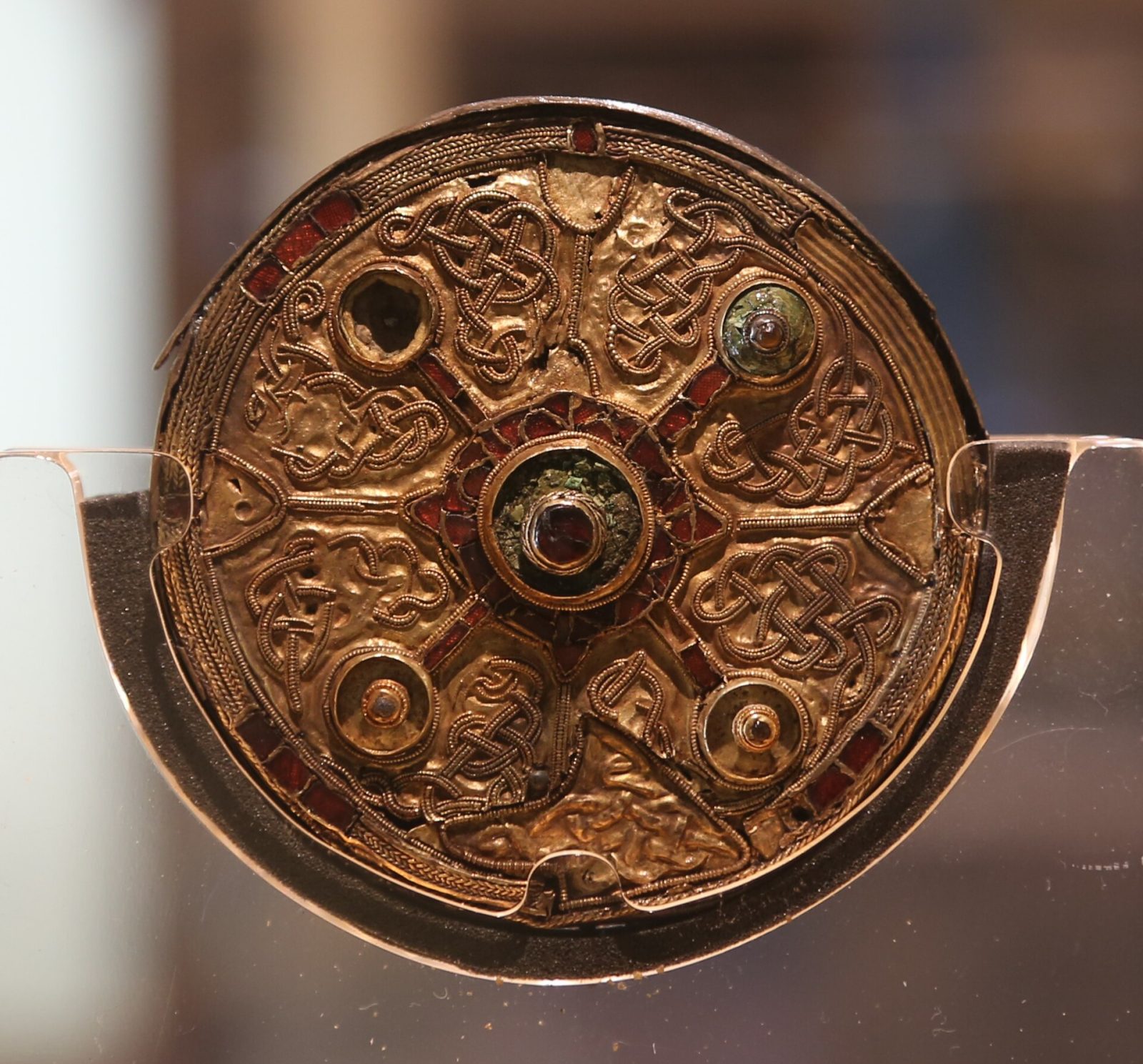
As it survives, the necklace is about 25 centimetres long. Gold pendants set with polished garnets alternate with small gold bullae, round pendants, and coiled gold-wire beads, with filigree end beads. Descriptions differ slightly on how many garnet pendants there are, eight or nine, which is a small reminder of how hard it is to be sure what a scattered find once looked like. At its centre hangs an equal-armed gold cross. Analysis in 2013 showed that the stone at the centre of the cross is glass rather than garnet, and that the necklace was put together from pendants from at least two different sources. It was probably assembled in the second half of the 7th century.
The cross makes it one of the earliest clearly Christian pieces of English jewellery, worn by a woman of high status in the generations when the Anglo-Saxon kingdoms were converting to Christianity. Its closest parallel is the necklace from the Harpole Treasure, found in 2022 less than 20 miles away.
The British Museum bought the necklace in 1876 from the Reverend Robert Baker, who published the find in the journal Archaeologia in 1880. It is displayed in the museum's early medieval gallery, and in 2018 and 2019 it was lent back to Northamptonshire for an exhibition at Kettering.
Written for Global Finds from the British Museum's collection record, Northampton Museums, the Northamptonshire Historic Environment Record and the Northamptonshire Heritage Forum. Photo: the Desborough necklace in the British Museum, Lumaag, Wikimedia Commons, CC0.
Source: Northampton Museums