The Holderness Cross: a farmer spotted a gold glint in his stack-yard, then kept it in a drawer for thirty years
Famous find Made about AD 620 to 660 See it on the timeline →
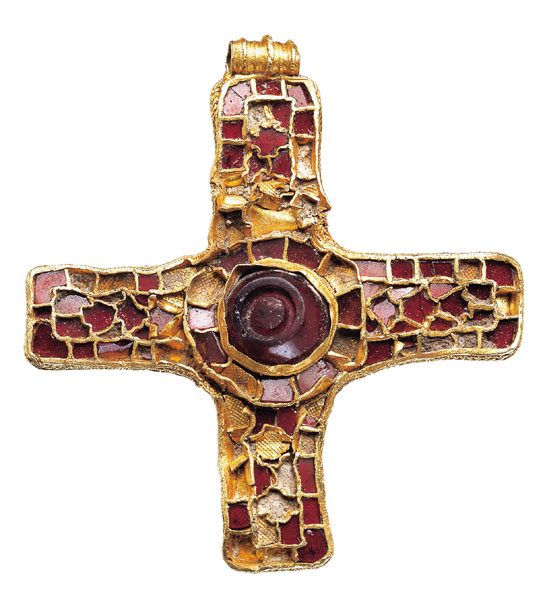
In the 1960s farmer Ronald Wray saw a gold cross lying in his stack-yard at Burton Pidsea in East Yorkshire, washed clear by rain. Nobody could identify it, and it spent thirty years in a drawer before a museum recognised it as a 7th-century Anglo-Saxon pectoral cross.
One morning in the 1960s, Ronald Wray, who farmed Gray's Garth Farm at Burton Pidsea on the Holderness peninsula of East Yorkshire, was crossing his stack-yard when he glimpsed a golden gleam on the ground. The previous night's rain had washed the soil away from a small cross lying face-down. He showed it to a friend who knew local history, but nobody could say what it was, and in the end Mr Wray put it in a box at the back of a drawer, where it stayed for about thirty years.
In 1998 the cross was taken to an open finds day at the Hull and East Riding Museum. The Keeper of Archaeology, Gail Foreman, recognised it at once as an important 7th-century piece made of gold, and the coroner was told. Because it had been found long before the Treasure Act came in, the East Yorkshire coroner held the inquest under the old law of treasure trove. At Hull on 19 April 1999 the jury decided it was not treasure trove, because there was no evidence it had been hidden with the intention of coming back for it. It may have been lost, or come from a grave; an Anglo-Saxon cemetery had been found in the village in 1818.
So the cross went back to Mr Wray, who sold it at Bonhams in Knightsbridge in October 1999. The Ashmolean Museum in Oxford was outbid at the sale, but it then approached the buyer and, with a grant from the National Art Collections Fund, secured the cross that November.
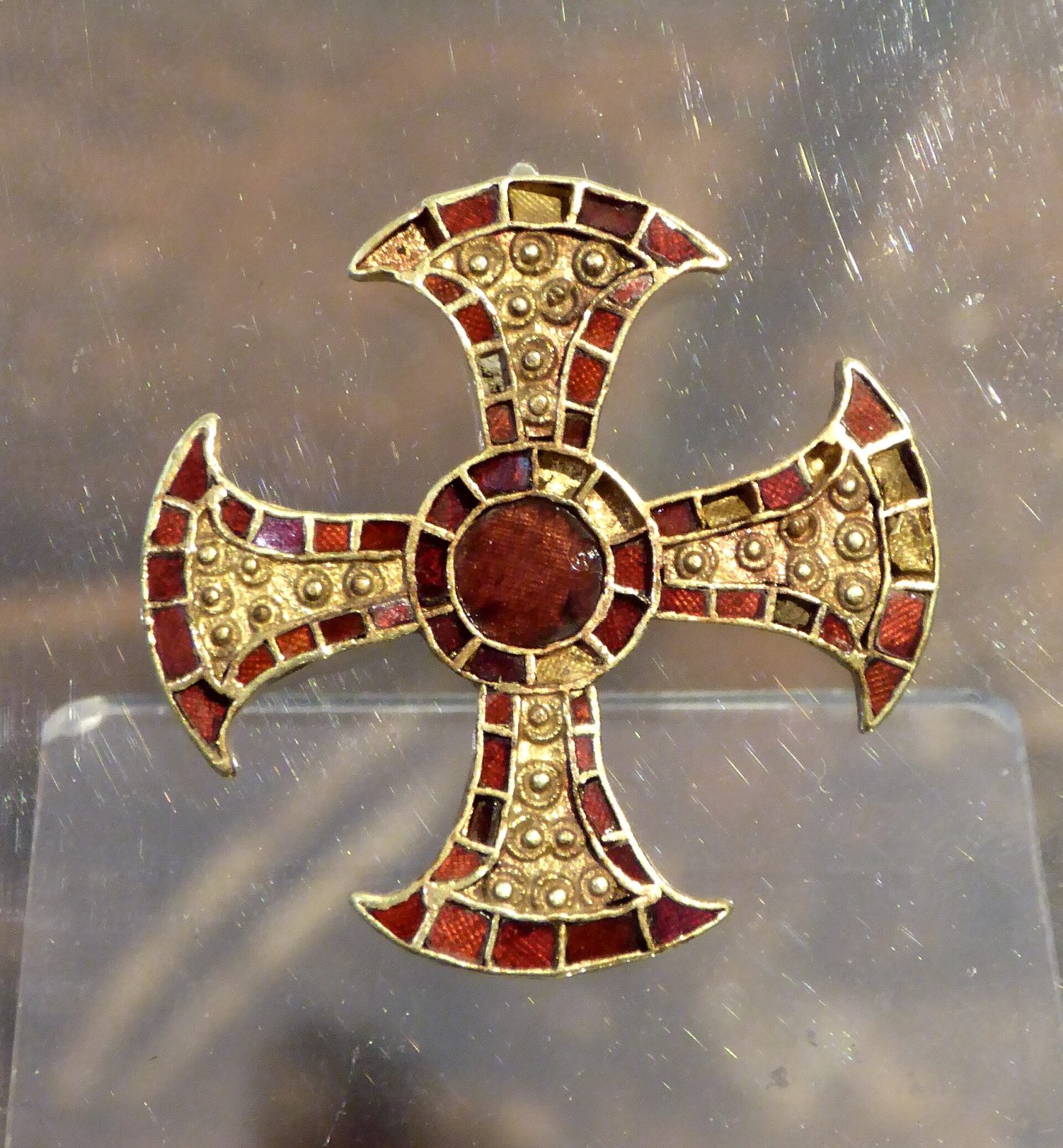
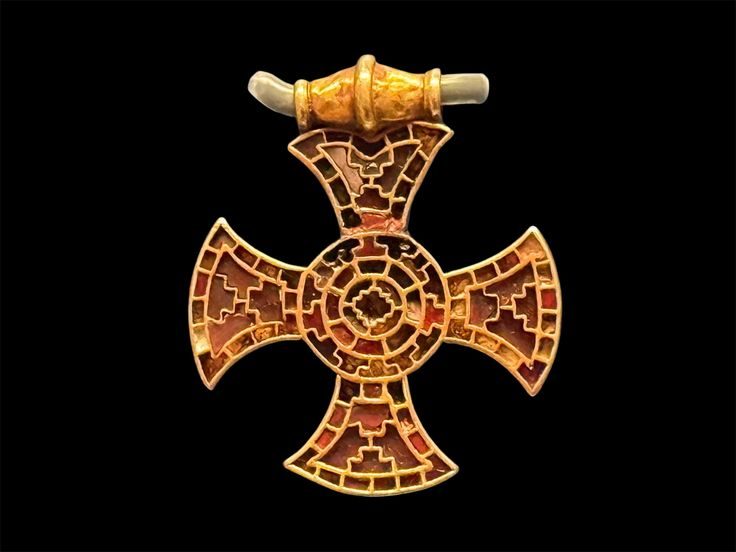
It is an equal-armed cross 49 millimetres across, weighing 12.23 grams, made of gold set with garnets in a honeycomb of tiny gold cells, with a ribbed loop for hanging it around the neck. At its centre is a domed garnet with a carved groove that once held an inlay. Of the original 95 garnets, 58 survive. Only a handful of Anglo-Saxon gold and garnet crosses are known, including St Cuthbert's cross from Durham and the Trumpington Cross, and they are among the earliest Christian jewellery made in England, using the goldsmithing skills of the pagan age.
The Holderness Cross is displayed in the Ashmolean's England 400–1600 gallery.
Written for Global Finds from A. MacGregor, "A seventh-century pectoral cross from Holderness", Medieval Archaeology 44 (2000), the Ashmolean Museum and the Art Fund. Photo: the Holderness Cross, Daniel Pett, Portable Antiquities Scheme, Wikimedia Commons, CC BY-SA 2.0.
Linked finds
Source: Ashmolean Museum