The Ecgberht Mancus: a detectorist thought he had a gold-plated button, and found the only gold coin of Alfred the Great's grandfather
Famous find Struck about AD 828 to 839 · Found in 2020 See it on the timeline →
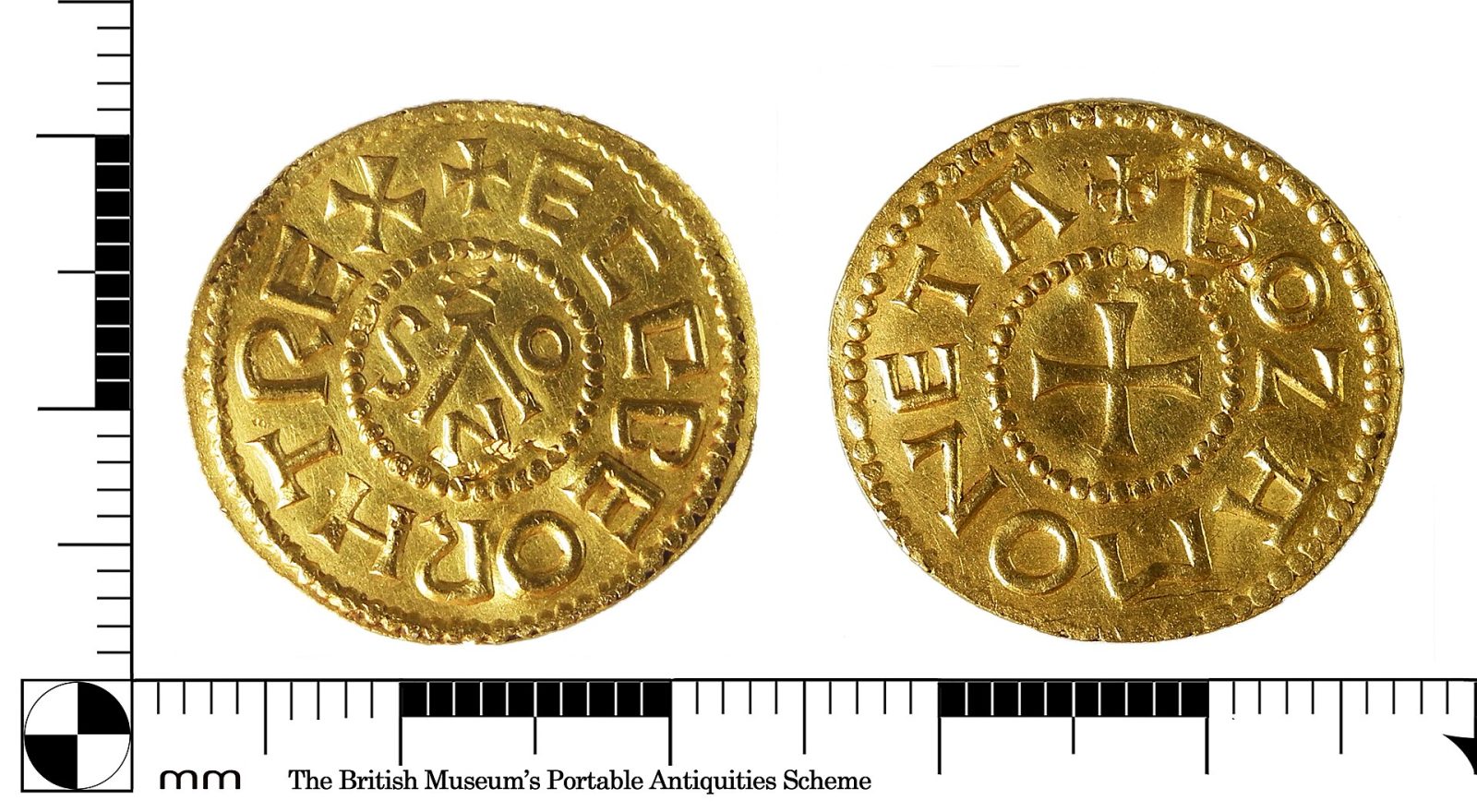
In March 2020 a metal detectorist searching pasture at West Dean, on the Wiltshire and Hampshire border, dug up what he took for a gold-plated livery button. It was a unique gold coin of Ecgberht, King of Wessex, the only late Anglo-Saxon gold coin in private hands.
In March 2020, a metal detectorist with eight years' experience was searching a five-acre pasture at the bottom of a hill near West Dean, a village on the border of Wiltshire and Hampshire, when he got a strong signal. Seven inches down in dark, sandy soil he found what he first thought was a gold-plated livery button. Then he felt how heavy it was. A fellow detectorist identified it as a coin of international importance. The finder's name has not been published.
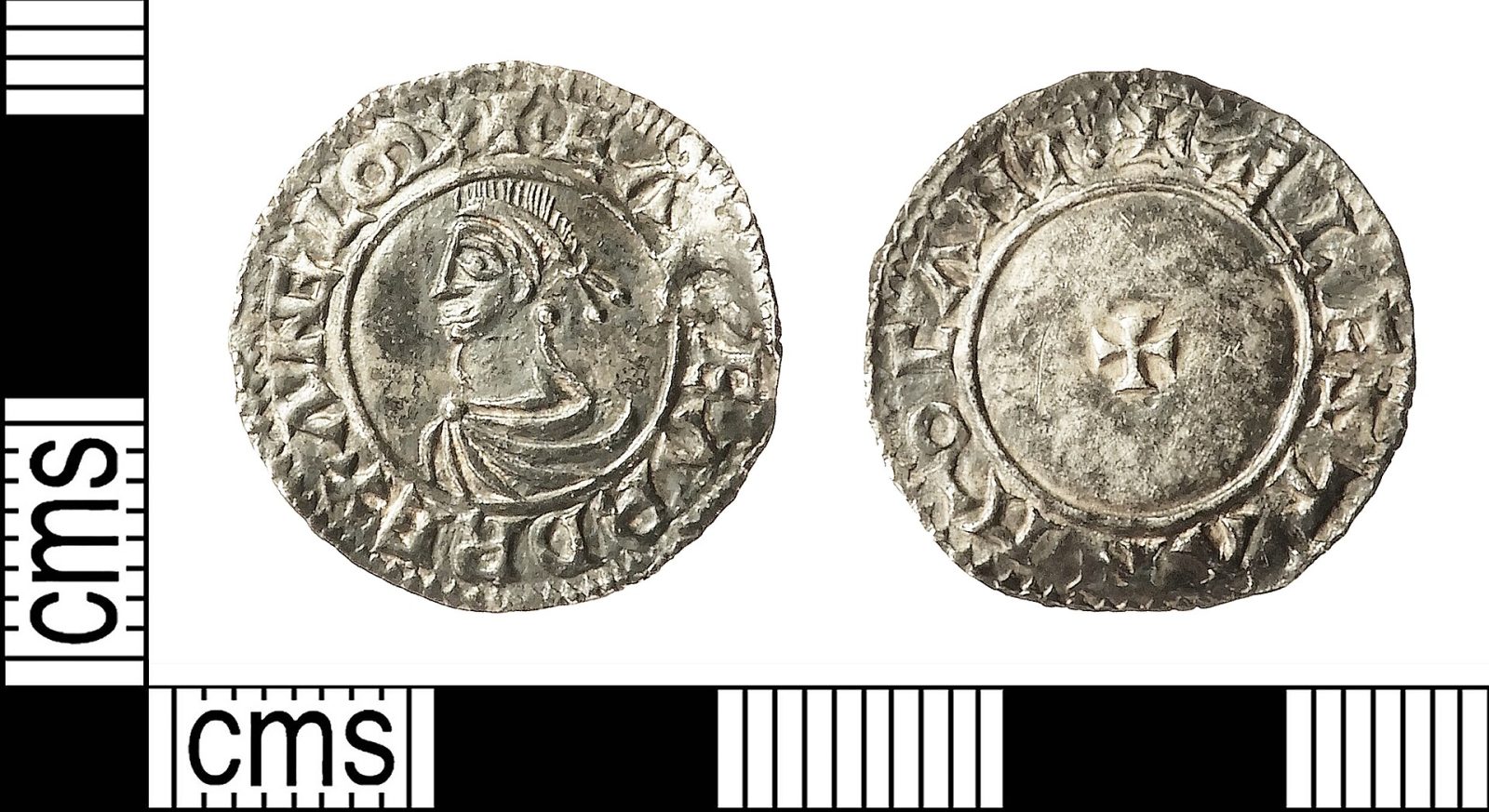
It was a gold coin of Ecgberht, King of the West Saxons from 802 to 839. On one side, around a monogram of the word SAXON, is the king's title, ECGBEORHT REX. On the other is the name of the moneyer, Bosa. Its design copies Ecgberht's silver pennies from the last decade of his reign, and it was probably struck at Southampton or Winchester. Analysis in 2021 showed it was made of very pure gold. The Portable Antiquities Scheme recorded it as a find of national importance.
Gold coins of Ecgberht were completely unknown until this one was found. Most Anglo-Saxon money was silver, and gold was struck only rarely, probably for royal gifts and ceremonial payments. A gold coin like this is known as a mancus, worth 30 silver pennies. Peter Preston-Morley of the auctioneers Dix Noonan Webb worked out that a single mancus would have bought the equivalent of 360 two-pound loaves of wheat bread. Only eight other late Anglo-Saxon gold coins are known, seven in the British Museum and one in Lausanne, so this was the only one in private hands.
Ecgberht made Wessex the strongest kingdom in England. In 825 he defeated the Mercians at the Battle of Ellendun, and in 829 he briefly ruled Mercia itself. He died in 839 and was buried at Winchester. His grandson was Alfred the Great.
As a single coin, the mancus was not Treasure, so it remained the property of the finder and landowner. Dix Noonan Webb offered it in London in September 2021 with an estimate of £150,000 to £200,000. Its sale price and present owner have not been published in the reports used here, and it is not on public display.
Written for Global Finds from the Dix Noonan Webb announcement in The E-Sylum (2021), the Press Association (2021) and Detecting Finds (2021). Photo: the West Dean mancus of Ecgberht, Simon Maslin, Portable Antiquities Scheme, Wikimedia Commons, CC BY 2.0.
Linked finds
Source: The E-Sylum (2021)