The Ålleberg Collar: two men looking for a hearthstone found one of Sweden's greatest gold treasures
Famous find Made in the Migration Period, about AD 400 to 550 · Found in 1827 See it on the timeline →
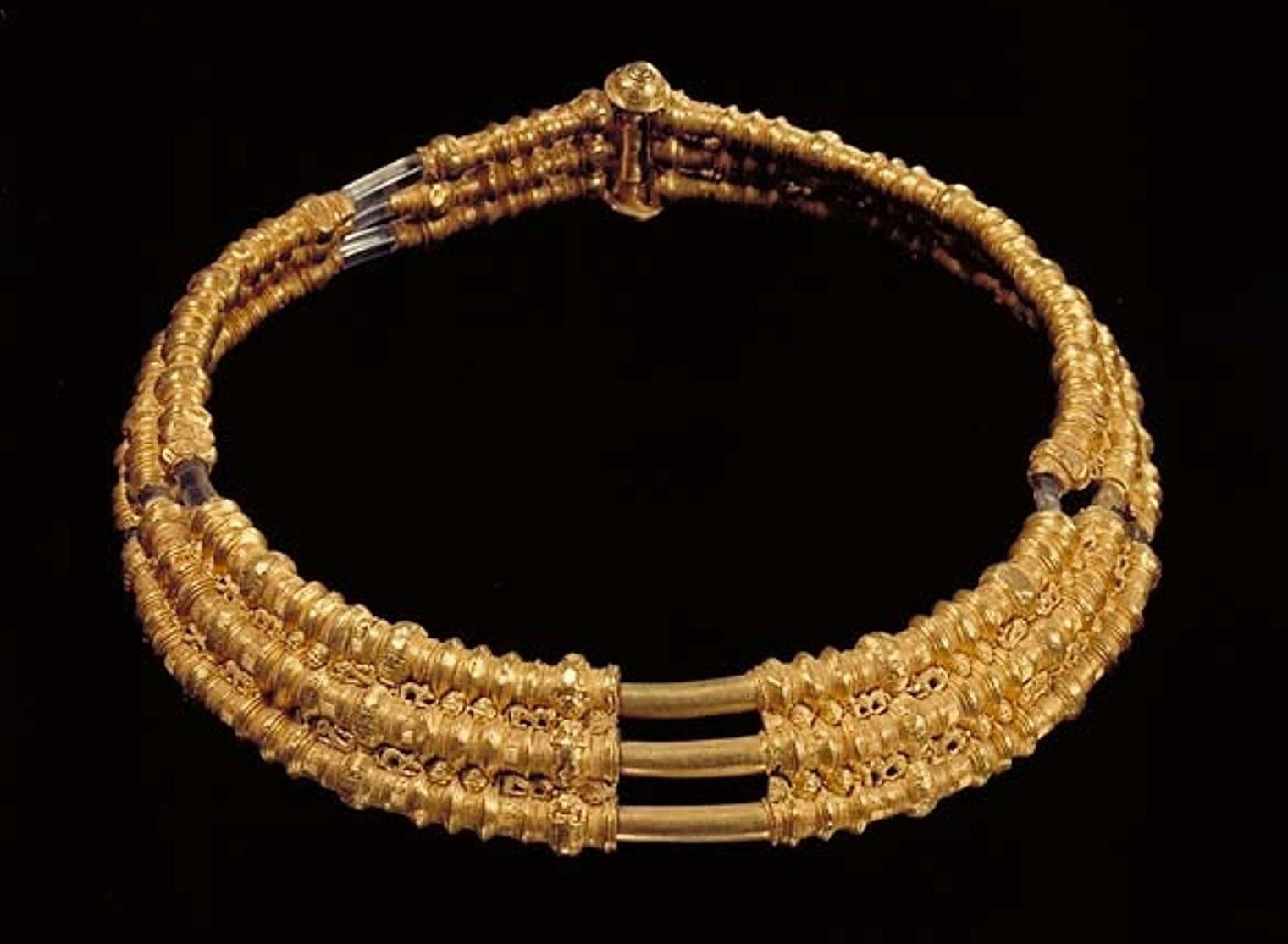
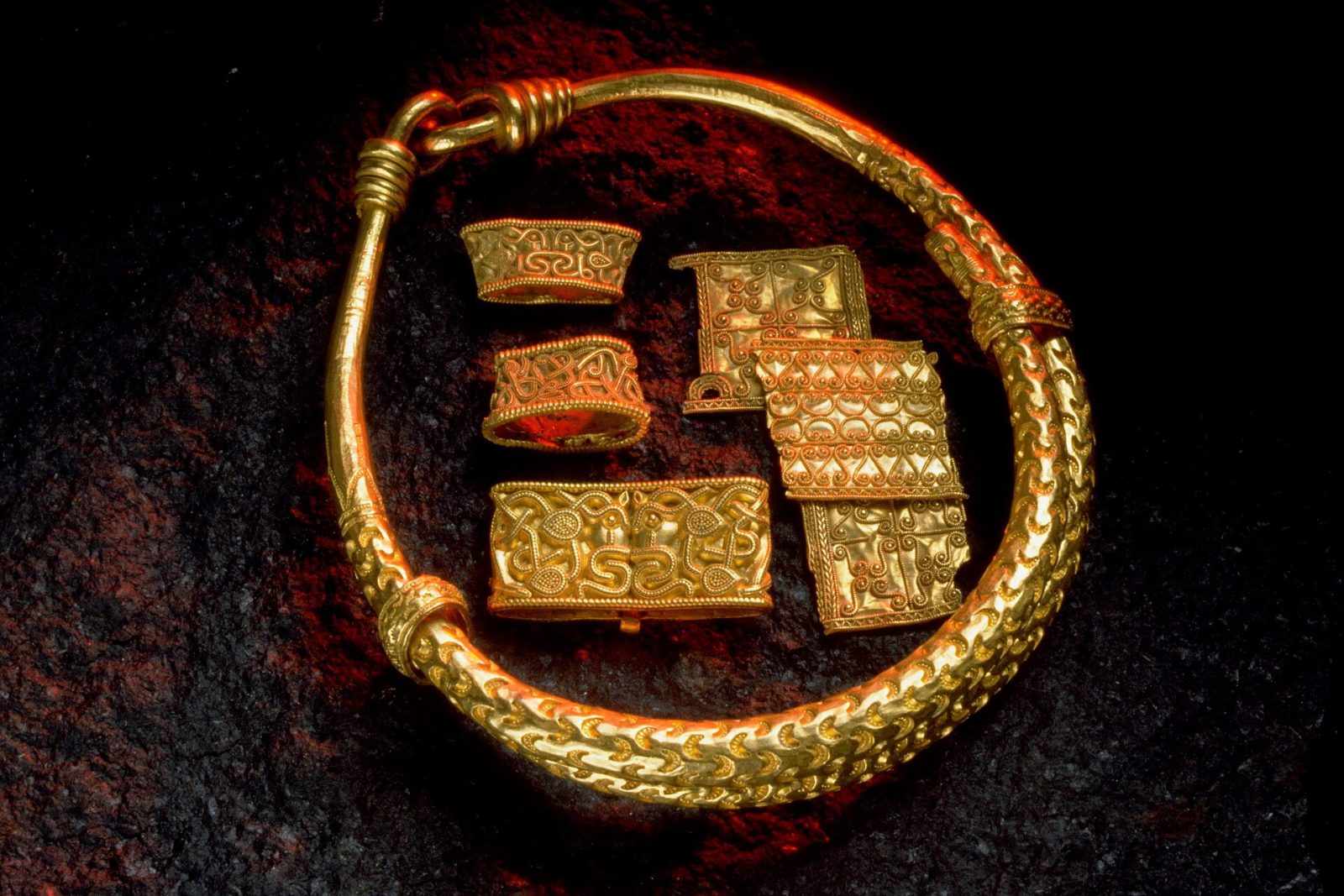
In 1827 two men searching the scree below Ålleberg mountain in Västergötland, Sweden, for a flat stone found a broken gold collar of the 5th century. Over 600 grams of gold, decorated with more than a hundred tiny figures, it is one of the finest objects in the Swedish History Museum.
In 1827, two local men, Lars Helgesson and Gustaf Sandsjö, were searching the scree below the cliffs at the north end of Ålleberg, a flat-topped mountain near Falköping in Västergötland, south-west Sweden. According to Swedish accounts, they were looking for a flat stone to use as a hearth slab. What they found among the rocks was a heavy collar of gold, broken into several pieces. The story goes that one of them first took it for brass.
The collar was reported, and the Swedish state acquired it for the national collection. It is made of three hollow gold tubes laid one above another, joined by a hinge at the back and closed with a catch at the front. It weighs just over 600 grams. The tubes are covered with fine gold filigree, and in the narrow spaces between them sit tiny figures of people and animals, each only a few millimetres across. There were once 137 of them, and 105 survive. A study by the archaeologist Bernadett Tóth in 2016 found that dozens of the little faces seem to have been cast from a model, a technique the goldsmiths may have learned from the Roman world.
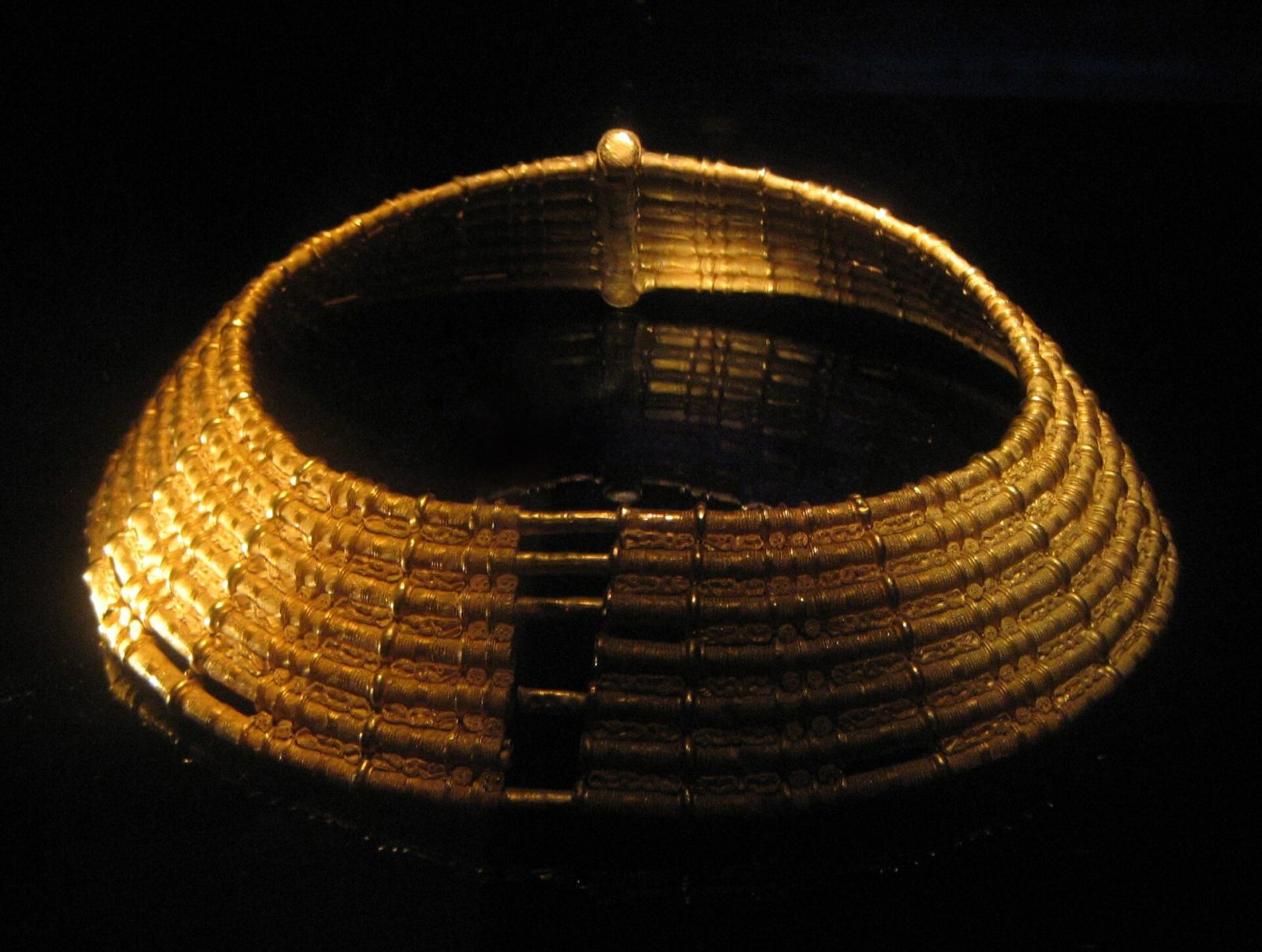
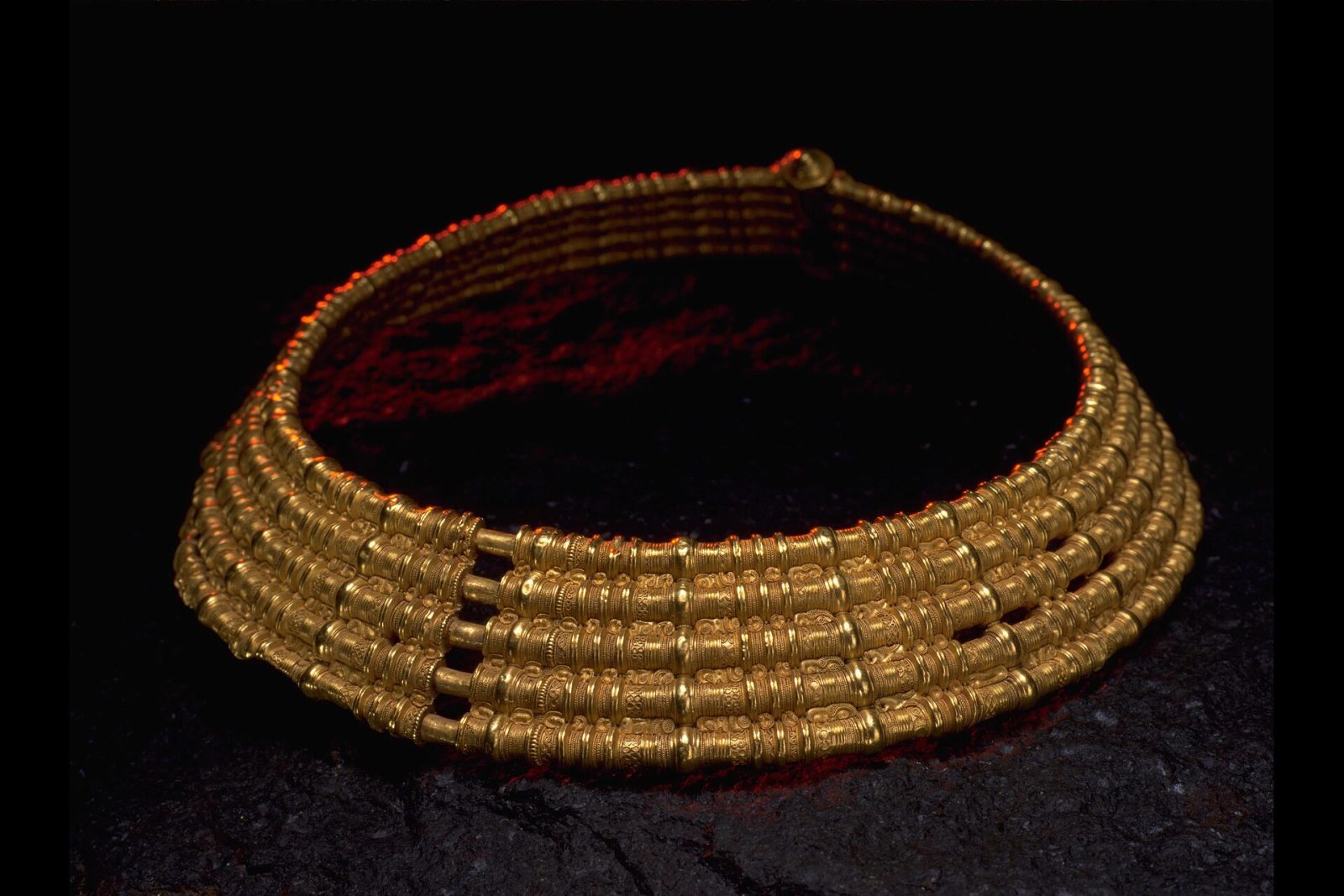
The collar was made in the 5th century, in the Migration Period, when gold poured into Scandinavia from the collapsing Roman Empire as pay, tribute and plunder. Only three collars of this kind are known, all from Sweden. Ålleberg has three rings, the Färjestaden collar from Öland has five, and the Möne collar, also from Västergötland, has seven. Tóth suggests that the Ålleberg and Möne collars may have come from the same workshop. Nobody knows who wore them, but they were almost certainly made for chieftains or for the gods.
Ålleberg itself is a mountain of legend, said to hide sleeping knights who will wake when Sweden needs them. The collar is displayed in the Gold Room of the Swedish History Museum in Stockholm, beside the other two collars, and a copy is shown at Falbygdens Museum in Falköping.
Written for Global Finds from the Swedish History Museum, B. L. Tóth, Journal of Archaeology and Ancient History 18 (2016), and Swedish published accounts of the find. Photo: the Ålleberg collar, Sören Hallgren, Swedish History Museum, Wikimedia Commons, CC BY 2.5.
Linked finds
Source: B. L. Tóth, Journal of Archaeology and Ancient History (2016)