The Möne Collar: a crofter clearing stones found a box of slabs holding Sweden's greatest gold collar
Famous find Made in the Migration Period, about AD 400 to 550 · Found in 1864 See it on the timeline →
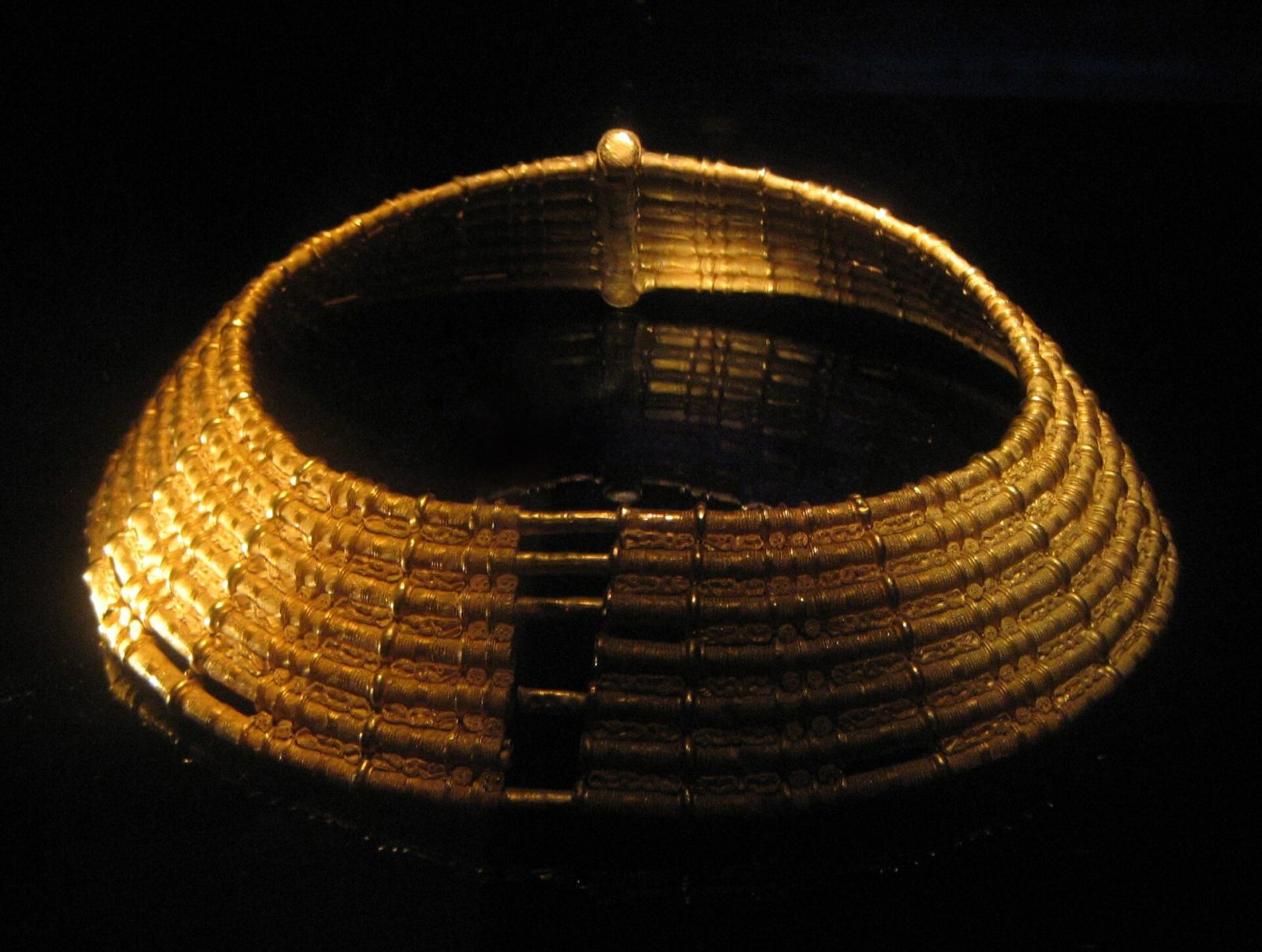
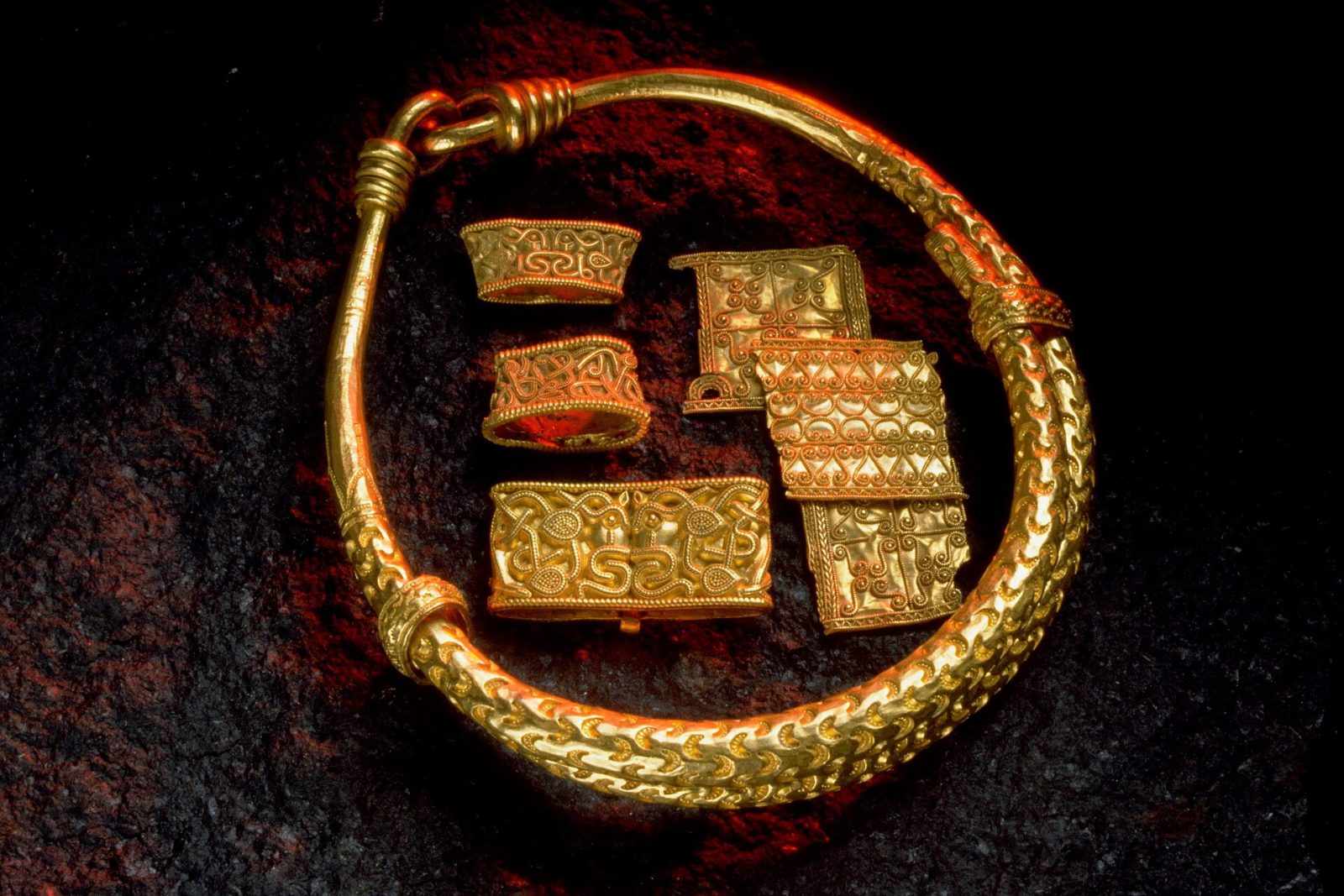
In 1864 the crofter Johannes Andersson was clearing a heap of stones beside Möne church in Västergötland, Sweden, when he uncovered four slabs set on edge. Inside lay a seven-ringed gold collar of the 5th century, covered with hundreds of tiny faces and animals.
In 1864, Johannes Andersson, a crofter at Möne, near Ulricehamn in Västergötland, south-west Sweden, was clearing away a heap of stones on land beside Möne church. Under the stones he found four limestone slabs standing on edge, forming a small box, and inside it lay a heavy collar of gold. The find was reported and acquired for the state, and Andersson was paid a reward of over 2,000 riksdaler in silver, a fortune for a crofter.
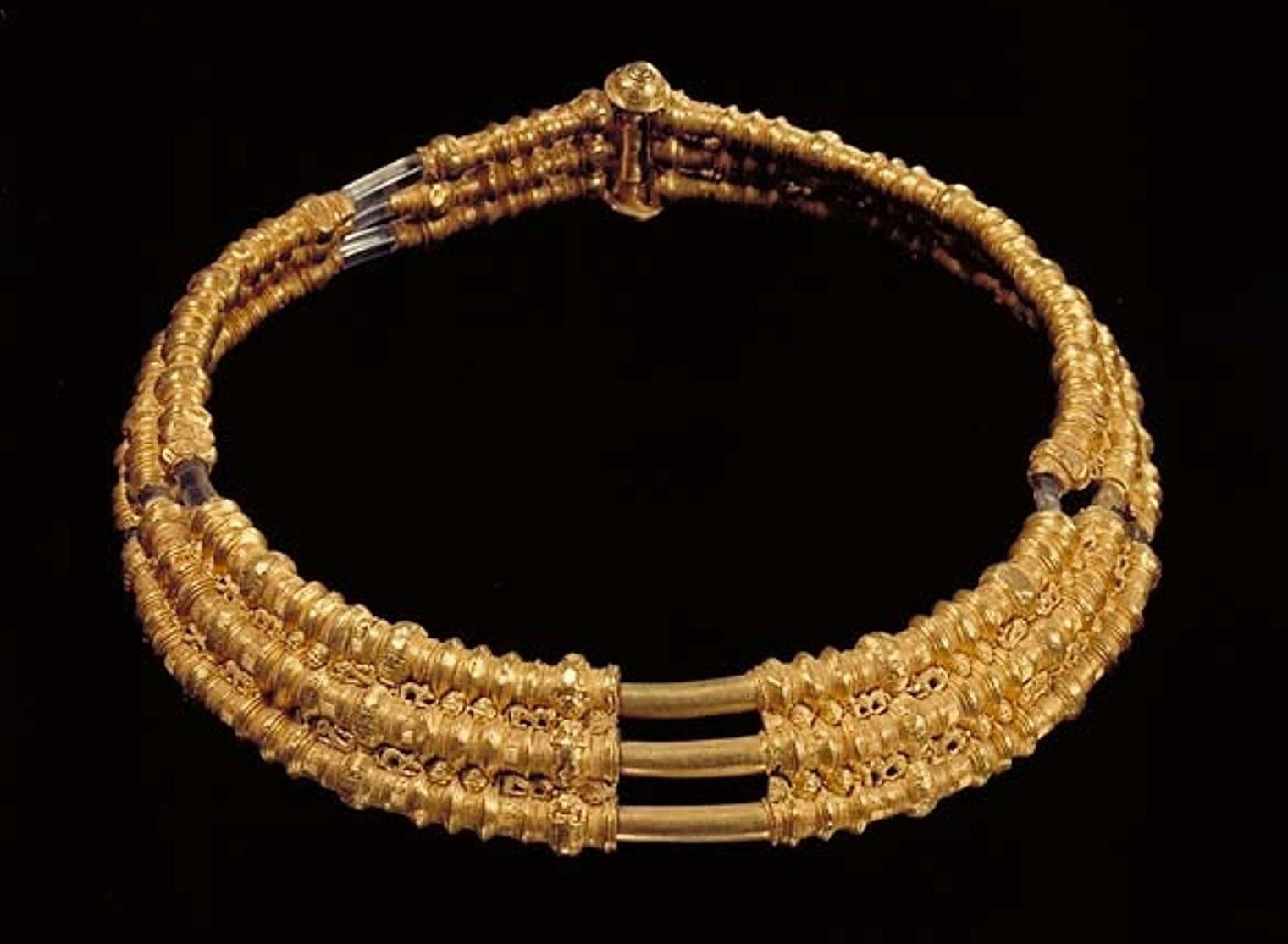
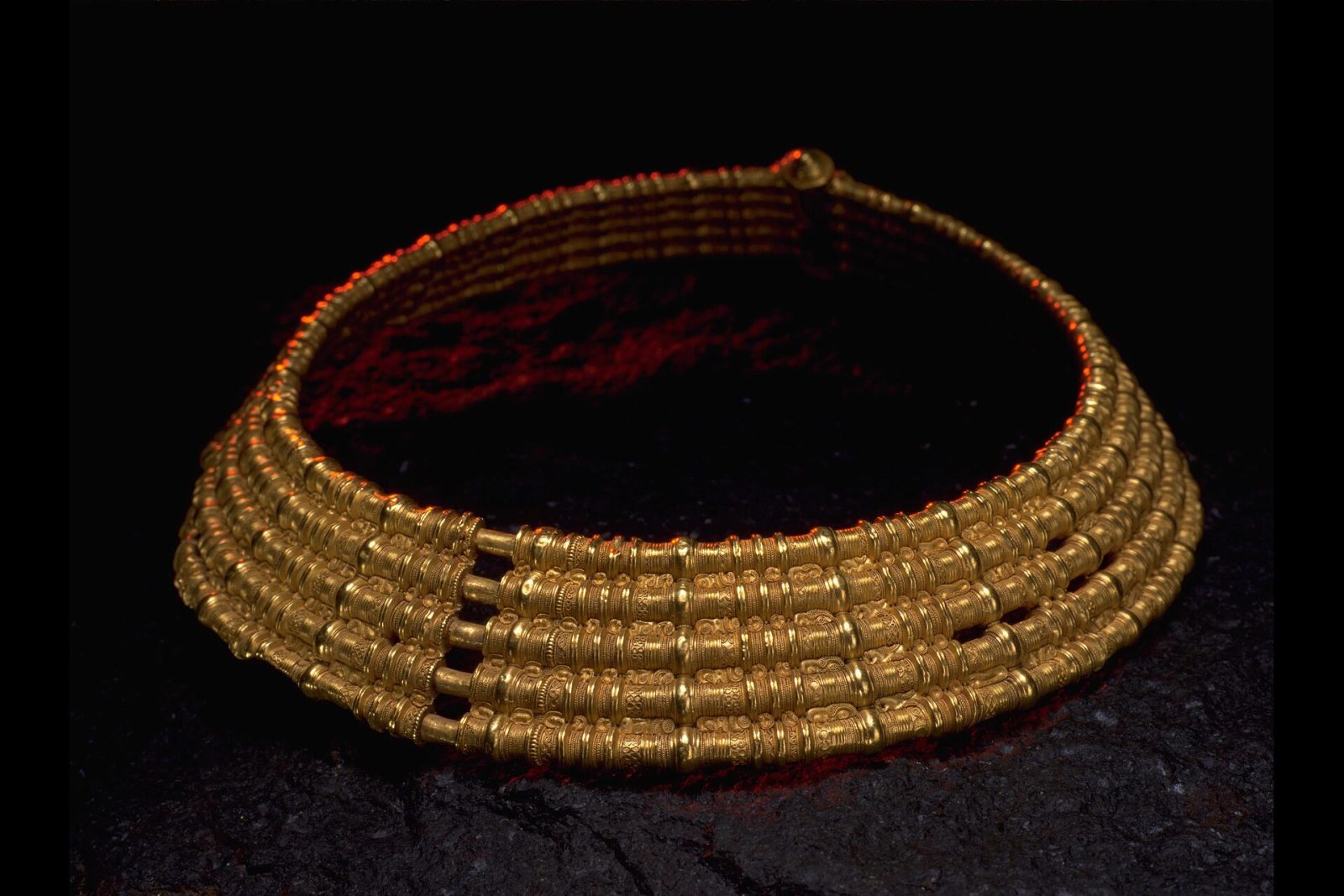
The Möne collar is the largest of only three gold collars of its kind known in the world, all of them from Sweden. The others are the Ålleberg collar, found 30 kilometres away, and the Färjestaden collar from Öland. Möne has seven rings of gold tubes, more than either of them, bound with very fine gold wire. Between the rings and along the tubes sit 458 tiny figures, among them human faces, animals and serpents, each just a few millimetres across. It weighs about 820 grams. Its clasp is broken, apparently from being forced shut too hard, which suggests it was actually worn.
The collar was made in the 5th century AD, in the Migration Period, probably from Roman gold that reached Scandinavia as pay, tribute or plunder. It is thought to be the latest of the three, and one study suggests that the Ålleberg and Möne collars may have come from the same workshop. Who wore them is unknown, but the amount of gold, the skill involved and the strange crowds of little faces suggest chieftains, ceremonies or the gods. The careful stone setting at Möne suggests that the collar was deliberately placed there, not simply lost.
The Möne collar is displayed in the Gold Room of the Swedish History Museum in Stockholm, beside the Ålleberg and Färjestaden collars. Together they are among the finest goldwork of Migration-period Europe.
Written for Global Finds from the Church of Sweden, Ulricehamn, the Ulricehamn Museum collection, the Swedish History Museum and published accounts of the find. Photo: the Möne collar in the Swedish History Museum, Marieke Kuijjer, Wikimedia Commons, CC BY-SA 2.0.
Linked finds
Source: Church of Sweden, Ulricehamn