The Malia Pendant: two golden insects from Crete's 'pit of gold', found where treasure hunters had already been digging
Famous find Made about 1800 to 1700 BC · Found in 1930 See it on the timeline →
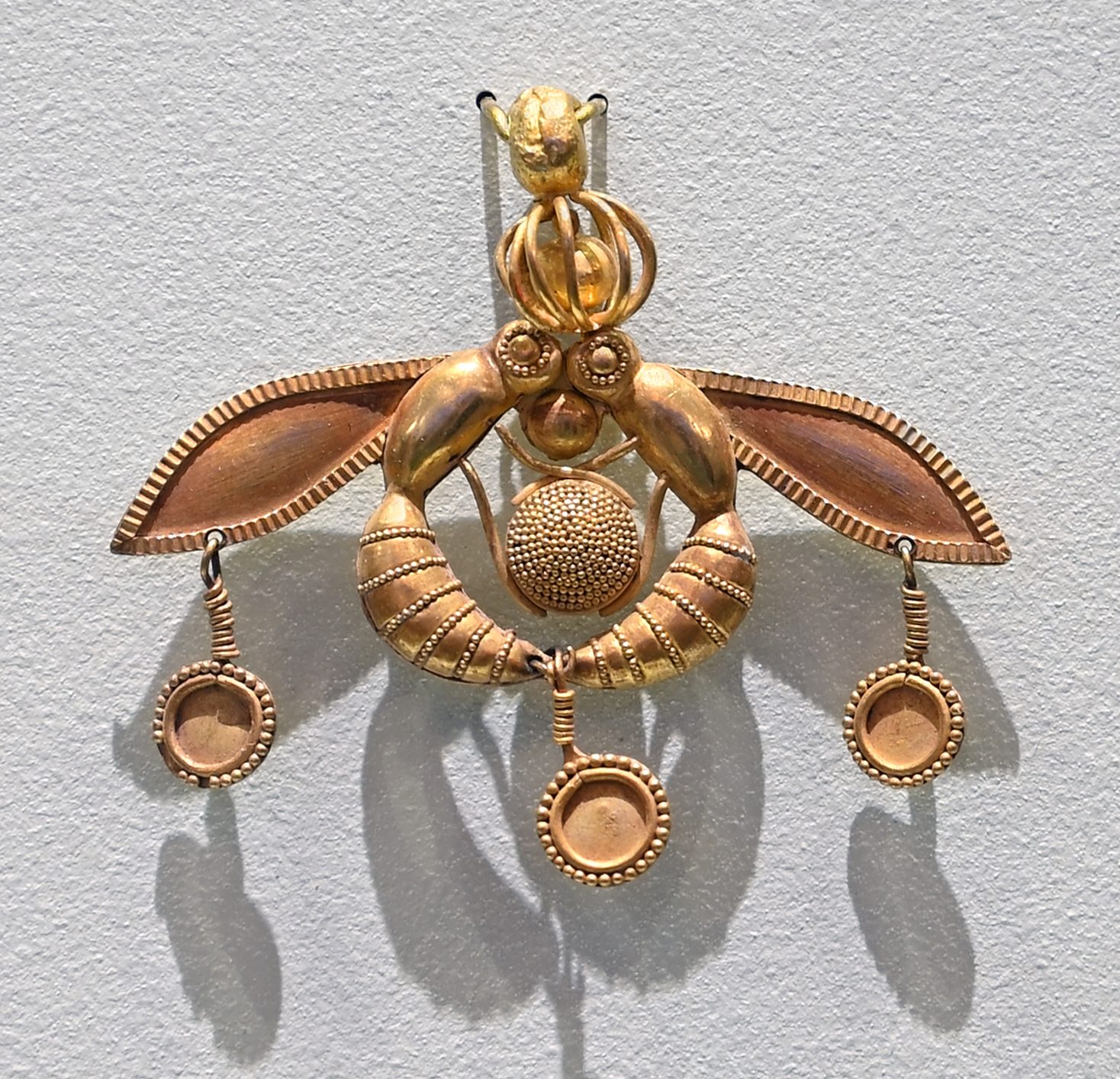
In 1930 French archaeologists clearing a Minoan burial building at Chrysolakkos, the 'pit of gold', beside the palace of Malia in Crete, found a tiny gold pendant of two insects around a honeycomb. Local diggers had plundered the cemetery long before, but they missed this.
In 1930, archaeologists of the French School at Athens returned to a large rectangular building at a place called Chrysolakkos, just north of the Minoan palace of Malia on the north coast of Crete. The building, made of finely cut stone blocks and divided inside into small chambers, had first been explored in 1921 and then abandoned. It turned out to be a great communal tomb of the Minoan elite, perhaps the burial place of Malia's rulers. During that season the excavators found one of the most famous pieces of jewellery from the ancient world. It was published the same year by Pierre Demargne.
It is a gold pendant only 4.6 centimetres high and weighing about 5.5 grams. Two insects face each other head to head, their curved bodies wrapped around a disc covered in tiny granules, and they hold a drop of gold between their heads. Their wings spread outwards, and three small gold discs hang from the wing-tips and tails. Above them, a little wire cage holds a gold bead. The goldsmith used almost every technique known at the time: casting, repoussé, filigree, incised lines and granulation, in which minute balls of gold are fused to a surface. It was made around 1800 to 1700 BC.
The insects are usually called bees, with the disc as a honeycomb and the drop as honey. In 2021, though, a team of scientists argued in the Antiquaries Journal that they look more like a large Cretan wasp, and that the hanging discs copy the seeds of a local plant. The debate continues.
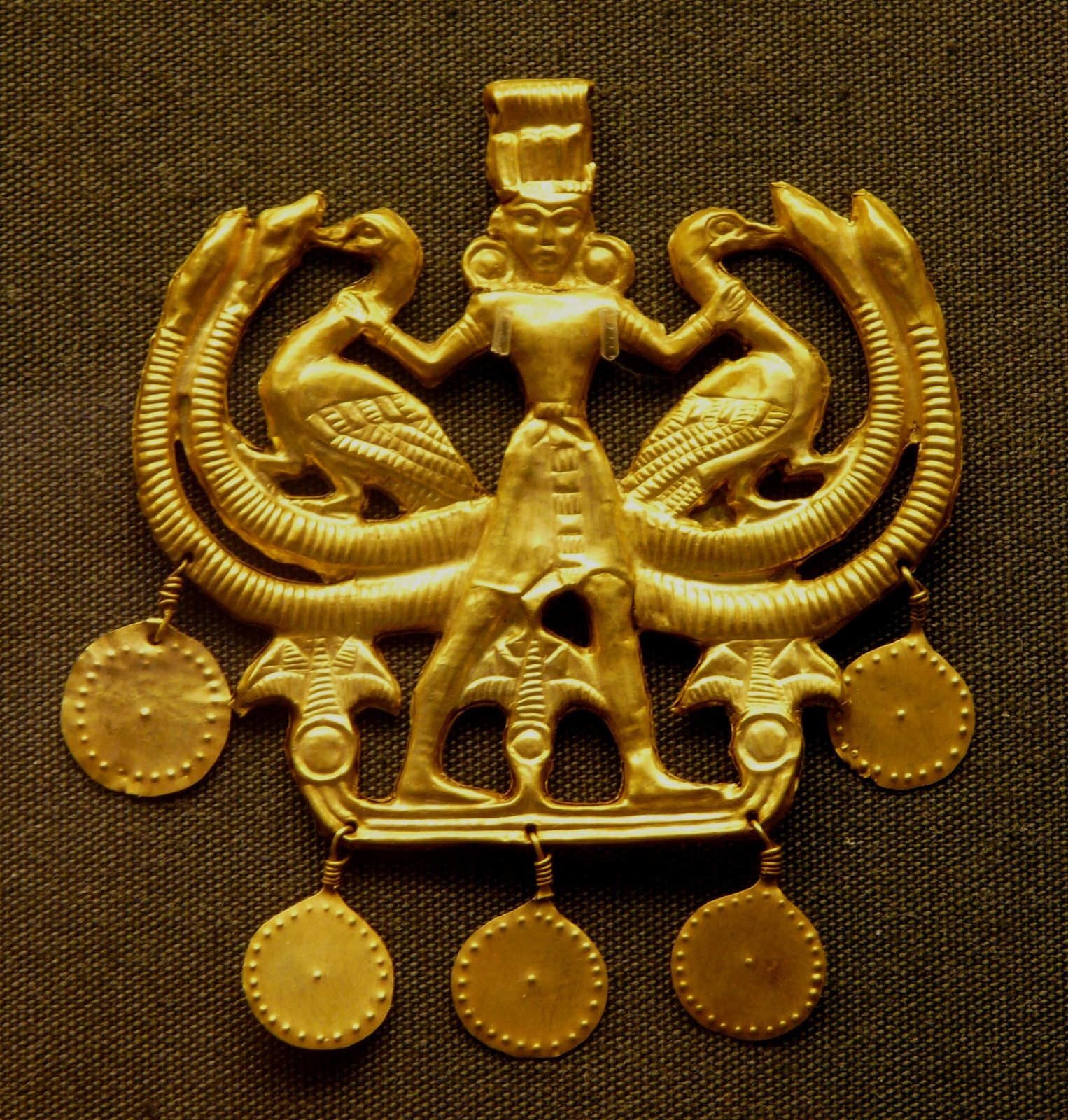
The name Chrysolakkos means "pit of gold". Local people had dug gold out of the tombs there long before the archaeologists arrived, and many scholars believe that the Aegina Treasure, bought by the British Museum in 1892 and said to come from the island of Aegina, was really plundered from this cemetery. If so, the bee pendant is a piece the treasure hunters missed.
The Malia pendant is displayed in the Heraklion Archaeological Museum in Crete. It has become a symbol of Minoan Crete, copied in countless pieces of modern jewellery.
Written for Global Finds from P. Demargne, Bulletin de Correspondance Hellénique 54 (1930), Live Science (2025) and J. Nelson and others, Antiquaries Journal 101 (2021). Photo: the Malia pendant in the Heraklion Archaeological Museum, Cayambe, Wikimedia Commons, CC BY-SA 4.0.
Linked finds
Source: Live Science (2025)