The Färjestaden Collar: a teenage farmhand asked 'what's that rubbish?', and it was 700 grams of gold
Famous find Made in the Migration Period, about AD 475 to 525 · Found in 1860 See it on the timeline →
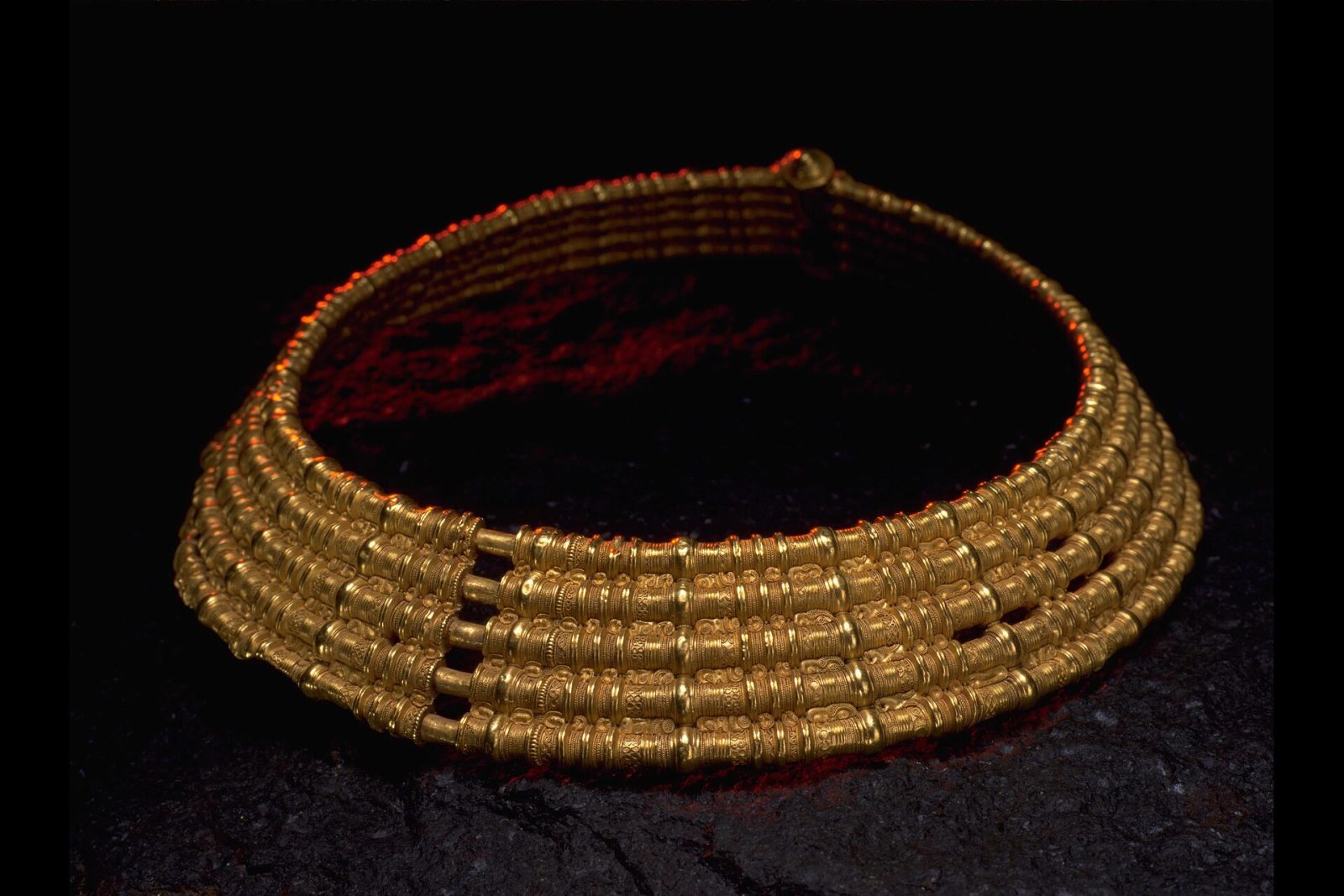
In 1860 farmhands digging by a road at Färjestaden on the Swedish island of Öland uncovered a five-ringed gold collar of the 5th century. One of them, a teenager, reportedly asked what the rubbish was. The state paid a reward worth about twelve years of a maid's wages.
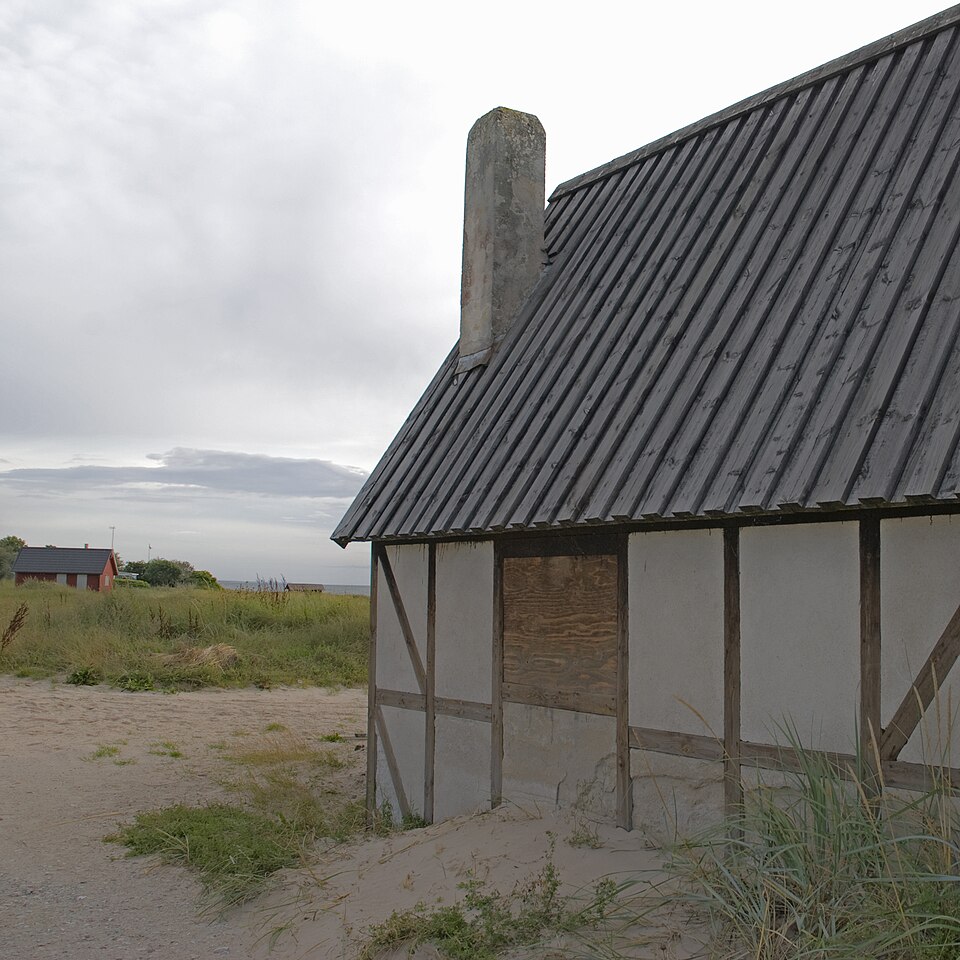
In 1860, farmhands were digging beside a road on the land of Färjestaden farm, in Torslunda parish on the island of Öland, off the south-east coast of Sweden, when they turned up a heavy, dirty object of gold. According to the Swedish History Museum, the finder was a farmhand called Johan Peter Petersson, aged about fifteen, working with another farmhand, Anders Jönsson. He is said to have asked, "What's that rubbish lying there?"
It was a collar of gold, made of five rings of hollow gold tubes joined together, opening on a hinge and locking at the front. It weighs 713 grams and is about 23 centimetres across. Between the rings and along the tubes sit hundreds of tiny figures of animals, birds and human faces, each only a few millimetres high, made with fine gold filigree. It was made in the Migration Period, around AD 475 to 525, when gold from the collapsing Roman Empire flowed into Scandinavia.
The state bought the collar from the finders for 1,749 riksdaler. The museum points out that a maid at the time earned a little over 142 riksdaler a year, so the reward was worth about twelve years' wages.
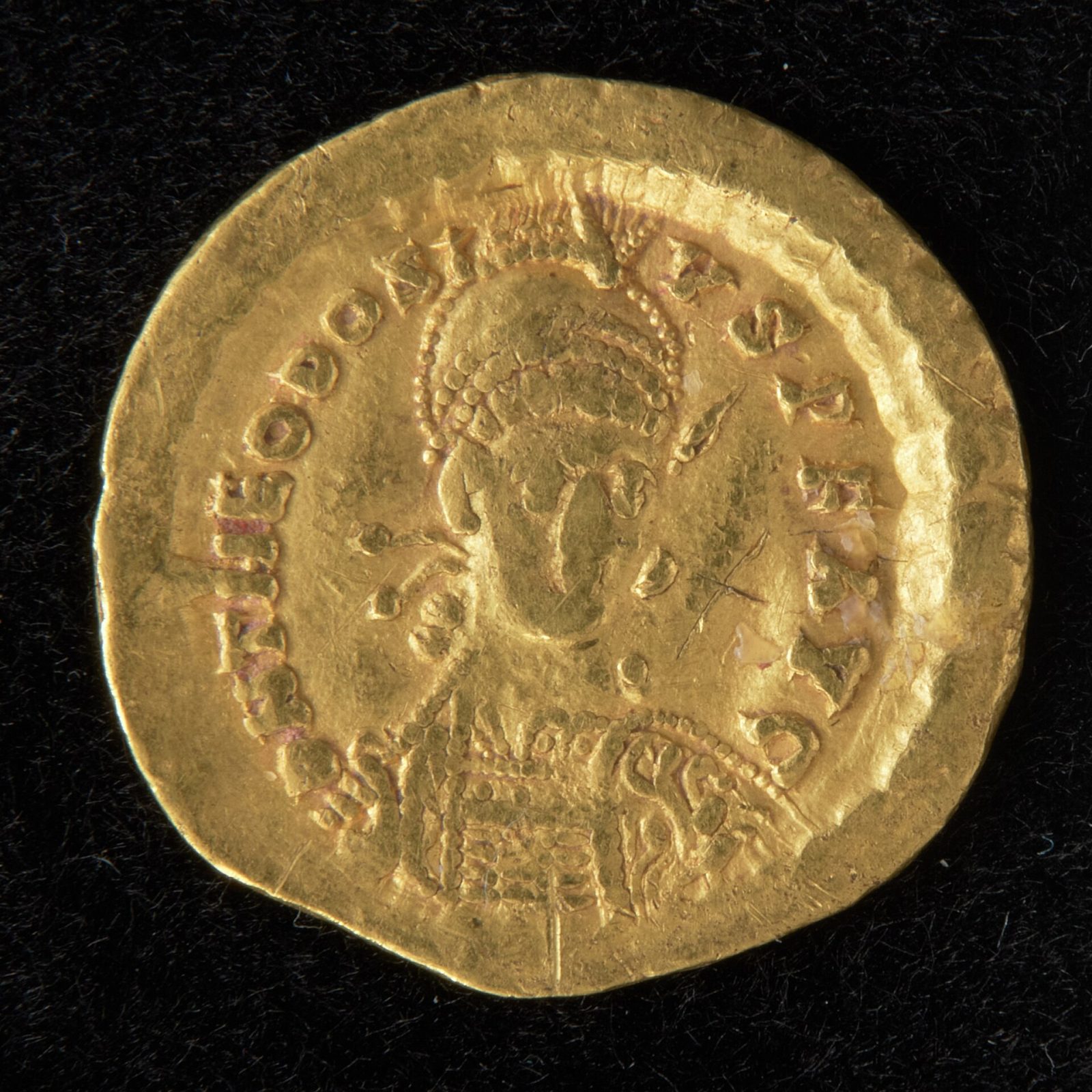
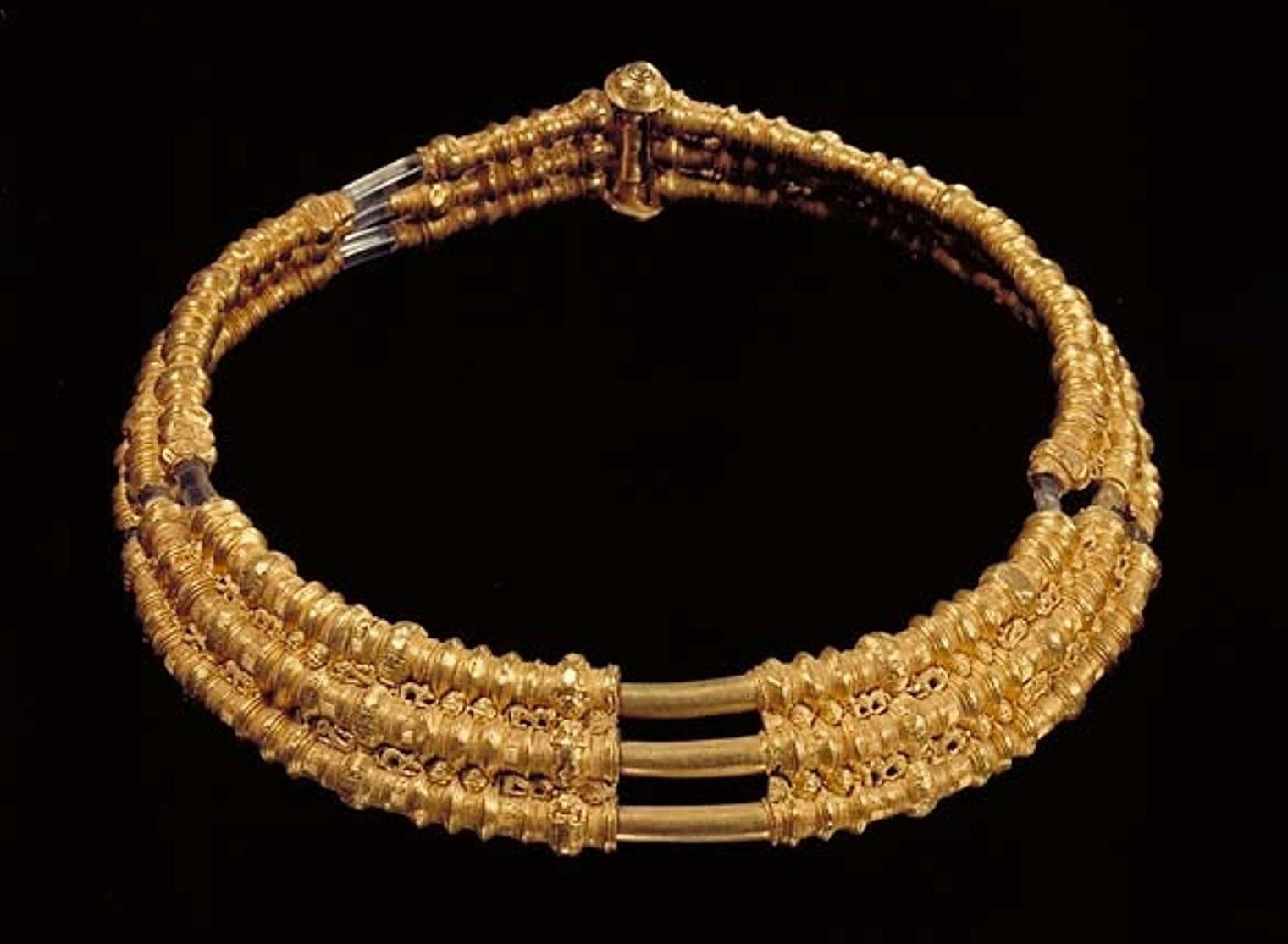
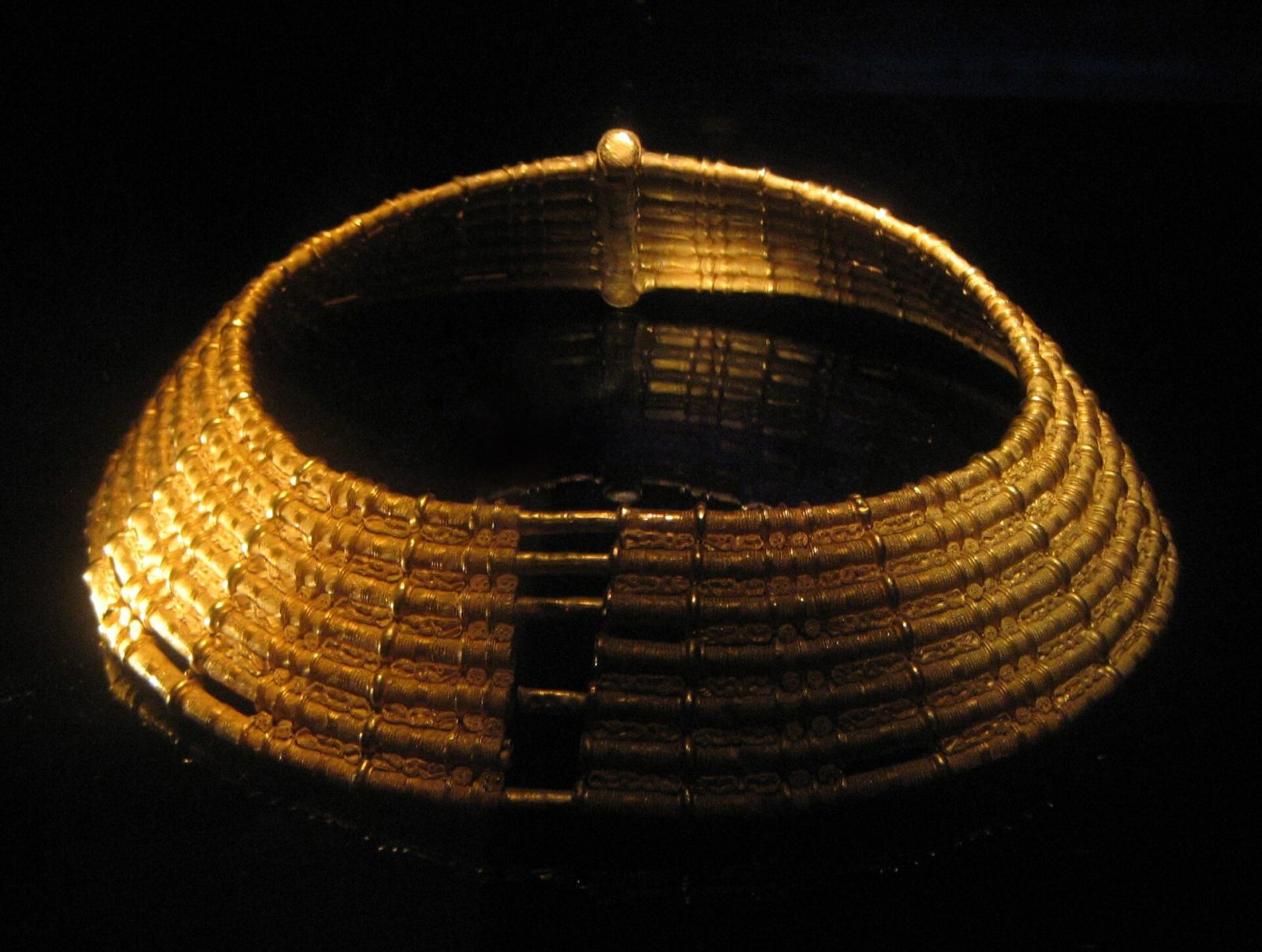
Only three gold collars of this kind are known in the world, and all three were found in Sweden: the Ålleberg collar, with three rings, found in 1827; the Färjestaden collar, with five, found in 1860; and the Möne collar, with seven, found a few years later. Nobody knows exactly who wore them or why. Their weight, their extraordinary workmanship and the crowds of tiny figures suggest that they were made for chieftains, for kings or for the gods, perhaps as insignia worn at ceremonies. Öland itself was one of the richest places in Scandinavia at the time, with ring-forts and many finds of Roman gold coins.
The Färjestaden collar is displayed in the Gold Room of the Swedish History Museum in Stockholm, alongside the other two collars.
Written for Global Finds from the Swedish History Museum (collection record 108870 and the museum's highlights pages). Photo: the Färjestaden collar, Christer Åhlin, Swedish History Museum, Wikimedia Commons, CC BY 4.0.
Linked finds
Source: Swedish History Museum