The Ixworth Cross: a gravel digger found a gold and garnet cross in a 7th-century bed burial
Famous find Made in the 7th century AD · Found in 1856 See it on the timeline →
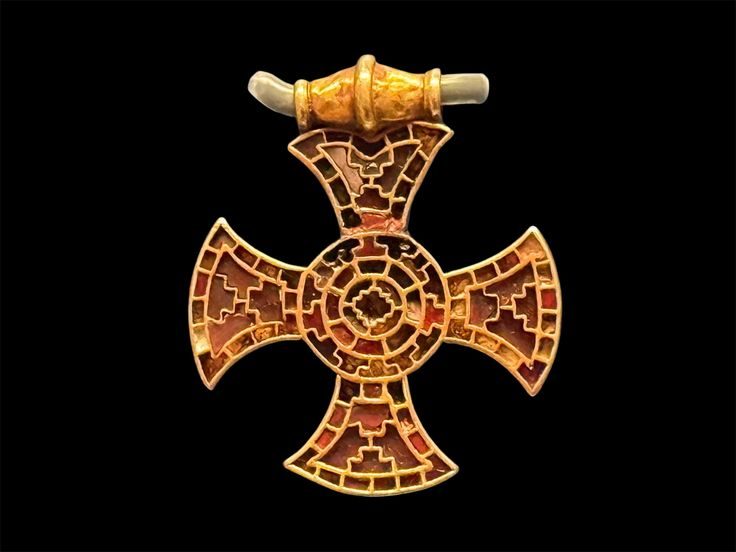
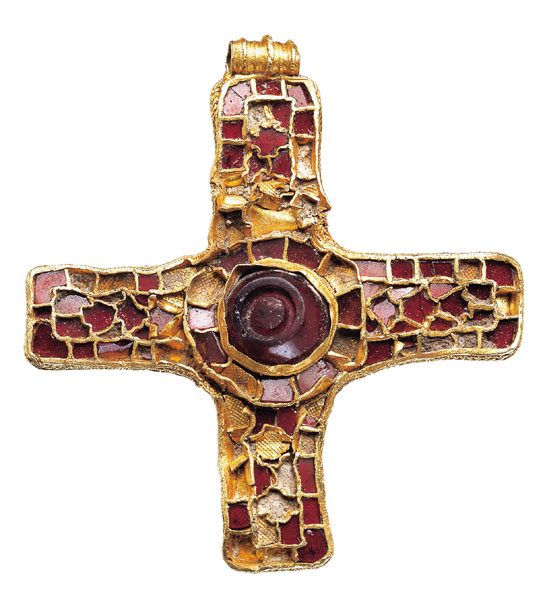
In February 1856 a man digging gravel at Stanton, near Ixworth in Suffolk, found a gold cross set with garnets, a gold brooch and iron fittings where a body had decayed away. It is one of only five Anglo-Saxon gold and garnet crosses known.
In February 1856, a man digging gravel at Stanton, near Ixworth in Suffolk, came across traces of decayed wood with a gold cross and the gold front of a round brooch among them. There was no sign of a skeleton; the bones had long since dissolved in the gravel. On 18 February the finds were brought to Joseph Warren, an Ixworth watchmaker who collected and dealt in antiquities. Warren bought them, and he made the finder go back and sift through the spoil for anything else, but nothing more was found apart from two dozen iron staples and some twisted iron pieces.
The cross is about 4.5 centimetres tall, made of gold and covered all over with flat-cut garnets set in tiny gold cells, a technique called cloisonné. Under each garnet is a gold foil, hatched so that it sparkles through the stone. The goldsmith used thicker, darker garnets in parts of the arms to create shading. The back is a single sheet of gold, and a barrel-shaped loop at the top allowed it to be worn on a cord around the neck. A large gold patch covers an old break where the top arm meets the centre, a sign that the cross was repaired and treasured. It was made in the 7th century, in the first generations of Christianity among the Anglo-Saxons.
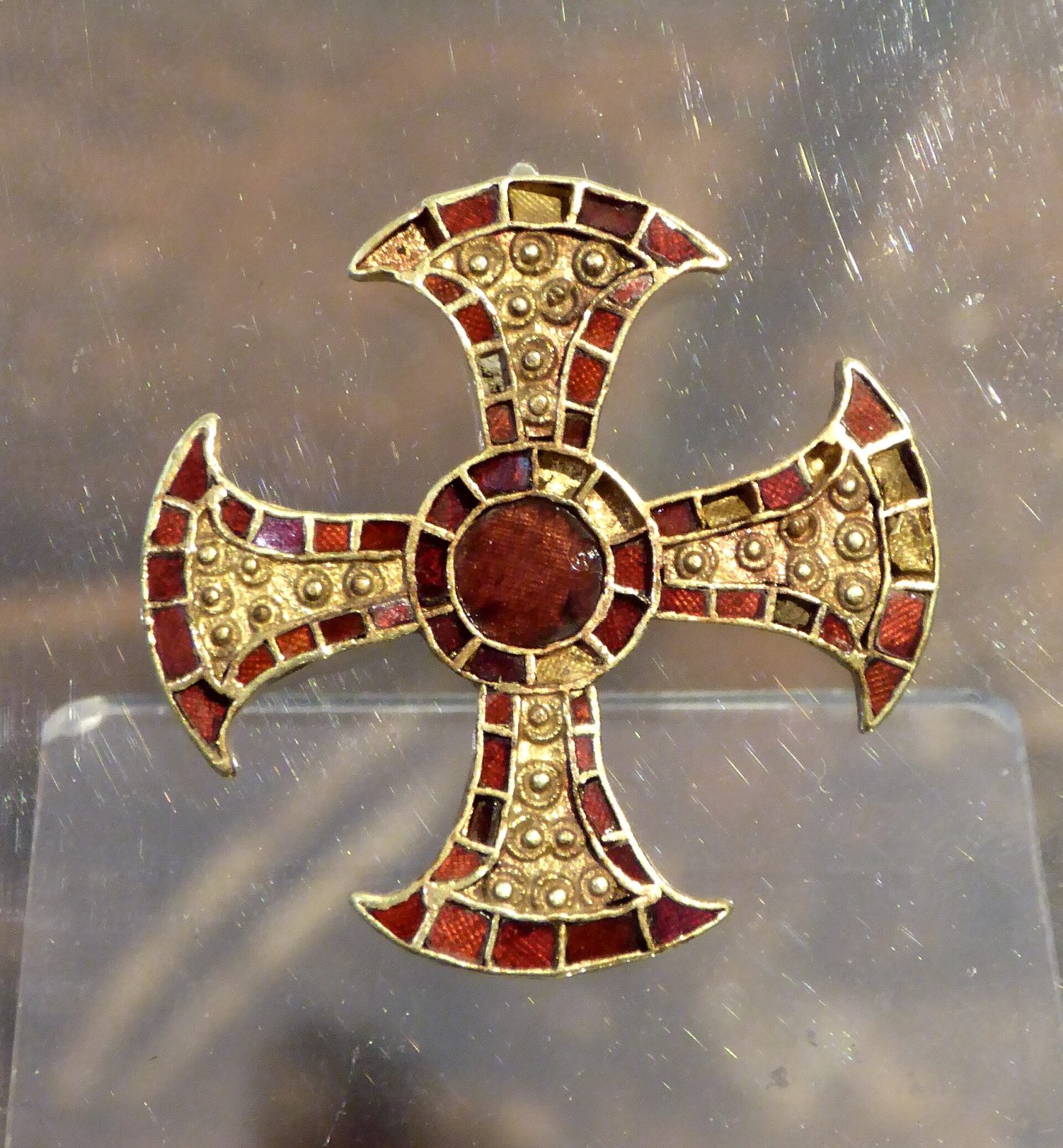
Warren took the iron fittings to be parts of a coffin. The archaeologist Sam Lucy has argued that they were the fittings of a bed, which would make this a bed burial, a rare rite used for a few high-status women in the 7th century, like the girl buried with the Trumpington Cross near Cambridge. Only five Anglo-Saxon gold and garnet crosses of this kind are known: the Ixworth, Holderness, Trumpington and Wilton crosses and the cross of St Cuthbert.
The cross was published in 1856 as a find from near Ixworth, which is why it carries that name. The collector Sir John Evans bought much of Warren's collection in 1866, and his son, Sir Arthur Evans, the excavator of Knossos, gave the cross to the Ashmolean Museum in Oxford in 1909. It is in the Ashmolean today.
Written for Global Finds from the Suffolk Historic Environment Record (SNT 071), the Ashmolean Museum and S. Lucy, "The Trumpington Cross in context", Anglo-Saxon England 45 (2016). Photo: the Ixworth Cross in the Ashmolean Museum, SpeakingArch, Wikimedia Commons, CC BY-SA 4.0.