The Spandau Coin: a 13-year-old found a coin from Troy in a Berlin field, the first ancient Greek find in the city
Famous find Struck at Ilion about 281 to 261 BC · Found in 2025 See it on the timeline →
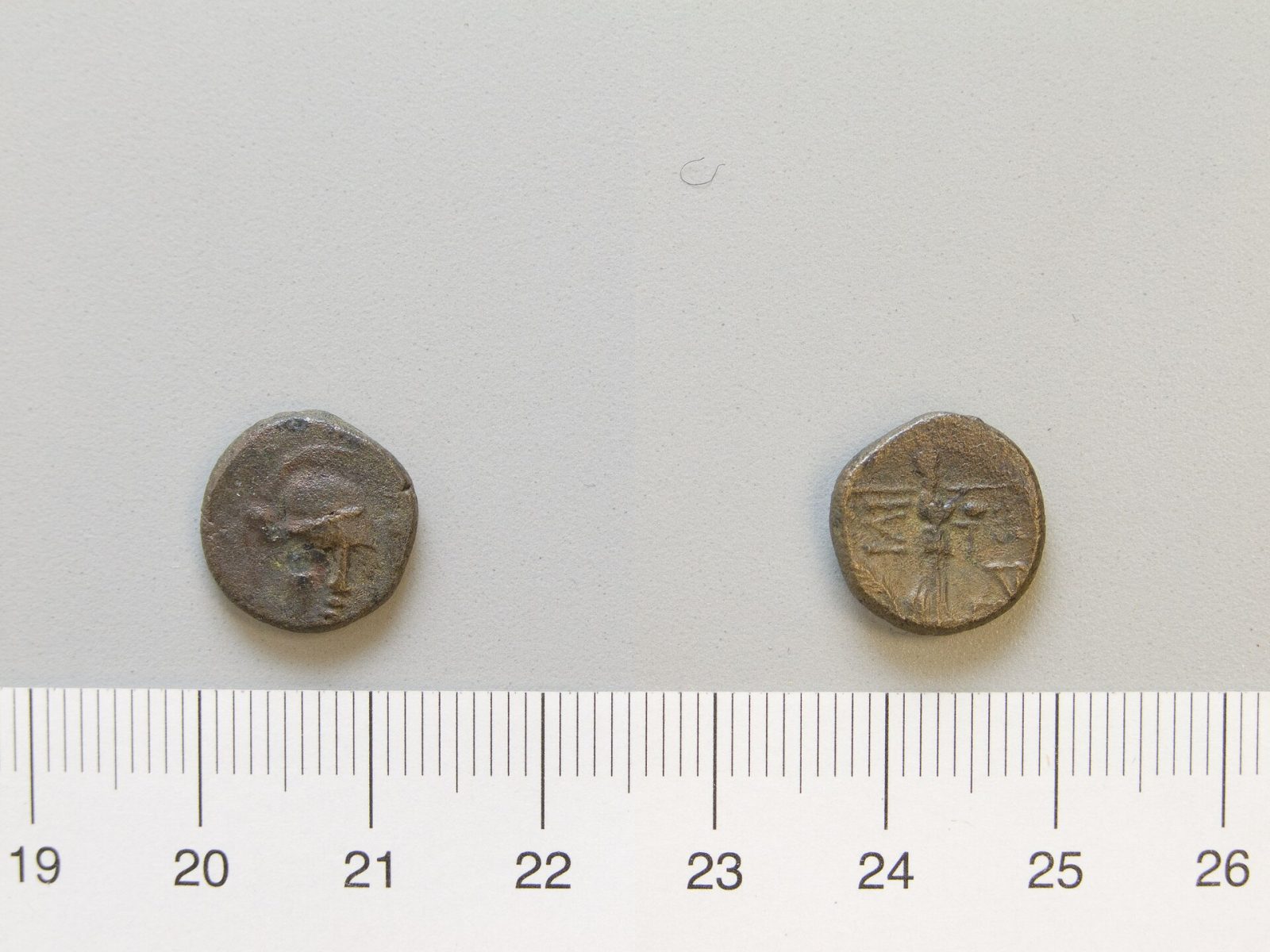
In summer 2025 a 13-year-old boy found a tiny bronze coin on farmland in Spandau, Berlin. It had been struck at Ilion, ancient Troy, around 281 to 261 BC. It is the first ancient Greek object ever found in Berlin, and it lay on a prehistoric cemetery.
In the summer of 2025, a 13-year-old schoolboy found a small, worn bronze coin on farmland in the Spandau district of Berlin. His name has not been published. In November he took it to PETRI Berlin, the city's archaeology centre, to ask what it was. "Nobody knew exactly what it was because it was so small," the archaeologist Jens Henker of Berlin's heritage office later said.
The coin is only about 12 millimetres across. On one side is the head of the goddess Athena wearing a Corinthian helmet. On the other is Athena Ilias, the goddess of Ilion, holding a spear and a spindle. Ilion was the Greek city built on the site of ancient Troy, in what is now north-west Turkey, and the coin was struck there around 281 to 261 BC. It had travelled about 2,000 kilometres.
At first the experts suspected that a modern collector had dropped it. But when they checked the findspot, they found that the field is a known prehistoric burial ground, excavated in the 1950s and 1970s, which had produced pottery, cremated bone, a Bronze Age bronze button, Roman-period finds and a Slavic knife fitting. That made it possible that the coin had been buried there in ancient times, perhaps as a grave gift or a treasured souvenir rather than as money. The heritage office linked it with the trade in Baltic amber, which was carried south to the Mediterranean world. Henker also mentioned the idea that men from this region may have served as mercenaries in the Greek world, while stressing that it is only an idea.
Greek coins have been found elsewhere in Germany, but they are very rare, and this is the first ancient Greek object ever found within Berlin. Berlin's State Office for Monuments announced the find on 15 April 2026, and since then the coin has been displayed in the case of recent finds at PETRI Berlin.
Written for Global Finds from the Berlin State Office for Monuments (Landesdenkmalamt Berlin, 2026), epd and dpa (2026) and Smithsonian Magazine (2026). Photo: a bronze coin of Ilion of a similar type, not the Spandau coin, Yale University Art Gallery, Wikimedia Commons, CC0.
Linked finds
Source: Landesdenkmalamt Berlin (2026)