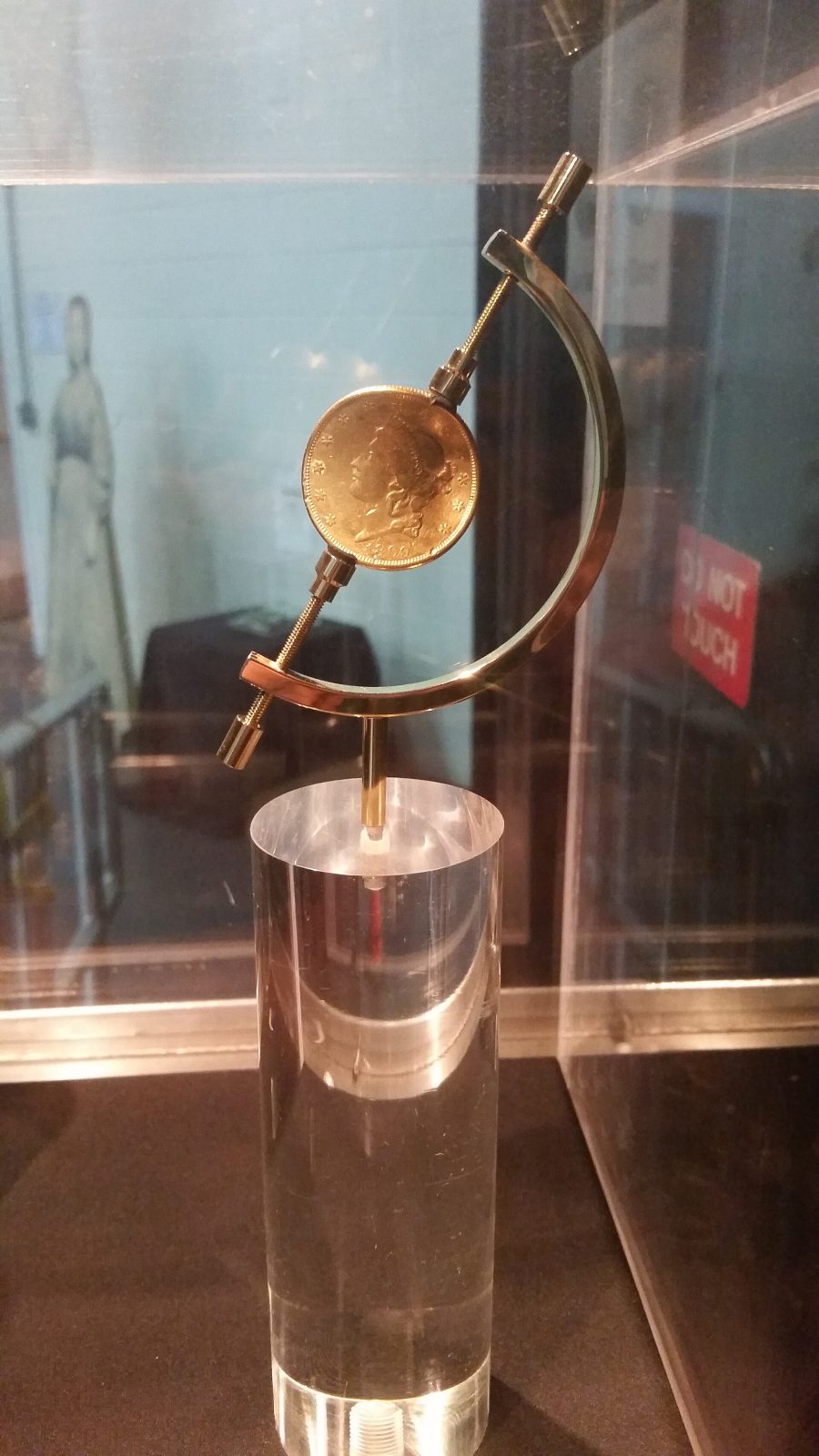
The Pirate's Coin: an Arabian silver coin in a Rhode Island orchard may have been spent by Henry Every's crew
Famous find Struck in Yemen in 1693 · Found in 2014 See it on the timeline →
In 2014 detectorist Jim Bailey found a darkened silver coin with Arabic script at a fruit farm in Middletown, Rhode Island. Struck in Yemen in 1693, it led him to argue that the crew of the pirate Henry Every spent their loot in colonial New England.
In 2014, Jim Bailey, an amateur historian and metal detectorist who works as a security analyst at a Rhode Island prison, was searching Sweet Berry Farm, a pick-your-own fruit farm in Middletown, Rhode Island, where he had already found colonial-era objects. He dug up a darkened silver coin about the size of a dime. At first he took it for Spanish or Massachusetts colonial money. But it bore Arabic script, and research showed that it had been struck in Yemen in 1693.
How did a Yemeni coin reach a New England field? Bailey's answer pointed to one of the most notorious pirates of the age. In September 1695, Henry Every, captain of the ship Fancy, captured the Ganj-i-Sawai, a treasure ship belonging to the Mughal emperor Aurangzeb, as it carried pilgrims home from Mecca across the Arabian Sea. The attack was brutal, and the haul was enormous. It caused a diplomatic crisis between England and the Mughal empire, and the government put a price on the pirates' heads, in what became one of the first worldwide manhunts. Every's crew scattered, and his own trail went cold in Ireland in 1696.
Bailey argued that many of Every's men slipped into the American colonies and spent their Arabian loot there. He published his case in 2017 in the Colonial Newsletter of the American Numismatic Society. By 2021, at least fifteen more Arabian coins of the period had been found in Massachusetts, Rhode Island and Connecticut, with another in North Carolina, where some of Every's men are known to have come ashore. Connecticut's state archaeologist, Sarah Sportman, said it was almost like a money-laundering scheme, and the archaeologist Kevin McBride called Bailey's research impeccable. The link with Every has not been proved, but it is now widely taken seriously. A fragment of a similar coin had been found a few miles away earlier, so Bailey's was the first intact example.
Bailey has kept his best finds in a safe-deposit box. In the United States there is no national treasure law for private land, and finds belong to the landowner unless they agree otherwise.
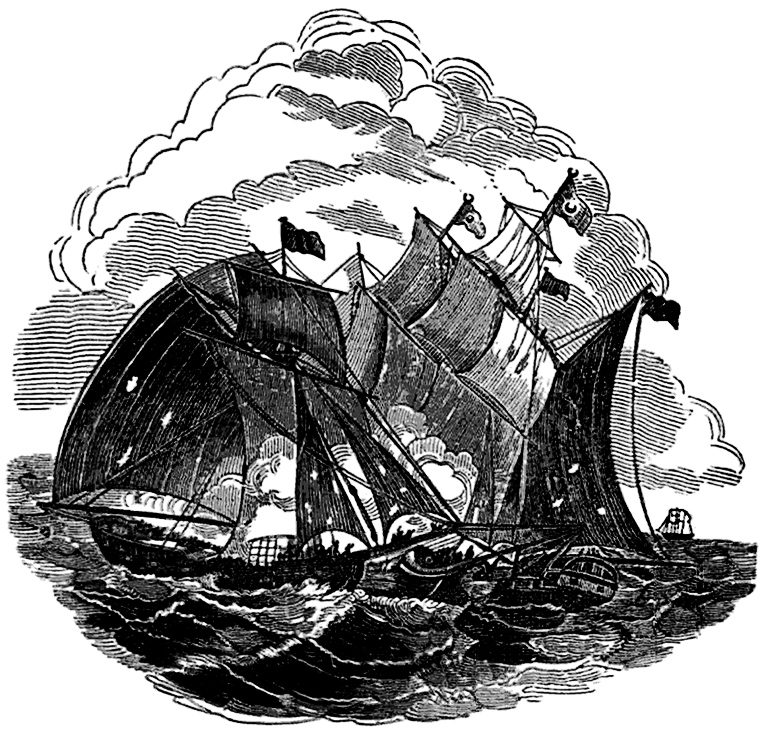
Written for Global Finds from the Associated Press via NBC News (2021), NPR (2021) and The E-Sylum (2017). Photo: an 1837 engraving of Henry Every's ship attacking the Great Mogul's ship, an illustration, not the coin, Charles Ellms, The Pirates Own Book, Wikimedia Commons, public domain.