The Eustace FitzJohn Penny: a baron's own coin from the Anarchy, showing a knight with a sword, found on the first signal of the day
Famous find Struck at York during the Anarchy, 1135 to 1154 · Found in 2020 See it on the timeline →
On 15 August 2020 Rob Brown, detecting a stubble field near Pickering in North Yorkshire, got his first signal of the day after twenty paces. It was a penny struck by Eustace FitzJohn, a baron who minted his own coins during the Anarchy. It sold for £29,760.
On 15 August 2020, Rob Brown, a 56-year-old detectorist from Leeds who had been detecting for eight years, was searching a stubble field near Pickering in North Yorkshire with a friend. About twenty paces in, he got the first signal of the day, and two inches down, in a clump of soil, was a small silver coin. Neither of them was sure whether it was Saxon or Viking, so they posted a photograph on a Facebook group for hammered coins, where many people recognised it at once.
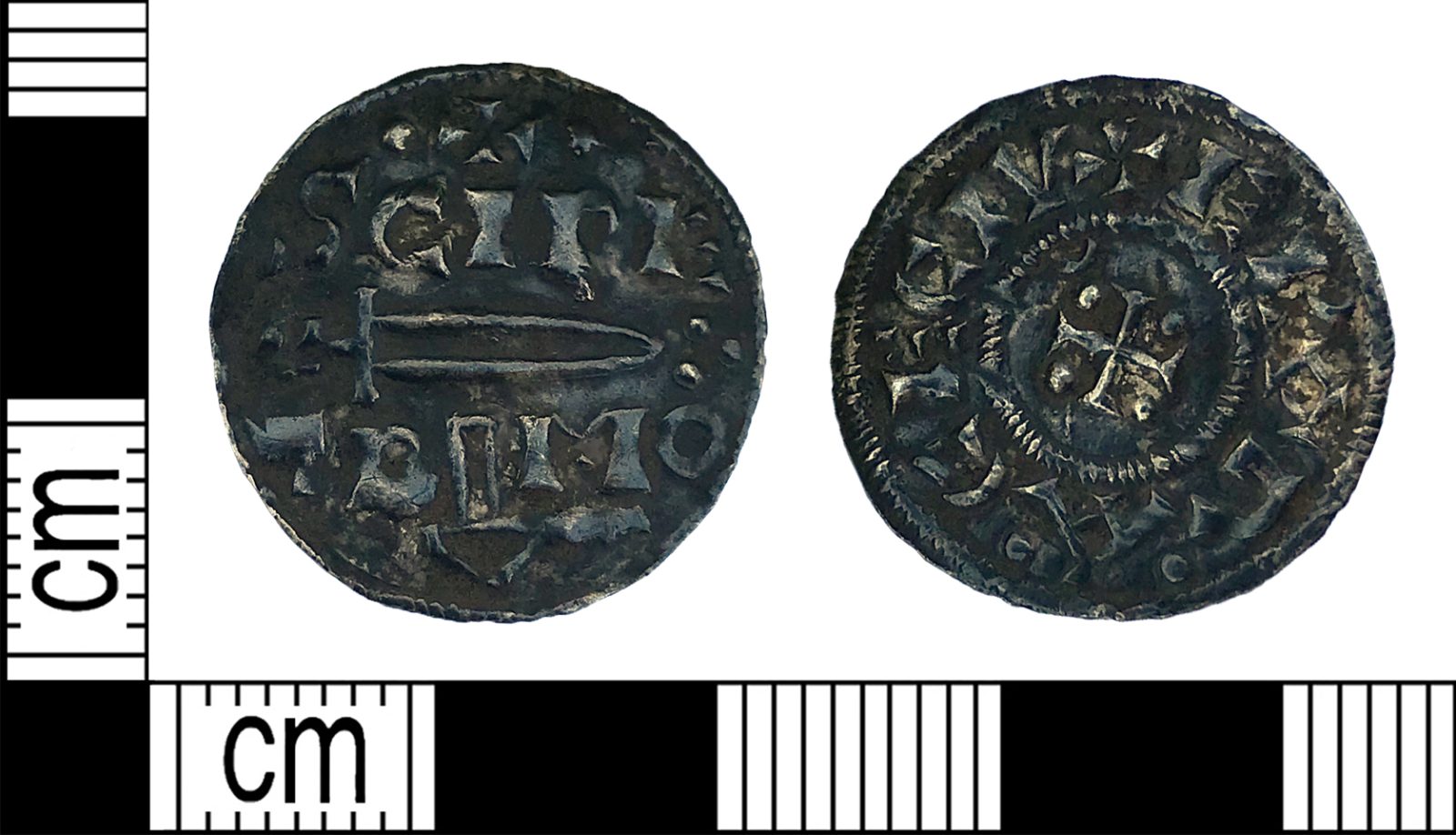
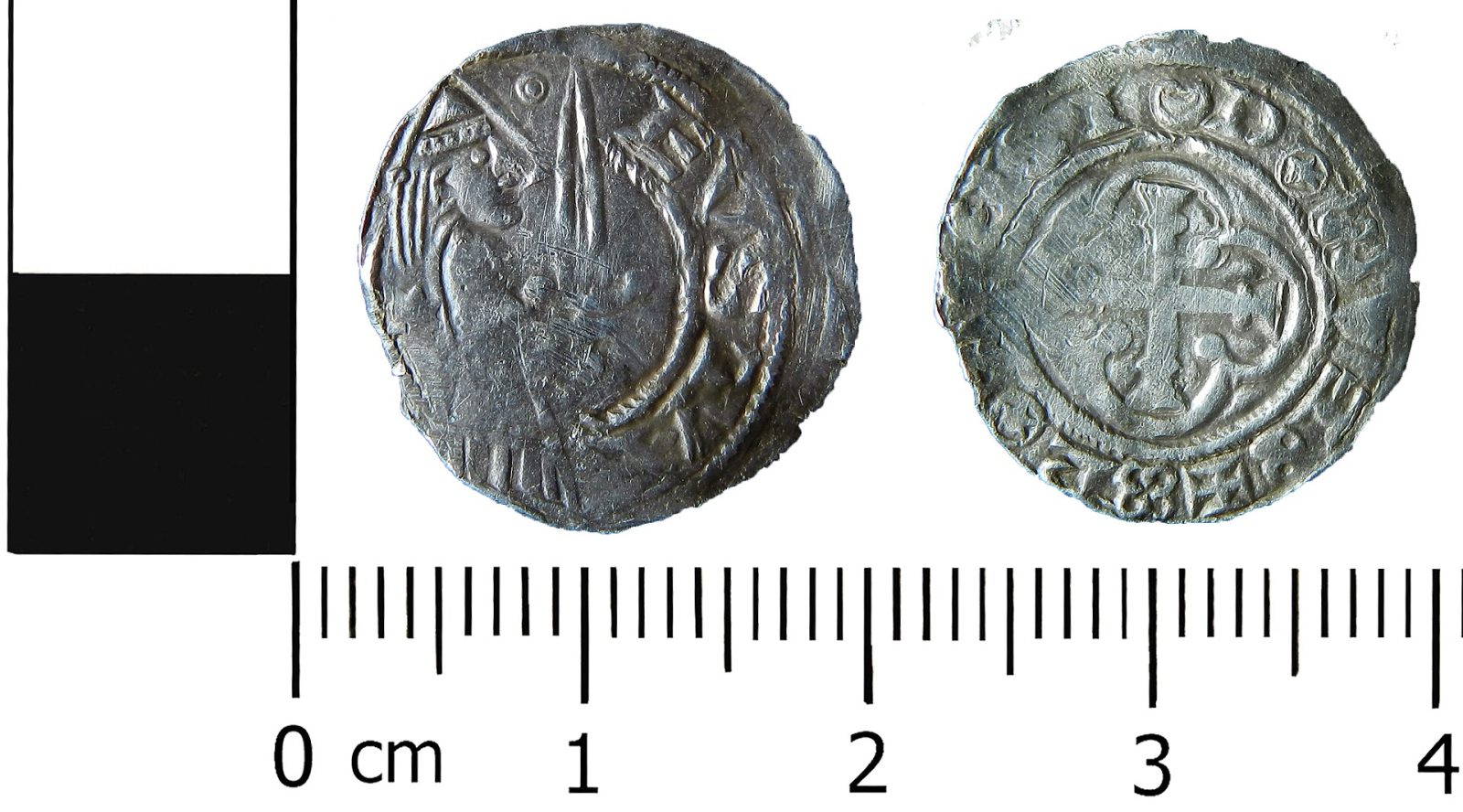
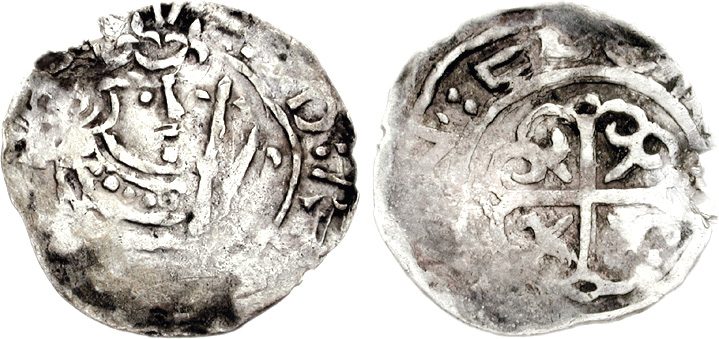
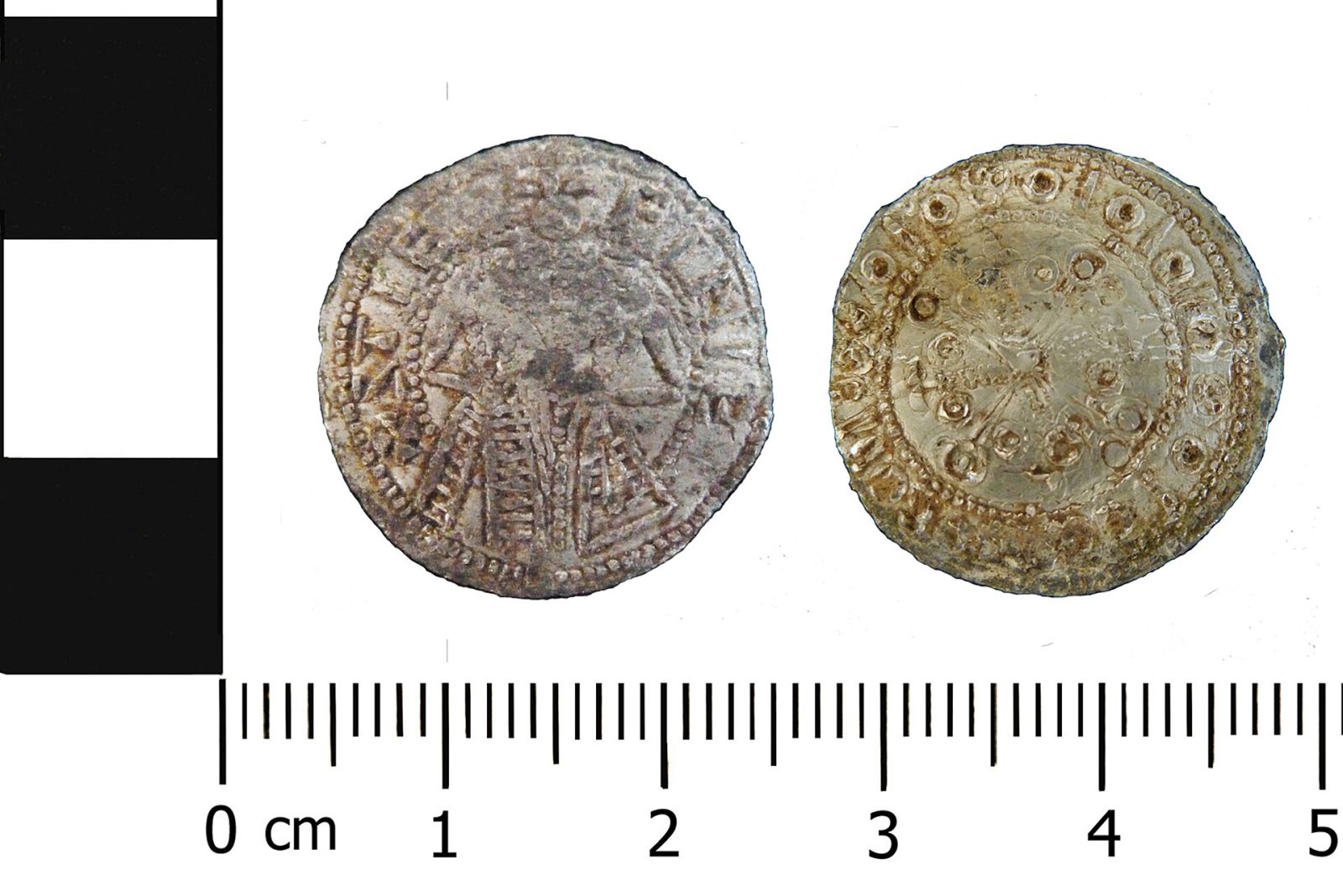
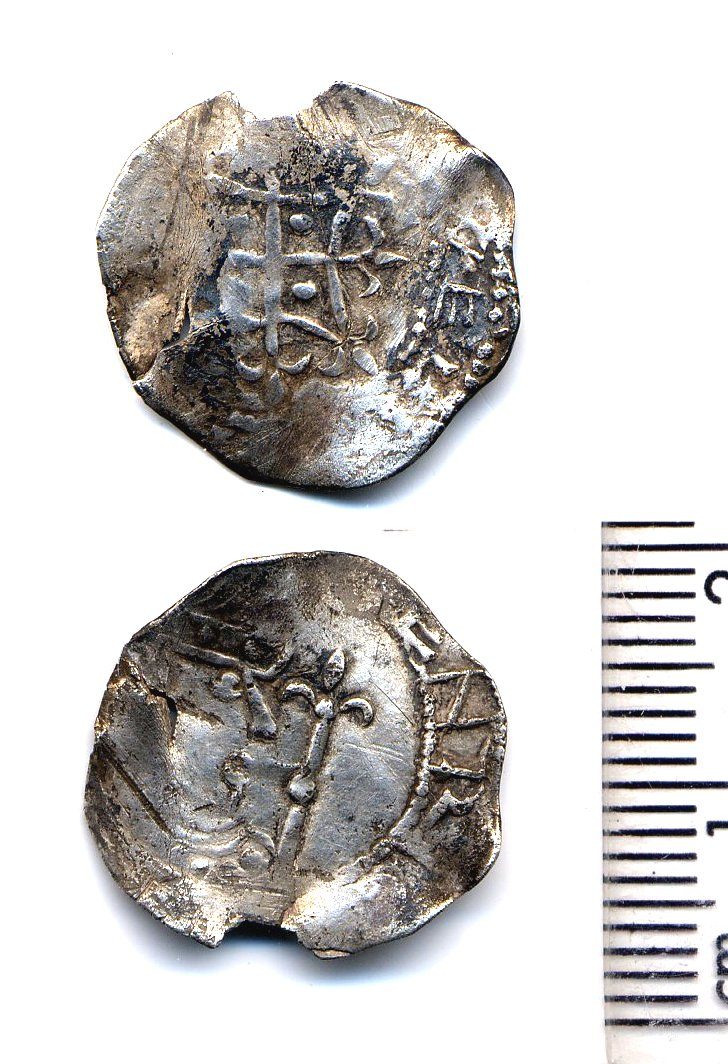
The coin is a silver penny, 19 millimetres across, struck at York not by a king but by a baron, Eustace FitzJohn. On one side stands a knight in a helmet holding a sword, with the name EUSTACIUS. On the other is a cross within a four-lobed frame. Only about twenty coins of this design are known.
Eustace FitzJohn was one of the most powerful men in the north of England, lord of Malton and Knaresborough and a royal justice under Henry I. During the Anarchy, the civil war between King Stephen and the Empress Matilda, he took Matilda's side. He lost Bamburgh Castle to Stephen in 1138 and fought for King David I of Scotland at the Battle of the Standard that same year. As royal control collapsed, a few great lords struck coins in their own names, and Eustace was one of them. The auctioneers noted that there is an Anarchy-period fortification close to the findspot. He was killed in an ambush in Wales in 1157. Nigel Mills of Dix Noonan Webb called him the Alan Sugar of his day.
The penny was sold online by Dix Noonan Webb on 3 November 2020 against an estimate of £10,000 to £15,000. Two British collectors fought it out against bids from the United States and Brazil, and it made £24,000 hammer, £29,760 with premium. Brown said he would put the money towards his pension. "So the Eustace stays here," said Mills.
Written for Global Finds from Coin World (2020) and Dix Noonan Webb (2020). Photo: another penny of Eustace FitzJohn of the same design, not the Pickering coin, Ben Jones, National Museums Liverpool, Portable Antiquities Scheme, Wikimedia Commons, CC BY 2.0.
Linked finds
Source: Coin World (2020)