The Vitellius Aureus: told by his wife to get out of the house, a 76-year-old detectorist found an emperor's gold
Famous find Struck in AD 69 · Found in 2024 See it on the timeline →
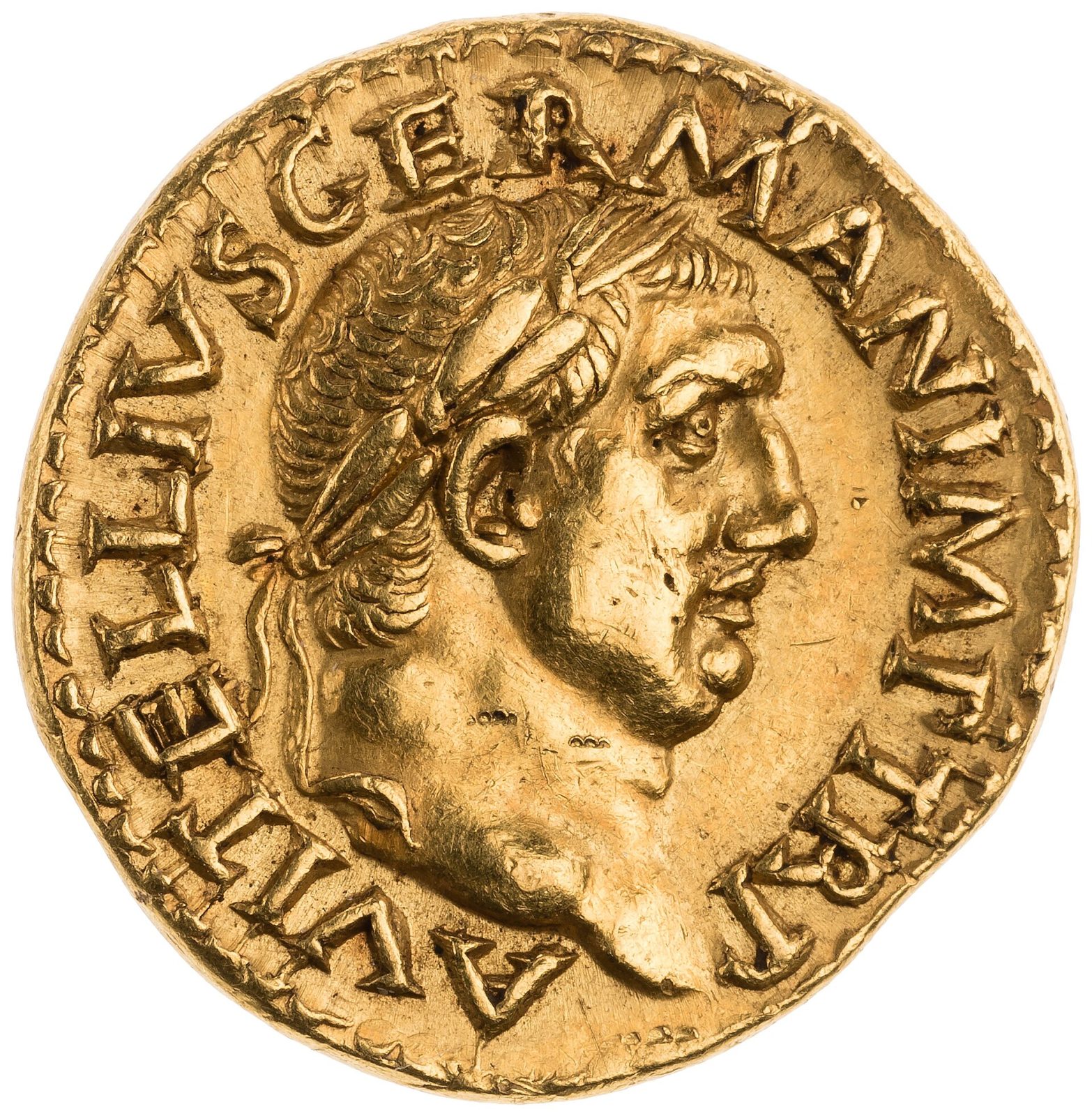
In May 2024 Ron Walters, a 76-year-old retired welder, found a gold aureus of Vitellius, who ruled Rome for eight months in AD 69, in a field near Wall Heath, Dudley, that he had searched for six years. It is believed to be the first Vitellius aureus found in the British Isles.
In May 2024, Ron Walters, a 76-year-old retired welder and grandfather from Kingswinford in the West Midlands, went out detecting because, as he told reporters, his wife had told him to get out of the house. He went to a farmer's field near Wall Heath, Dudley, which he had searched every spring and autumn for six years. He got a signal, lost it, then found it again in a clod of earth two feet away. When he broke the clod open, a gold coin dropped into his hand.
It was an aureus, a Roman gold coin, of the emperor Aulus Vitellius. Vitellius ruled for only about eight months in AD 69, the Year of the Four Emperors, when Rome went through four rulers in a single year of civil war. He was proclaimed emperor by the legions on the Rhine, marched on Rome and defeated Otho, but was himself overthrown by the forces of Vespasian and killed in Rome in December. Coins of such a short reign are scarce, and gold ones especially. The coin is believed to be the first aureus of Vitellius recorded as a find in the British Isles. Walters imagined it being carried here by a soldier, perhaps by way of France.
The coin was sent to the British Museum, which did not wish to keep it, and it was returned to the finder. Fieldings Auctioneers in Stourbridge, a few miles from the findspot, offered it on 27 March 2025 with an estimate of £4,000 to £6,000. It was bought by a collector in Scotland for a hammer price reported as £4,700, over £5,000 with the buyer's premium, and the money was shared with the landowner.
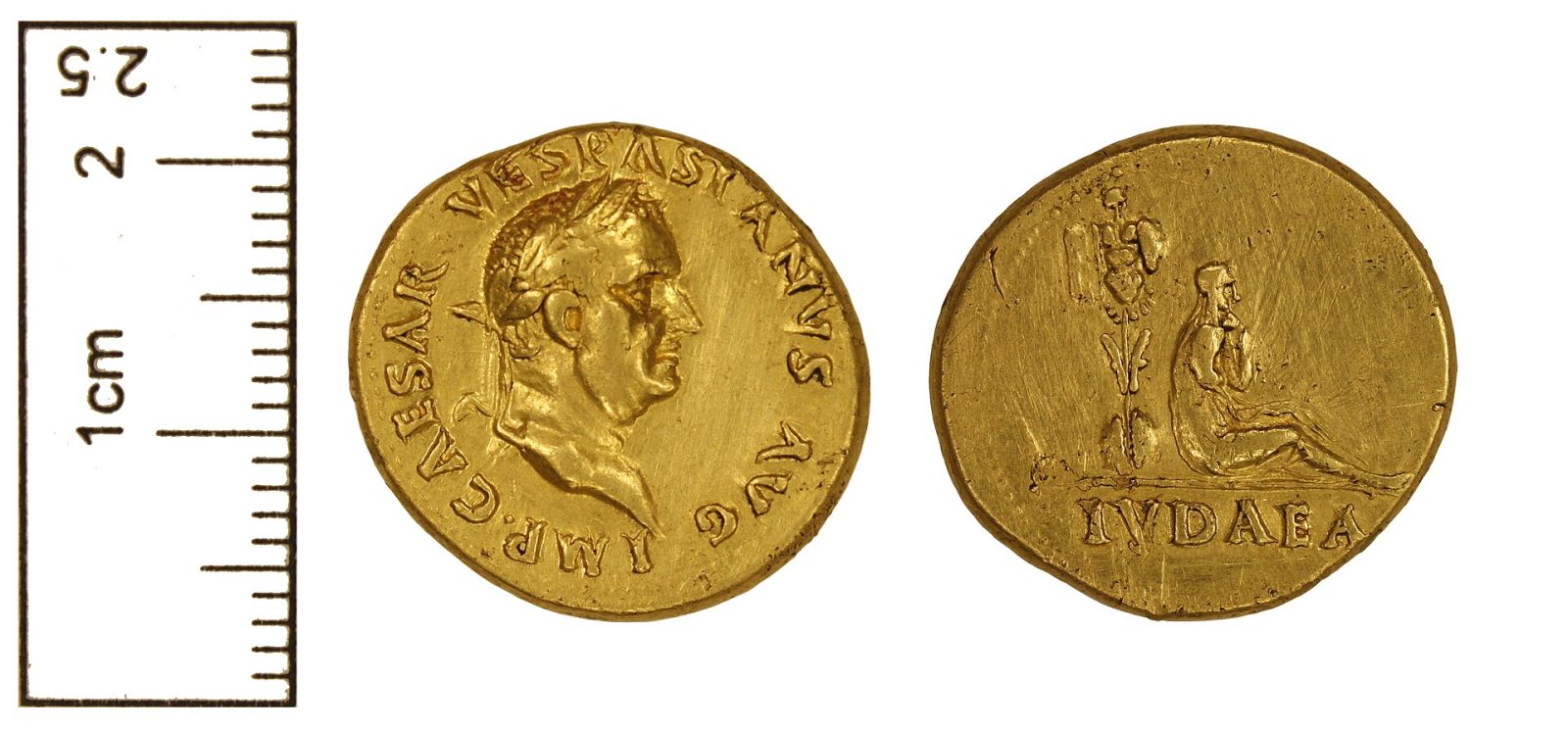
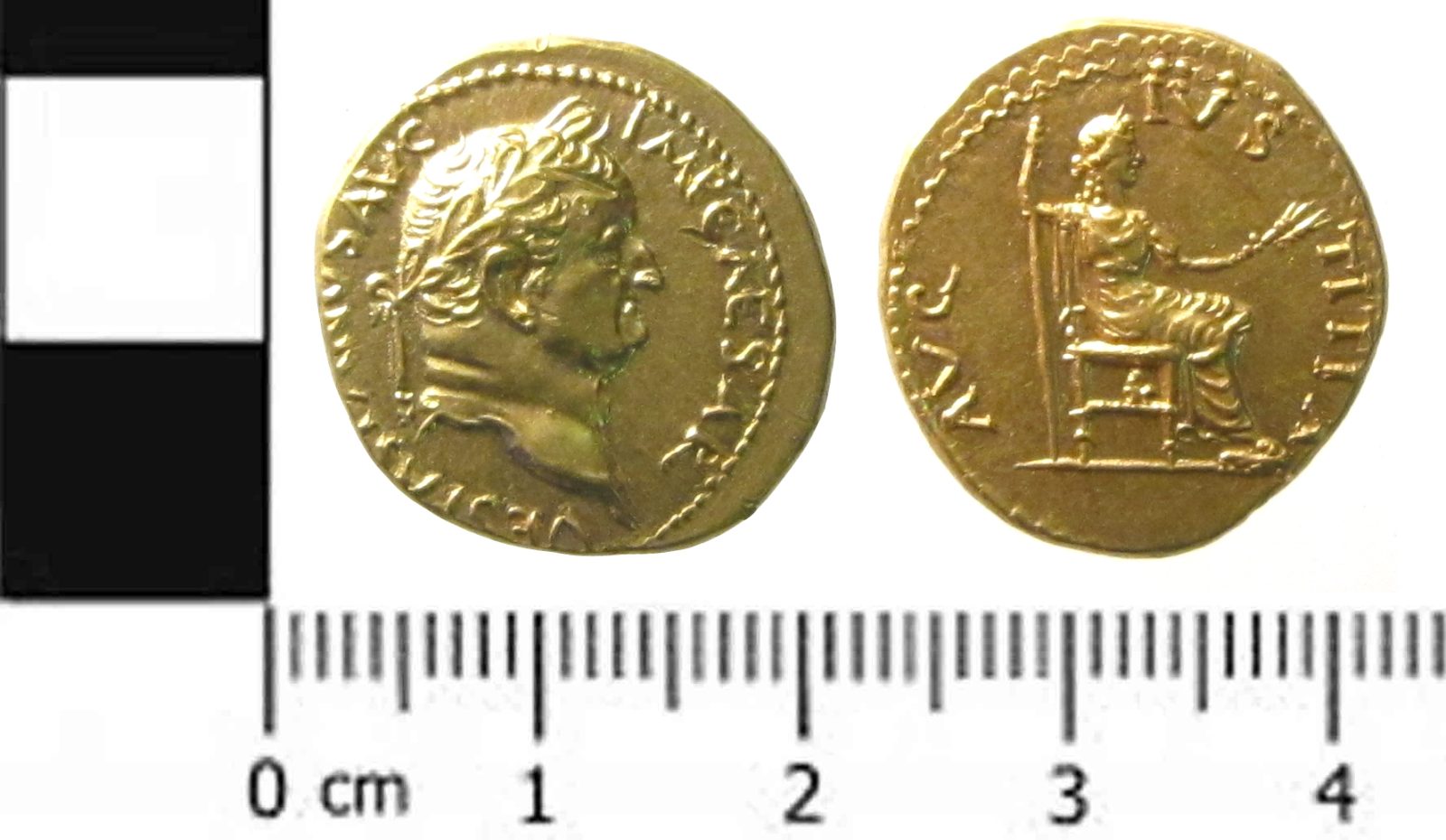
Vespasian, the general who overthrew Vitellius and took the throne, had commanded a legion in the Roman conquest of Britain. Gold coins of Vespasian found in Cambridgeshire and Lincolnshire are also on Global Finds.
Written for Global Finds from Fieldings Auctioneers (2025) and Good News Network, reporting SWNS (2025). Photo: another gold aureus of Vitellius, not the Wall Heath coin, American Numismatic Society, Wikimedia Commons, CC0.
Linked finds
Source: Fieldings Auctioneers (2025)