The Peinan Earring: building a railway station uncovered a stone-coffin cemetery and a jade of two people carrying a beast
Famous find Made about 850 to 350 BC · Found in 1984 See it on the timeline →
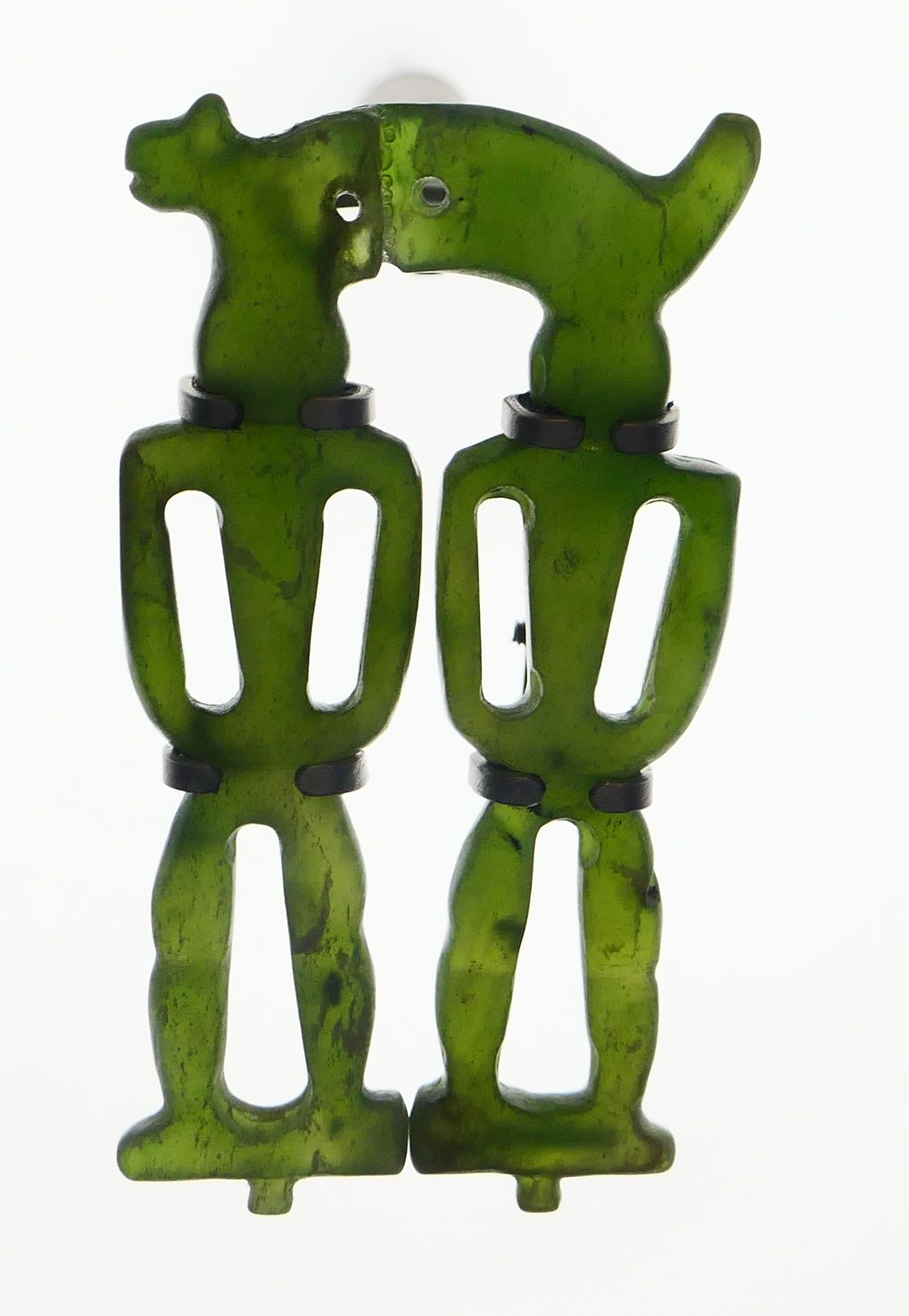
In 1980 railway works at Taitung in Taiwan uncovered a prehistoric cemetery of slate coffins. In 1984 archaeologists found in one coffin a carved jade earring of two human figures carrying an animal on their heads. It is now one of Taiwan's national treasures.
In July 1980, work on a railway extension and a new station at Taitung, on the south-east coast of Taiwan, cut into an ancient cemetery. Under the ground lay hundreds of coffins made of slabs of slate. Archaeologists from National Taiwan University, led by Sung Wen-hsun, began rescue excavations that went on for nearly ten years, recording well over 1,500 slate coffins, together with houses, pottery and thousands of stone and jade objects. The place is known as the Peinan site, and the culture it belongs to as the Peinan culture.
In 1984, in one of the slate coffins, the team found a small carved jade ornament with spearheads, beads, adzes and chisels. It shows two human figures standing side by side with their hands on their hips, carrying a four-legged animal across their heads. It is carved from grey-green Taiwanese nephrite and is 70 millimetres high, 40 millimetres wide and only 4.5 millimetres thick, weighing 15.7 grams. Because ornaments of this kind were found near the ears of the dead, it is called an earring, though some scholars think it may have been worn in the hair.
Peinan jade is famous across East Asia. The people who lived here worked nephrite from the mountains of eastern Taiwan into ear ornaments, beads and tools, and Taiwanese jade was traded across the seas to the Philippines and as far as Vietnam and Thailand. Only about 41 jades of this human-and-animal design are known from nine sites, and six of them come from Peinan. This is the best known. The National Museum of Prehistory dates the Peinan culture to between about 3,500 and 2,300 years ago, and the earring is usually placed late in that period.
The earring was published by Sung Wen-hsun and Lien Chao-mei in 1984. In 2012 it was declared a National Treasure of Taiwan, and its shape is the emblem of the National Museum of Prehistory in Taitung, which now cares for the Peinan collection. Part of the site has been preserved as the Peinan Site Park.
Written for Global Finds from the National Museum of Prehistory, Taiwan, and PTS News (2025). Photo: the Peinan human-and-animal jade earring at the National Museum of Prehistory, Pbdragonwang, Wikimedia Commons, CC BY-SA 4.0.