The Valknut Shilling: a dancing figure holds a Christian cross over a pagan symbol on East Anglia's earliest coin
Famous find Struck about AD 640 to 660 · Found in 2024 See it on the timeline →
In autumn 2024 a metal detectorist found a tiny gold shilling near Norwich showing a figure dancing a jig with a Christian cross held over a valknut, a pagan symbol linked with Odin. Struck around AD 640 to 660, it is thought to be the earliest Anglo-Saxon coin from East Anglia.
In the autumn of 2024, a metal detectorist searching a field near Norwich found a gold coin no bigger than a fingernail. The finder's name has not been published. The coin was examined by Adrian Marsden of the Norfolk Historic Environment Service, who called it massively significant. "It's the first one of this type of coin that we've seen," he said, "and new types of shillings just don't turn up."
It is a gold shilling, also called a thrymsa, struck around AD 640 to 660. On the front, a little figure wearing a diadem, with a large head and crossed legs, seems to be dancing a jig while holding up a long Christian cross. Beneath the cross is a valknut, three interlocked triangles, a pagan symbol associated with the god Odin, whose roles included guiding the dead to the afterlife; similar emblems appear on Anglo-Saxon cremation urns. On the back is a design that could be a cross or a swastika, then a good-luck sign, surrounded by an attempt at a Latin inscription. "Whoever made the die wasn't literate," Marsden said. "The letters don't bear much resemblance to Latin." Testing showed the coin contains up to 60 per cent gold.
Marsden concluded that all the evidence pointed to it being the earliest Anglo-Saxon East Anglian coin so far known. It was struck in the generation of the Sutton Hoo ship burial, when the kings of East Anglia were turning from the old gods to Christianity, and its mix of cross and valknut seems to capture that moment of change.
The coin was also only the second in Norfolk to be assessed under the new definition of Treasure introduced in 2023, which allows a single object to be declared Treasure on the basis of its national significance. Norwich Castle Museum hopes to acquire it. Marsden published the coin in The Searcher magazine.
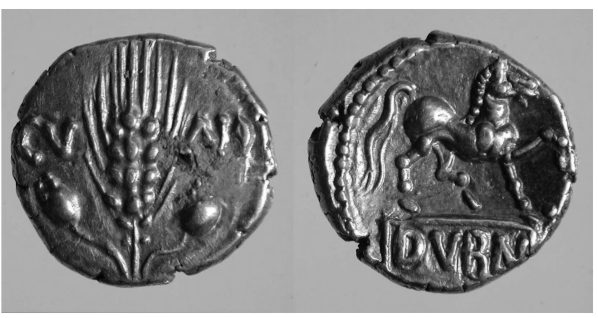
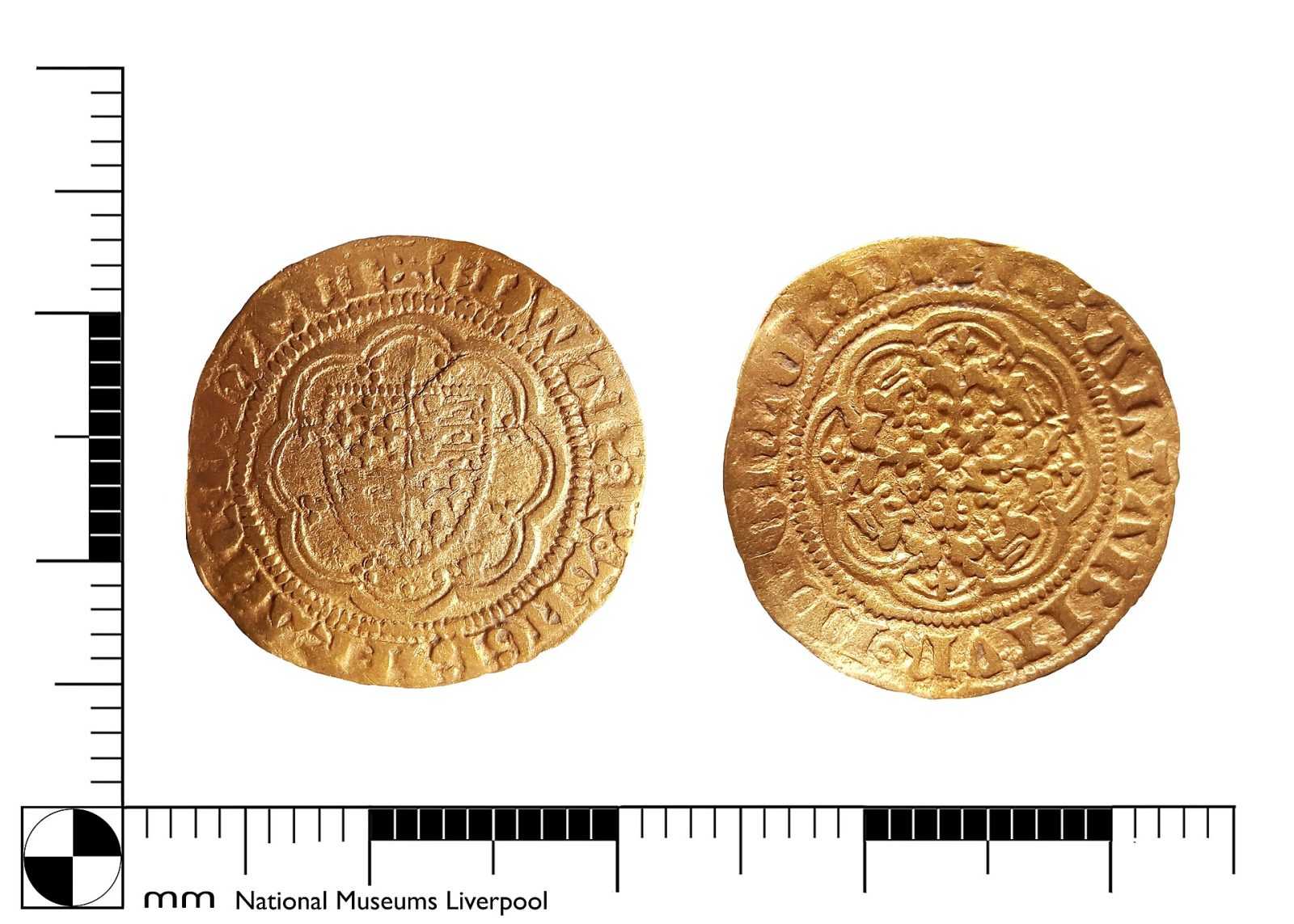
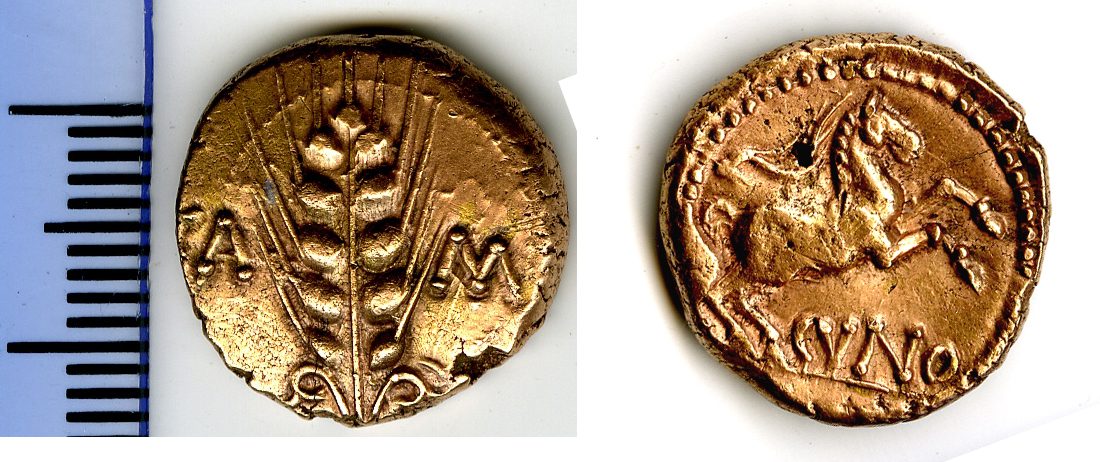
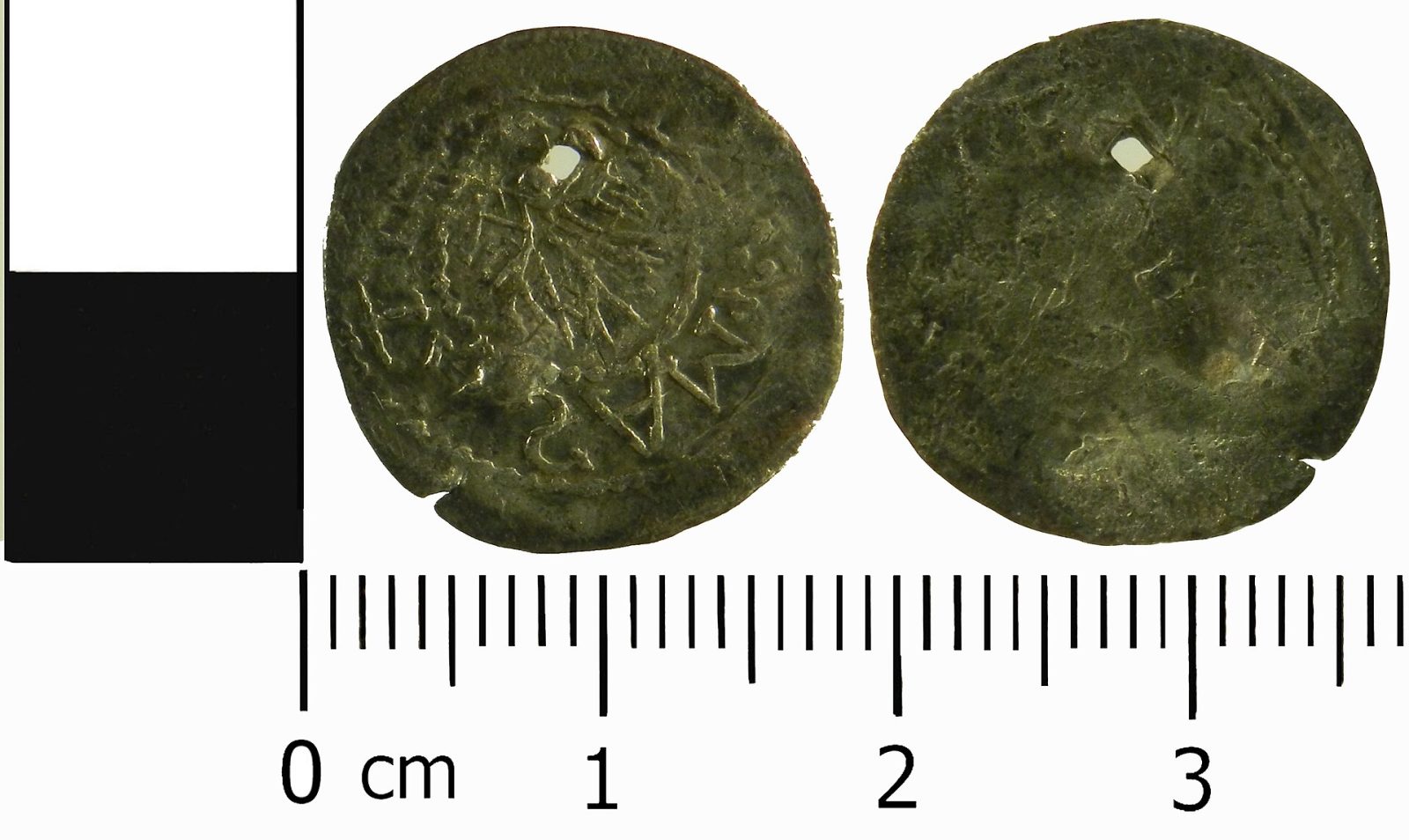
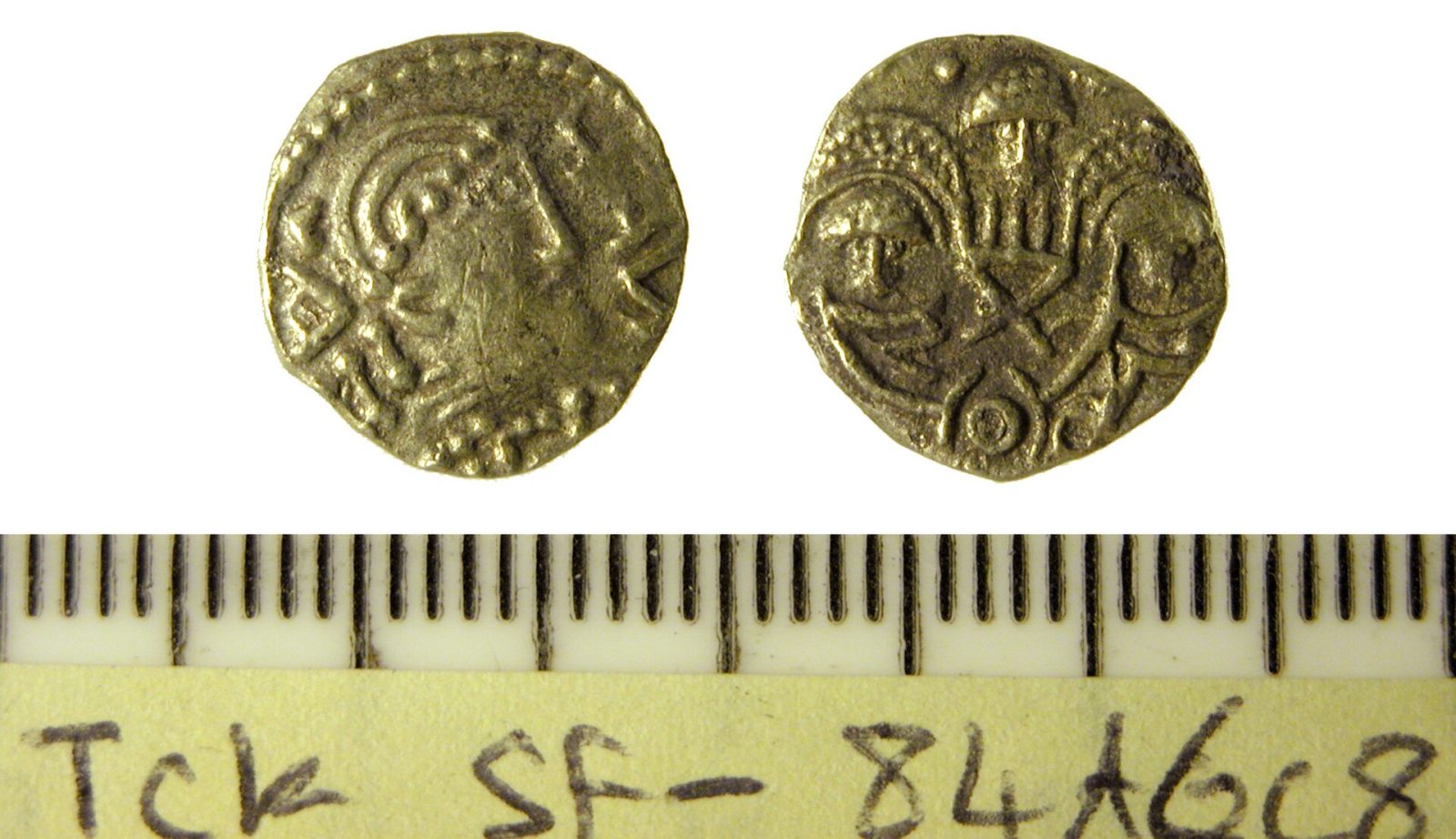
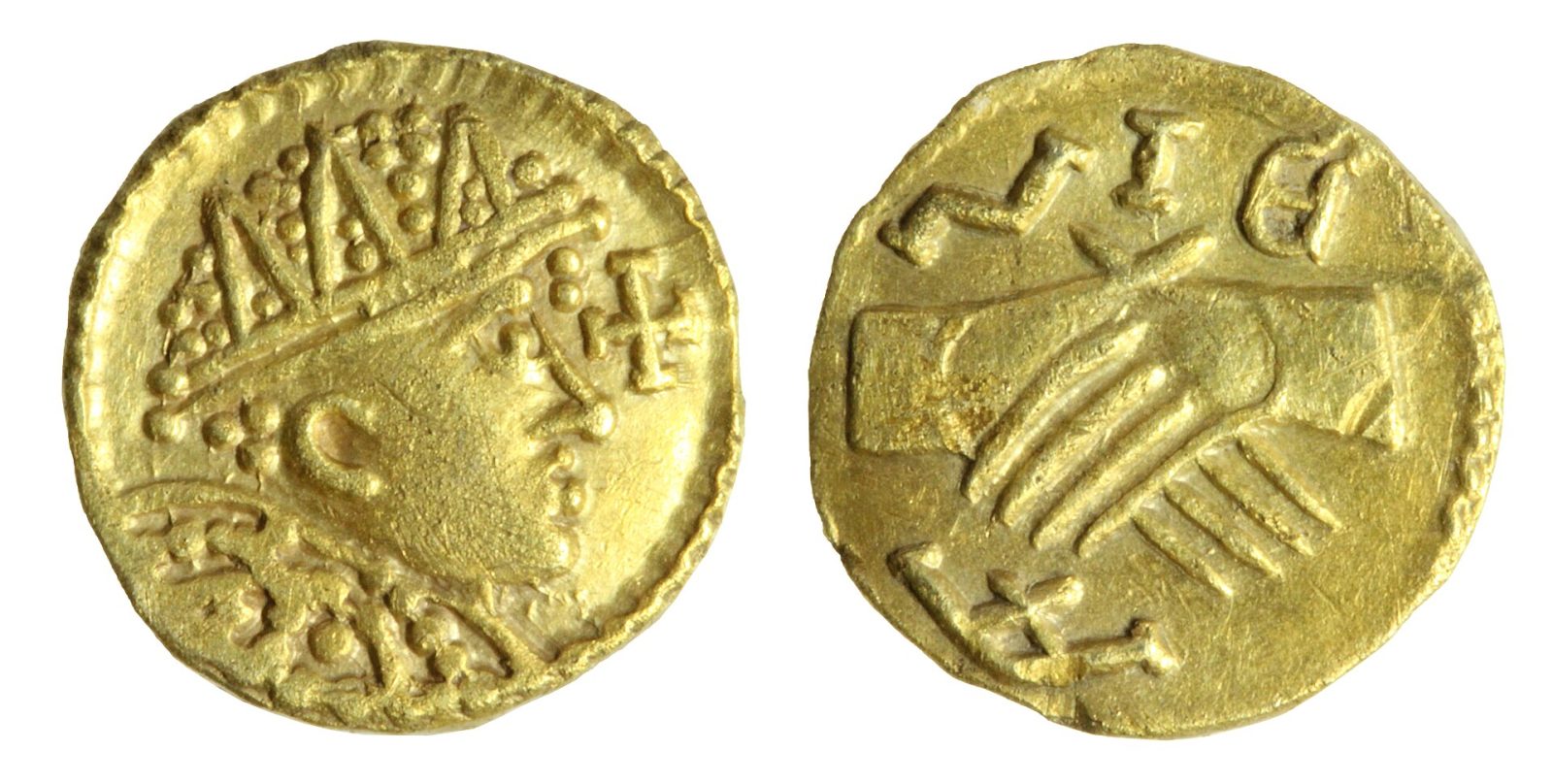
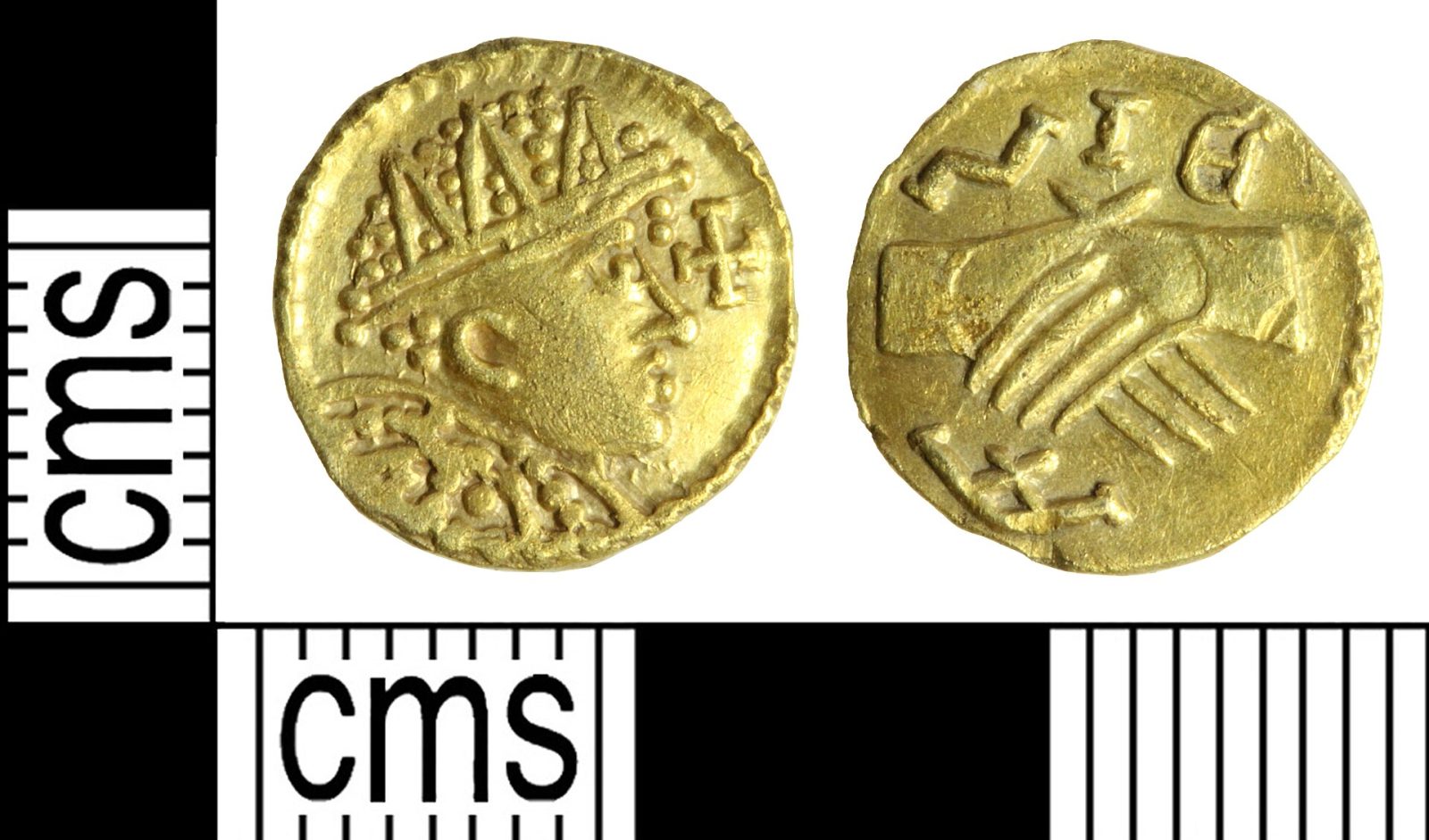
Written for Global Finds from BBC News (2025), The Past (2025) and Archaeology magazine (2025). Photo: another early Anglo-Saxon gold shilling found in East Anglia, of a different design, not the Norwich coin, Andrew Brown, Suffolk County Council, Portable Antiquities Scheme, Wikimedia Commons, CC BY-SA 2.0.
Linked finds
Source: BBC News (2025)