The CVNO/DVBN Coin: a 19-year-old's first gold find named two British kings, and perhaps a prince who died fighting Rome
Famous find Struck about AD 40 to 43 · Found in 2013 See it on the timeline →
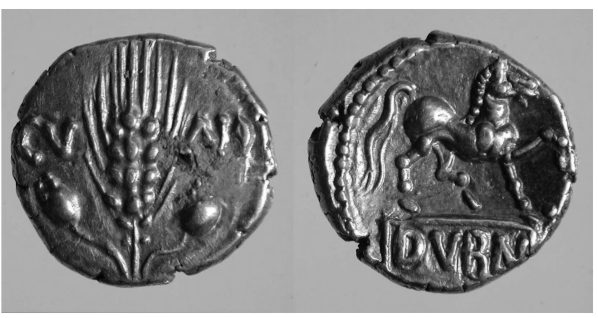
On 5 October 2013, 19-year-old Tom Lesurf, at a detecting rally at Bourne End, Bedfordshire, found his first gold coin after 15 minutes. It named both Cunobelin and a ruler called DVBN, and only three others were known, all from the Hallaton hoards.
At one o'clock on Saturday 5 October 2013, Tom Lesurf, a 19-year-old highways engineer, had been on the field for just fifteen minutes. He was at a three-day detecting rally of about 400 people on a farm at Bourne End, Bedfordshire, with his father, Eddie. He dug up a small gold coin. "At first I thought it was a brass button," he said. It was the first gold coin he had ever found.
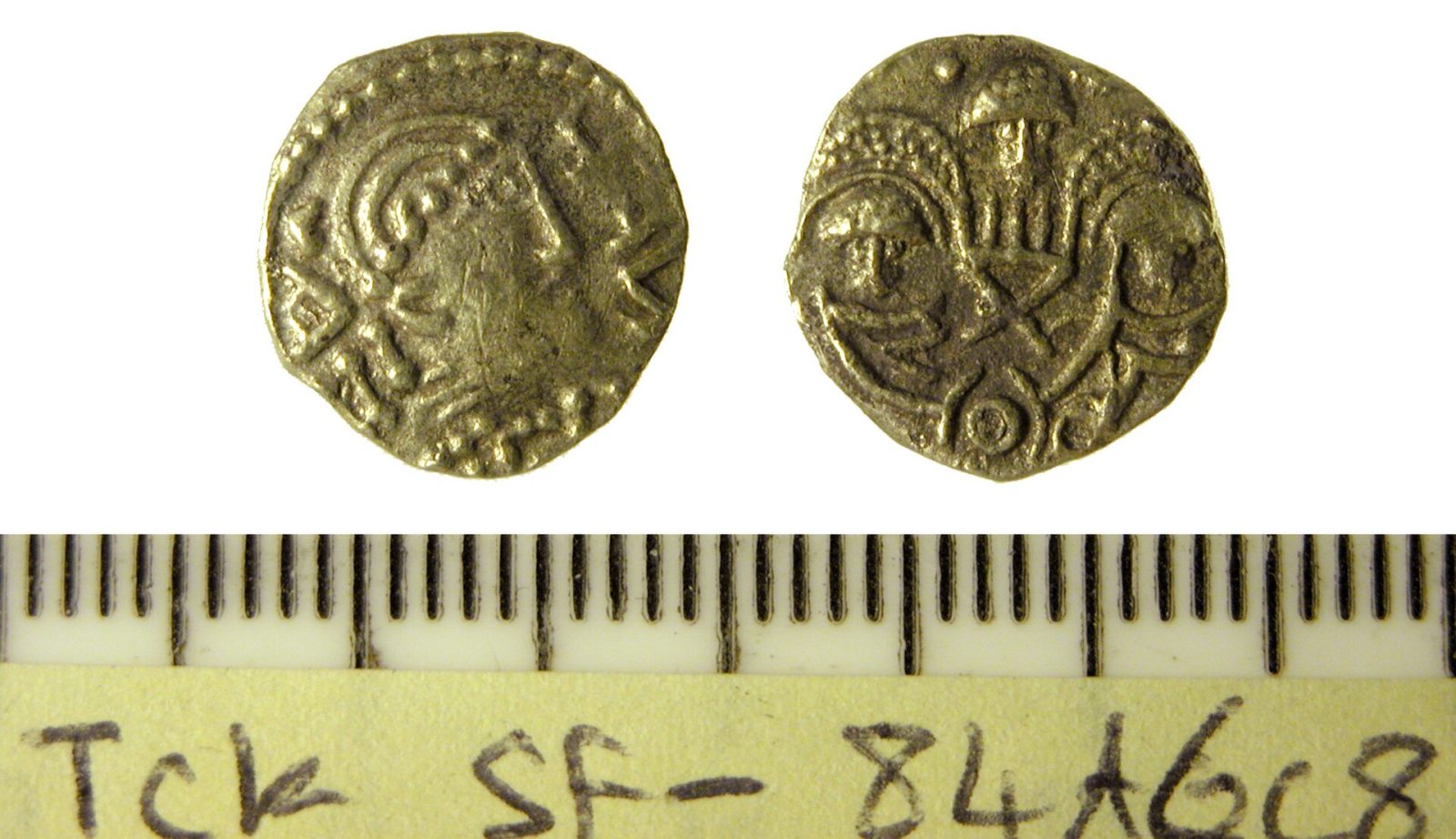
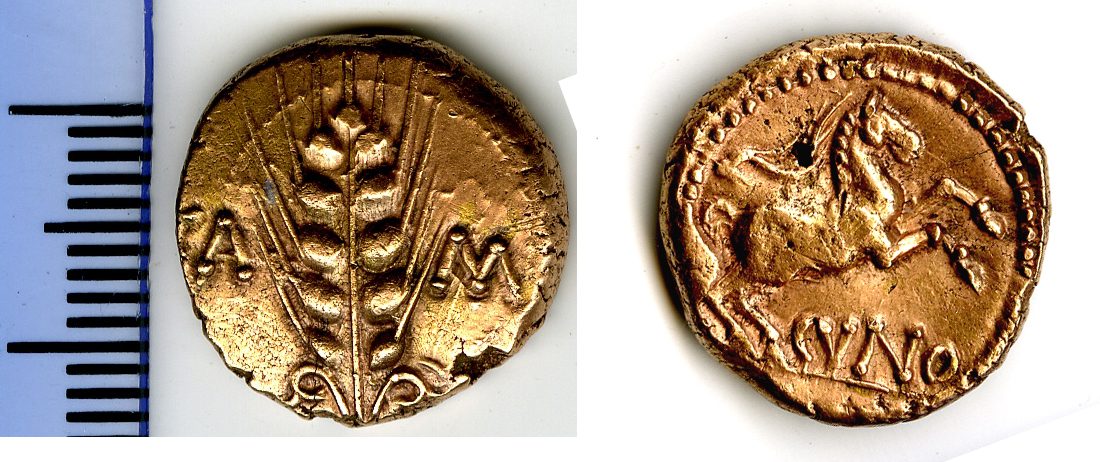
It was a gold quarter stater of the Iron Age. On one side is an ear of corn with three rows of grains, a variant of the design used by Cunobelin, the most powerful king in Britain before the Roman conquest, flanked by the letters CVNO, for Cunobelinus. On the other is a horse, and the letters DVBN. Only three other coins of this kind were known, and all of them had come from the Hallaton hoards in Leicestershire, about 35 miles away, a ritual site discovered by the detectorist Ken Wallace in 2000.
Who was DVBN? Some specialists have read the name as Dubnovellaunos, a king who ruled in Kent and Essex earlier. Others have suggested it may be Togodumnus, Cunobelin's son and heir, who, according to the Roman historian Cassius Dio, led the resistance against the Roman invasion of AD 43 and died soon afterwards. The coin dealer Chris Rudd, who sold the coin, favoured Togodumnus but admitted that we may never know the full name. A die study by John Sills suggested that coins of this type were struck very late in Cunobelin's reign, around the time of the invasion. If DVBN is Togodumnus, this would be one of the only coins of a British prince who fell fighting Rome.
Chris Rudd sold the coin on 13 January 2014 for £10,200, which he described as a record for an Ancient British gold quarter stater. The buyer has not been named.
Written for Global Finds from Chris Rudd via CoinsWeekly (2014) and The E-Sylum (2014). Photo: another CVNO/DVBN gold quarter stater, found in Leicestershire, not Tom Lesurf's coin, Celtic Coin Index and Portable Antiquities Scheme, Wikimedia Commons, CC BY-SA 4.0.
Linked finds
Source: CoinsWeekly (2014)