The Saffron Walden Stater: actor Charlie Cooper's pupil found Iron Age gold on his very first detecting lesson
Famous find Struck about AD 10 to 43 · Found in 2026 See it on the timeline →
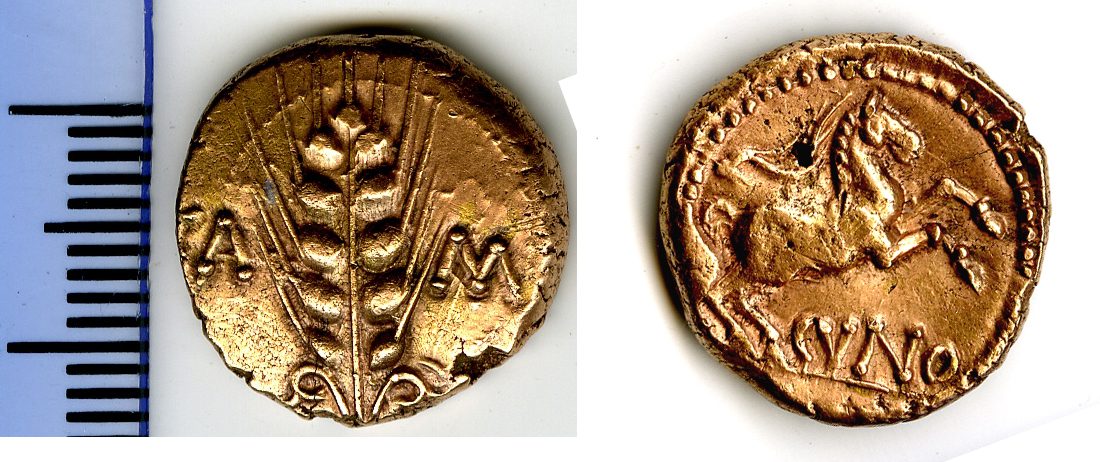
On 5 March 2026 assistant director Matt Bell, on his first metal-detecting outing with his friend, the This Country actor Charlie Cooper, found a gold stater of Cunobelin in a field near Saffron Walden, Essex. Cooper dropped to his knees.
On 5 March 2026, the actor Charlie Cooper, star of the BBC comedy This Country, went out to teach his friend Matt Bell to use a metal detector. Bell, an assistant director who had met Cooper while working on This Country, had arranged permission to search fields near his home at Saffron Walden in Essex. Cooper had become, in his own words, an absolutely obsessed detectorist about eighteen months earlier, while filming a series about British folklore.
Before long, Bell called over that he thought he might have something good. "I was like, 'Don't wind me up'," Cooper said. The field was claggy, but the coin had come out of the ground perfectly clean and was sitting on a mound of earth. Bell described it as rose gold and quite small, with an amazing horse. "As soon as I saw the abstract Celtic horse design on the coin, I just dropped to my knees," said Cooper. He told the BBC he had been a little cross with his friend for being so casual about it. The two celebrated in the pub and sent a picture to another actor-detectorist, Mackenzie Crook of The Detectorists, who rang straight back asking how on earth they had got their hands on it.
The coin is a gold stater of the Iron Age, believed to date from the reign of Cunobelin, around AD 10 to 43. Cunobelin, Shakespeare's Cymbeline, ruled from Camulodunum, Colchester, and controlled much of south-east Britain, including Essex, before the Roman conquest. His gold staters, with an ear of corn on one side and a horse on the other, are among the best-known British Iron Age coins. Cooper suggested it might not be pure beginner's luck: the day before, he had sent Bell a picture of a hoard of Iron Age gold staters at the British Museum.
The coin was reported to the Essex Finds Liaison Officer so that it could be recorded with the Portable Antiquities Scheme.
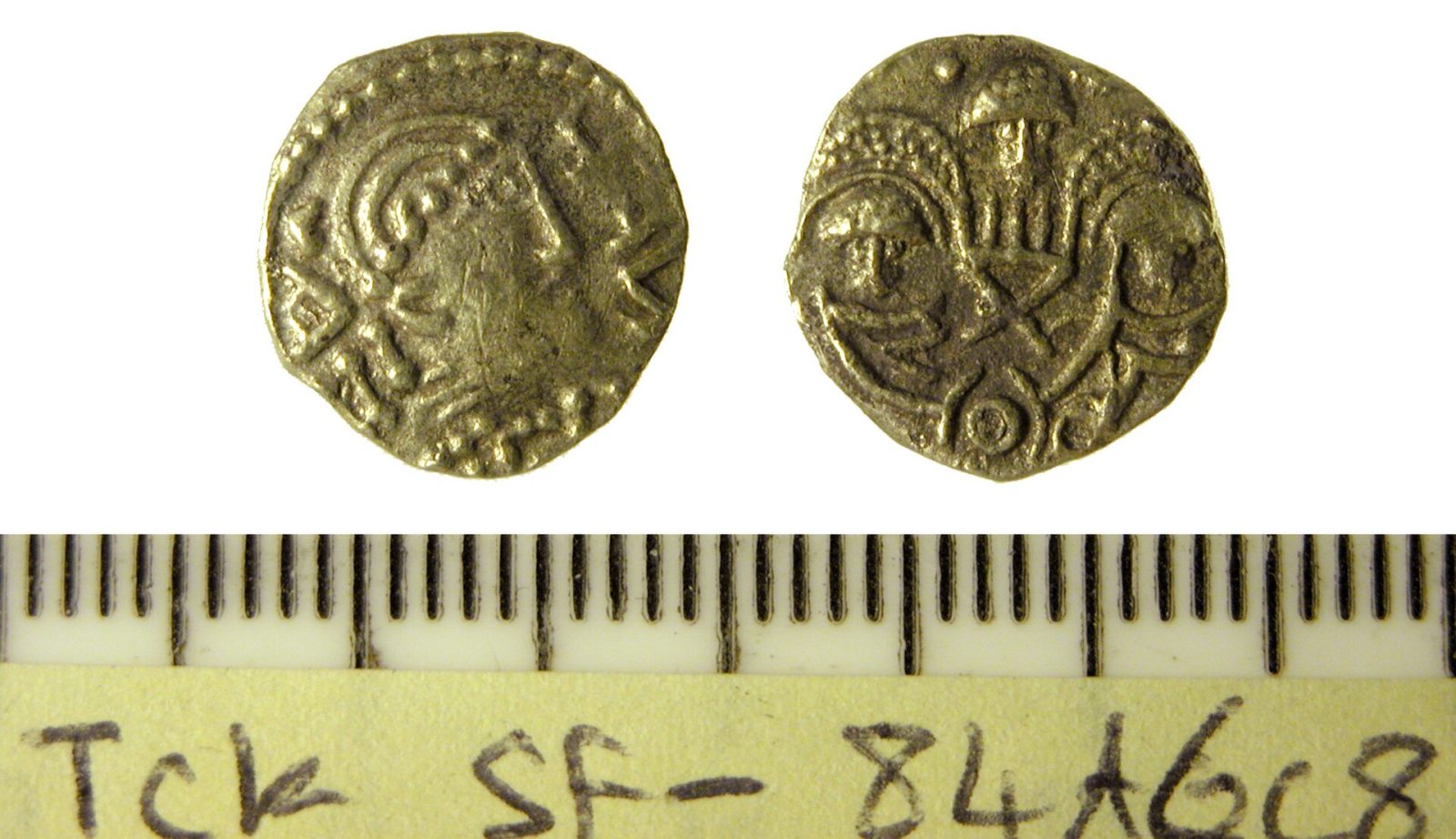
Written for Global Finds from BBC News (2026). Photo: another gold stater of Cunobelin, found in Essex, not the Saffron Walden coin, Laura McLean, Colchester and Ipswich Museum Service, Portable Antiquities Scheme, Wikimedia Commons, CC BY-SA 4.0.
Linked finds
Source: BBC News (2026)