The Somogy Binio: the only gold coin from a Roman settlement in Hungary, struck for an emperor murdered at 22
Famous find Struck AD 251 to 253 · Found in 2022 See it on the timeline →
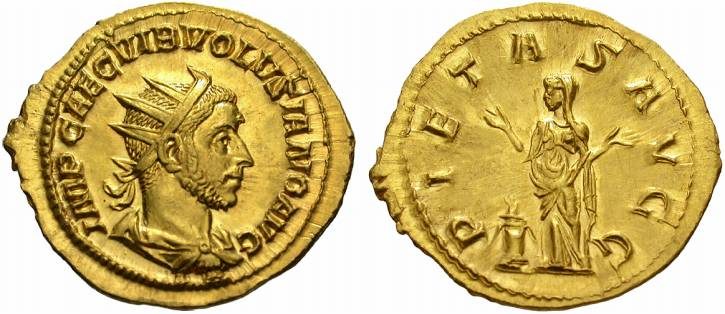
In early 2022 a metal-detector survey of a Roman settlement in Somogy County, Hungary, ahead of road building, turned up a gold double aureus of the emperor Volusianus, who ruled from 251 to 253. It was the only gold coin from the site.
In early 2022, the Rippl-Rónai Museum in Kaposvár, in south-western Hungary, was surveying a Roman settlement in Somogy County with metal detectors before a motorway was widened. The museum's team, working with volunteer detectorists, found many Roman coins, but only one of gold. The site's exact location has been kept secret. "Illegal metal detectors are a big problem in Hungary," said the excavation leader, Máté Varga of the University of Szeged.
The gold coin weighs about 5.6 grams. On the front is the bearded emperor Volusianus wearing a radiate crown, and on the back stands Libertas, the goddess of freedom. The numismatist Marjanko Pilekić identified it as a binio, a double aureus, a rarer denomination than the ordinary gold coin of the time. "It must have been a great loss for the former owner," Varga said. In the troubled middle of the 3rd century, as emperors came and went and silver coins were steadily debased, gold kept its value, and a coin like this was a store of real wealth. Newspapers first reported it as an ordinary aureus; the specialists' view is that it is the heavier double piece.
Volusianus was the son of Trebonianus Gallus, who became emperor in 251 after the emperor Decius was killed fighting the Goths. Gallus made his son co-emperor, but their reign of about two years was a disaster: plague swept the empire, barbarian invasions continued, and in 253, when a rival general, Aemilianus, rebelled, their own soldiers murdered both father and son. Volusianus was about 22. Gold coins of his short reign are rare. The site lay in the Roman province of Pannonia, on the empire's Danube frontier, and the coin may have belonged to a soldier or an official paid in gold.
Before this find, the Rippl-Rónai Museum owned only one Roman gold coin. The binio is now in its collection in Kaposvár.
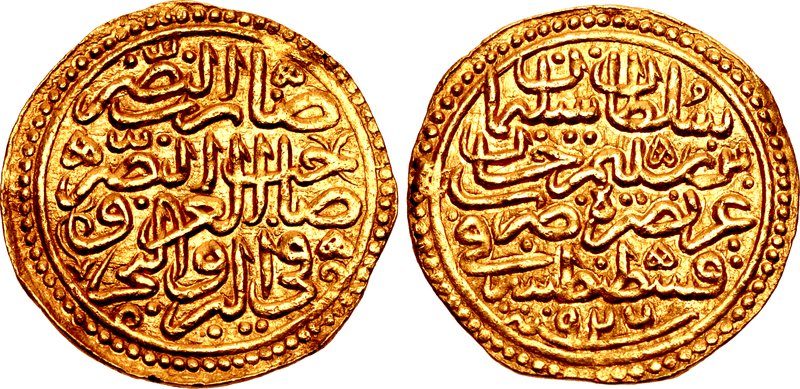
Written for Global Finds from Live Science (2022) and Archaeology magazine (2022). Photo: a gold binio of Volusianus with a different design on the back, not the Somogy coin, Numismatica Ars Classica, Wikimedia Commons, CC BY-SA 3.0 de.
Source: Live Science (2022)