The Olompali Sixpence: an Elizabethan coin in a California Native village, perhaps left by Francis Drake's crew
Famous find Struck in London in 1567 · Found in 1974 See it on the timeline →
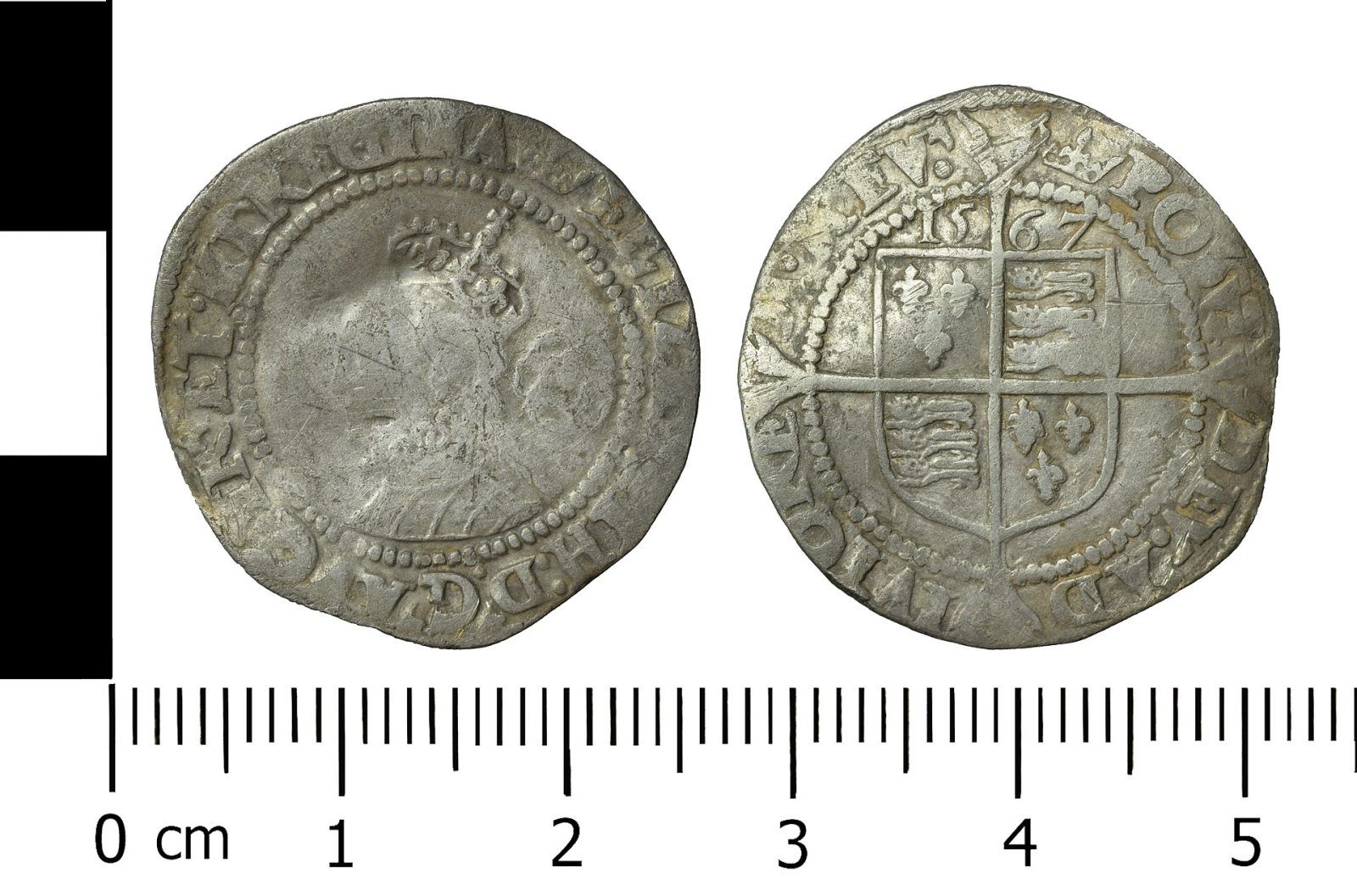
In November 1974 archaeologist Charles Slaymaker, digging the Coast Miwok village at Olompali in Marin County, California, found an English silver sixpence of Elizabeth I dated 1567. It may have arrived with Francis Drake, who landed on that coast in 1579.
In November 1974, the archaeologist Charles Slaymaker was excavating at Olompali, a few miles north of Novato in Marin County, California, on slopes above San Pablo Bay. The land was then privately owned, and Slaymaker lived on the property. Olompali had been one of the largest villages of the Coast Miwok people, occupied for more than a thousand years. On the floor of what had been a village dance house, he found a small silver coin. The discovery made the New York Times that month.
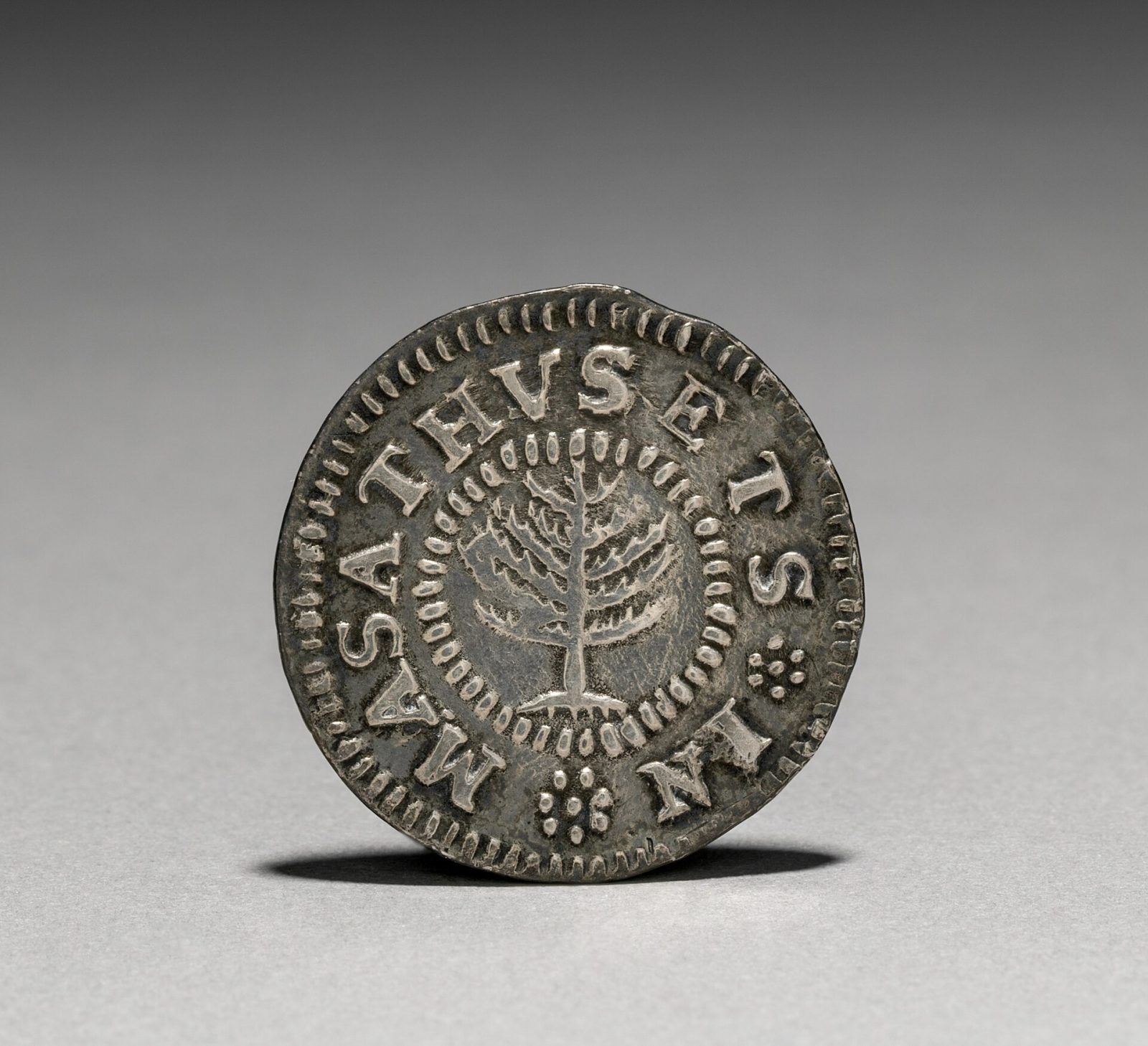
It was an English sixpence of Queen Elizabeth I, dated 1567 and struck at the Tower mint in London. Coins of this type show the Queen's crowned bust facing left, with a rose behind her head, and on the other side the royal shield on a cross, with the Latin motto POSVI DEV ADIVTOREM MEV, "I have made God my helper".
How did an Elizabethan coin reach a Miwok village on the Pacific coast? Slaymaker suggested Francis Drake. During his voyage around the world, Drake put in on the coast of northern California in June 1579 to repair his ship, the Golden Hind, and claimed the land for Elizabeth as "Nova Albion". According to accounts of the voyage, he set up a brass plate with an English sixpence fixed into it as a mark of the claim. A famous "Drake's Plate of Brass" found in the 1930s later turned out to be a hoax, made as a prank by a group of historians, but the Olompali coin was a separate and genuine find. Nobody knows whether it came from Drake's crew directly, was traded from village to village, or arrived some other way, and it should be treated as a possible link to Drake rather than proof.
California State Parks describes the coin as perhaps the most spectacular find made at Olompali, and as one of the earliest known objects showing contact between Europeans and Native Americans in California. The state bought the land in 1977, and it is now Olompali State Historic Park. The coin is held by the Bancroft Library at the University of California, Berkeley.
Written for Global Finds from California State Parks, J. M. Kleeberg, Numismatic Finds of the Americas (American Numismatic Society, 2009) and Bay Nature (2003). Photo: an Elizabeth I sixpence of 1567 like the Olompali coin, found in Wales, Susie White, National Museum Wales, Portable Antiquities Scheme, Wikimedia Commons, CC BY 2.0.
Source: California State Parks