The St Martin Stater: a Jersey detectorist took a Gaulish gold coin for a cardigan button, then thought it was a fake
Famous find Struck around 100 BC · Found in 2021 See it on the timeline →
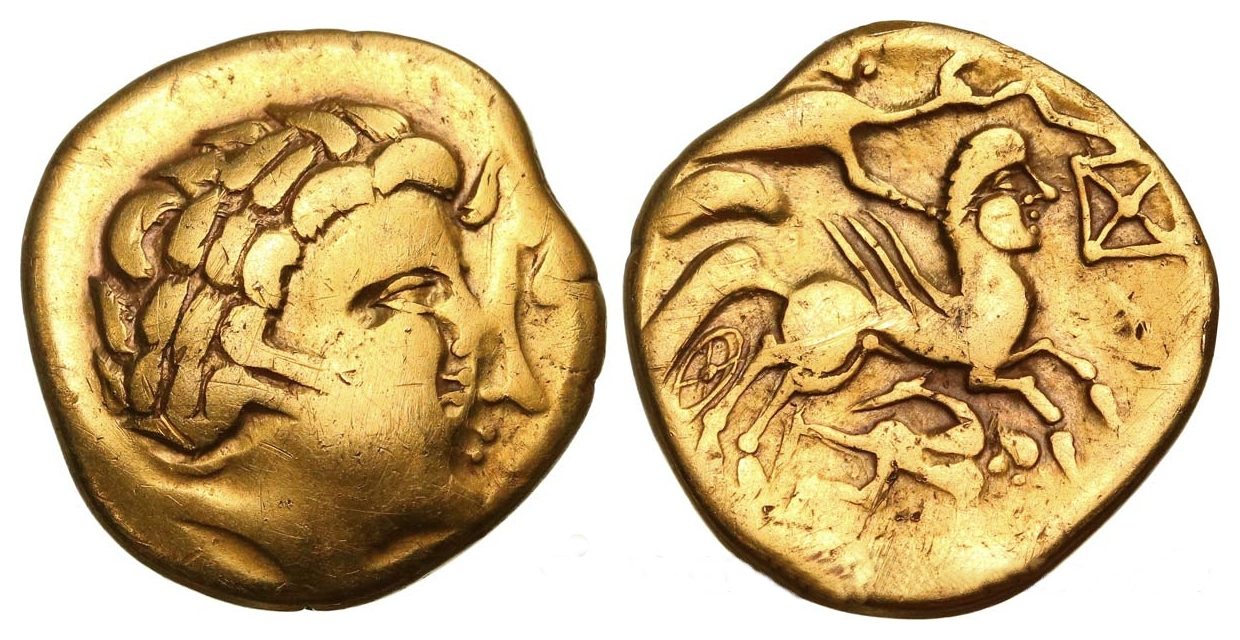
In early 2021 Deryck Egré, after 24 years of detecting, found a gold stater of the Aulerci Cenomani, a Gaulish tribe from around Le Mans, in a ploughed field in St Martin, Jersey. Only about 20 coins of this type are known, and five come from Jersey.
In 2021, Deryck Egré, a Jersey detectorist with 24 years of regular searching behind him, was working a ploughed field in the parish of St Martin, on the east side of the island, when he picked up something small and caked in mud. "When I first spotted the coin I thought it was a button from a ladies' cardigan," he told the Jersey Evening Post. It was only when he turned it over that his heart missed a beat: he could see the face of a horse with a human head. "I thought it was a fake," he said. "I didn't think I could ever be that lucky."
It was a full gold stater of the Aulerci Cenomani, a Gaulish tribe whose territory lay around modern Le Mans, in north-western France. It dates from around 100 BC. Coins of the Cenomani and their neighbours show a stylised human head on one side and, on the other, the strange human-headed horse that is one of the most striking images in Celtic art, often with a charioteer on its back. Only about 20 coins of this type are known, and five of them have been found in Jersey. Egré thanked the Guernsey archaeologist and coin expert Philip de Jersey for helping him identify the exact type.
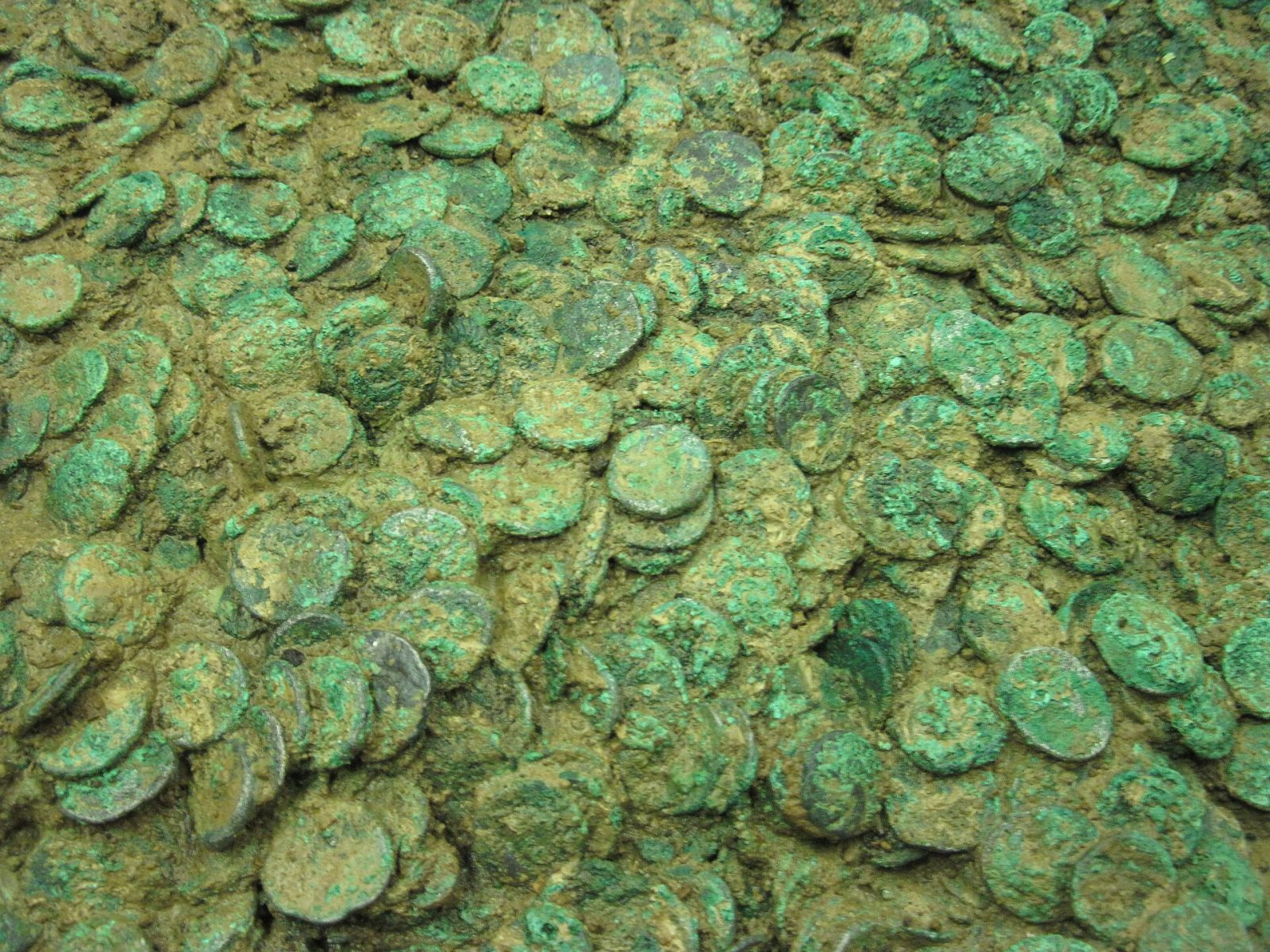
Jersey sits only a few miles off the coast of Normandy, and in the Iron Age it belonged to the world of the Gaulish tribes. Huge numbers of their coins have been found on the island, including the Le Câtillon II hoard of almost 70,000 coins, so a single gold piece of a mainland tribe is not out of place. What amazed Egré was that it had survived at all. "It is astounding that it survived in the ploughed soil this long and hasn't been chewed up by the unforgiving farm machinery," he said.
Egré reached a settlement with the landowner so that the coin could stay in his collection, and said he was unlikely ever to sell it, because "it is part of Jersey's heritage". He is one of four detectorists who spend their mornings at La Hougue Bie museum helping islanders identify their finds.
Written for Global Finds from the Jersey Evening Post (2021) and The E-Sylum (2021). Photo: another gold stater of the Aulerci Cenomani, not the St Martin coin, CGB Numismatique, Wikimedia Commons, CC BY-SA 3.0.
Linked finds
Source: Jersey Evening Post (2021)