The Swandro Coin: a Roman small change coin turned up in a roundhouse on Orkney, far beyond the empire's frontier
Famous find Struck at Trier, AD 348 to 350 · Found in 2017 See it on the timeline →
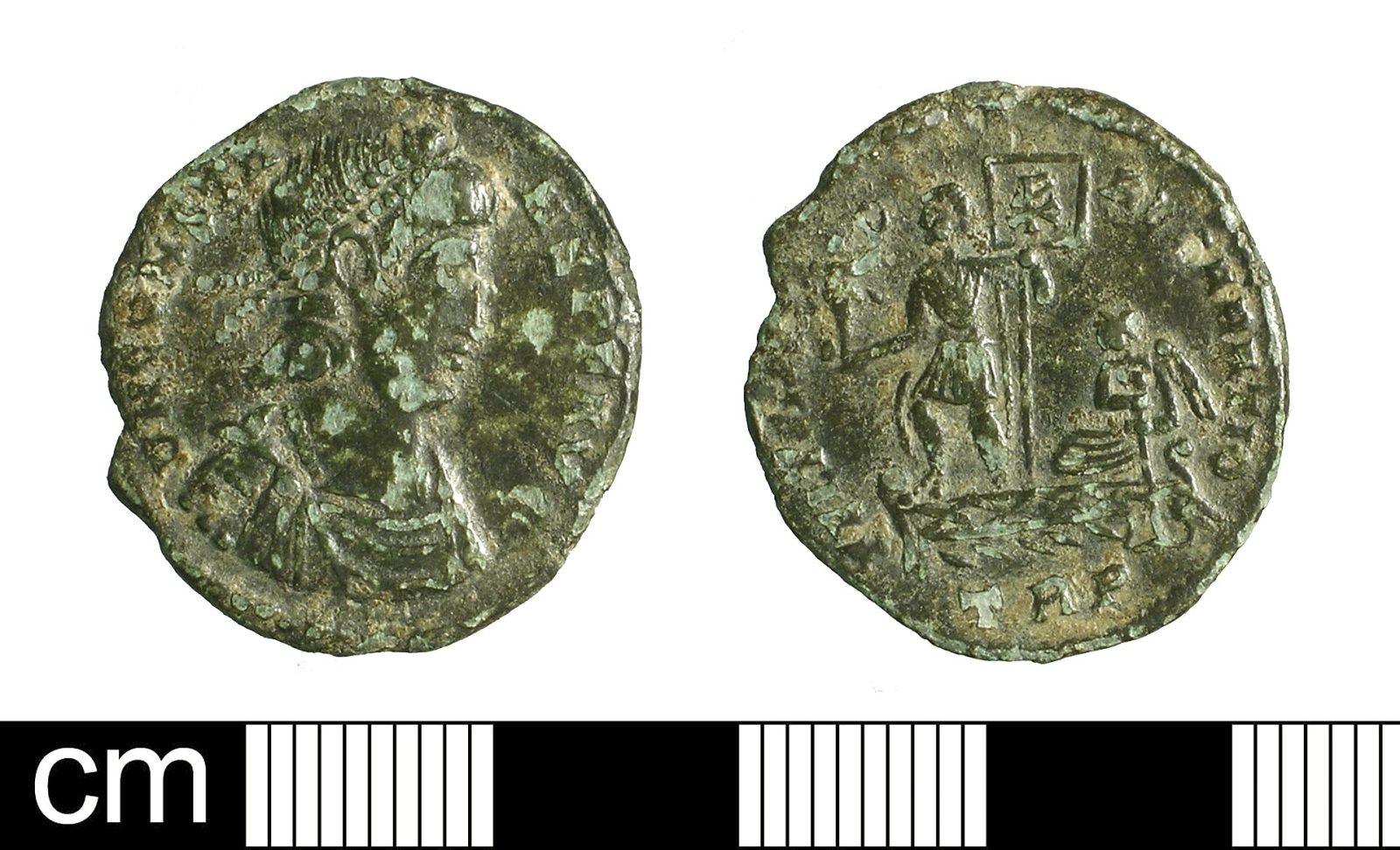
On 12 July 2017 archaeologists racing the sea at the Knowe of Swandro on Rousay, Orkney, found a Roman bronze coin in a small Iron Age roundhouse. It was a nummus of the emperor Constans, struck at Trier around AD 348 to 350, hundreds of miles beyond Roman Britain.
On Wednesday 12 July 2017, a team excavating the Knowe of Swandro, on the island of Rousay in Orkney, found a small copper-alloy coin in the floor layers of a building they called the little roundhouse. The site, on the shore of Rousay, holds a Neolithic chambered tomb, Iron Age roundhouses and Pictish buildings, and every winter Atlantic gales wash more of it away. The Swandro-Orkney Coastal Archaeology Trust, led by Dr Steve Dockrill and Dr Julie Bond of the University of Bradford, describes its work as a race against time and tide.
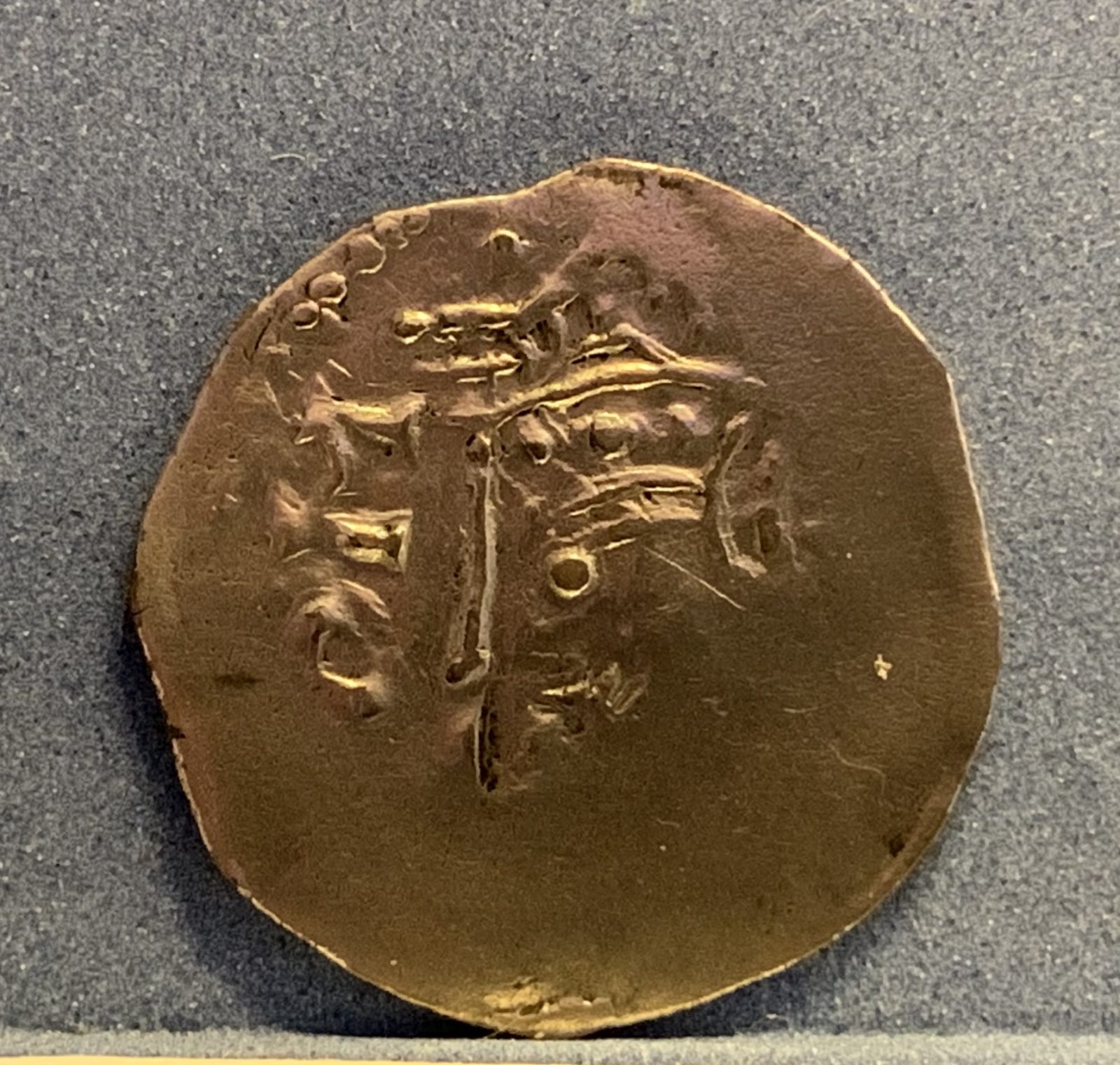
"The bust on the coin is clearly visible," Dockrill said, though much of the lettering was not. The team's first thought was that the standing figure on the back might be Hercules. When Richard Henry of Salisbury Museum identified it, it turned out to be a nummus of the emperor Constans, son of Constantine the Great. The front reads DN CONSTANS PF AVG around his bust. The back shows the emperor standing on a galley holding a small figure of Victory on a globe, with the slogan FEL TEMP REPARATIO, "the restoration of happy times", and the mark TRP, for the first workshop of the mint at Trier, in Germany. This type was made only between AD 348 and 350, the last years before Constans was overthrown and killed.
The coin had little value even when new: Henry noted that a few years later, about 1,100 of these bronze coins were needed for one gold coin. That is what makes it so interesting. Rome never occupied Orkney, and the empire's frontier lay hundreds of miles to the south, yet a piece of everyday Roman small change made its way to a roundhouse on Rousay, perhaps through trade, gifts or raiding. Only a handful of Roman coins had ever been found in Orkney before.
Because it came from a securely recorded layer, the coin also helps date the roundhouse, where other finds belong to the second to fourth centuries AD. As every archaeological find in Scotland must be, it was reported to the Treasure Trove system.
Written for Global Finds from the University of Bradford (2017) and the Swandro-Orkney Coastal Archaeology Trust (2017). Photo: another nummus of Constans of the same galley type from the Trier mint, found in England, not the Swandro coin, Julian Watters, Portable Antiquities Scheme, Wikimedia Commons, CC BY-SA 4.0.
Linked finds
Source: University of Bradford (2017)